
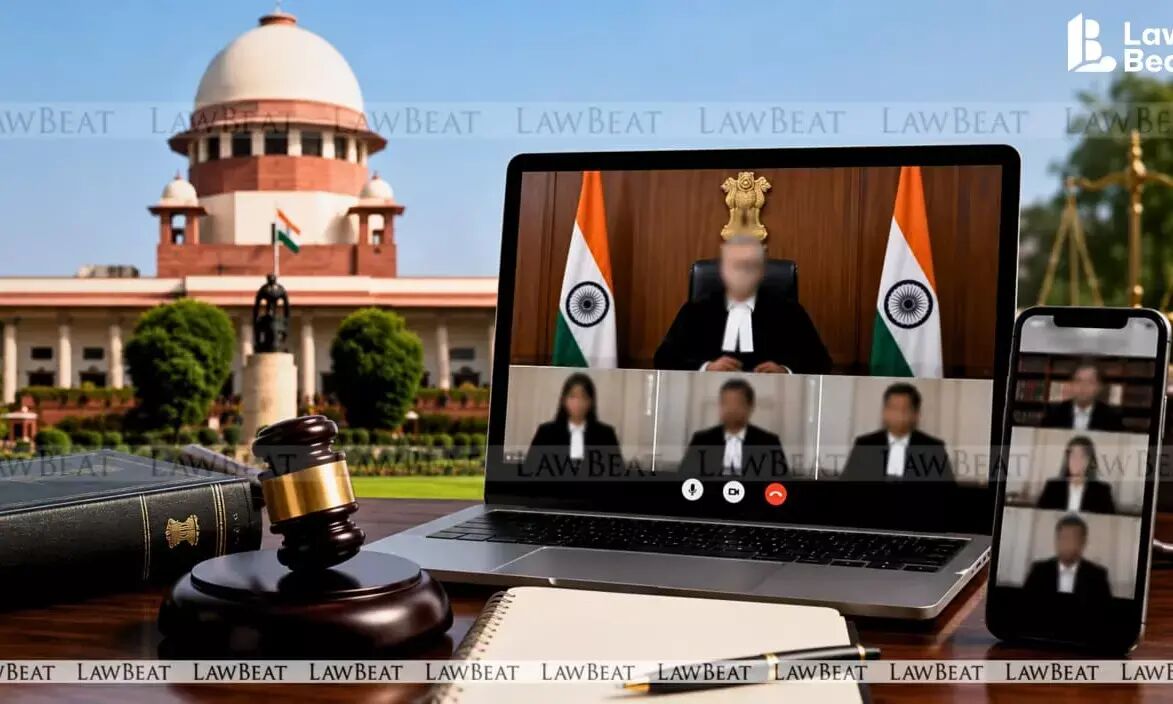
Supreme Court: Lawyer Viral Video Refusal on News Portals
Summary
- The Supreme Court rejected a lawyer's plea against news portals circulating a viral video of him using abusive language during a court appearance.
- The lawyer argued the video's circulation violated the Supreme Court's July 24 interim order prohibiting unauthorized sharing of court recordings on digital platforms.
- Chief Justice Surya Kant clarified that while commercial exploitation of live-streamed proceedings might violate the order, fabricating remarks or falsely attributing statements to the bench constitutes a criminal act.
- The Court noted the lawyer did not allege the video was fabricated or altered, stating that appearing in open court requires bravery to face the consequences of one's conduct.
- The July 24 order, issued in response to a PIL, aims to prevent the distortion of judicial proceedings through unauthorized and out-of-context dissemination of audio-video recordings.
Supreme Court Rejects Lawyer's Plea Over Viral Video
The Supreme Court clarified that while the commercial exploitation of live-streamed proceedings might contravene its July 24 directive, the act of fabricating remarks or falsely attributing statements to the bench would constitute a criminal offense, deemed far more serious and potentially leading to criminal contempt.
The Supreme Court of India recently declined to entertain a plea from a lawyer seeking action against news portals for circulating a viral video of his courtroom appearance. The video, which has been widely shared across social media platforms, captured the lawyer using abusive language during proceedings, leading him to claim significant professional harm and label those disseminating the content as "antisocial elements."
The lawyer contended that the continued circulation of the video by news outlets directly contravened an interim order issued by the apex court on July 24. This directive specifically prohibits the unauthorized posting, reposting, uploading, transmission, or storage of audio and video recordings of court proceedings on social media and other digital platforms without explicit prior permission from the Supreme Court or the relevant High Court.
However, a bench led by Chief Justice of India Surya Kant, which heard the matter, quickly pointed out that the lawyer was not alleging that the video itself had been fabricated or altered using artificial intelligence. The Chief Justice emphasized that since the lawyer was appearing in open court, he "should be brave enough" to face the consequences of his conduct. The Court's refusal to intervene underscores a critical distinction in how it views the dissemination of authentic, albeit unflattering, court content versus fabricated material.
Unpacking the July 24 Directive on Court Recordings
The interim order, issued by the Supreme Court on July 24, serves as a crucial regulatory framework for the digital dissemination of judicial proceedings. Passed by a bench comprising Chief Justice of India Surya Kant and Justices Joymalya Bagchi and V Mohana, the directive explicitly states that "there shall be no extraction, dissemination, monetisation, posting, re-posting, uploading, transmitting, modification, storing, or hosting of the audio-video recording(s) of the judicial proceedings on social media or any other digital platforms" without the prior consent of the Secretary General of the Supreme Court of India or the Registrar Generals of the jurisdictional High Courts.
This order originated from a Public Interest Litigation (PIL) that highlighted concerns over the unauthorized extraction and circulation of audio and video recordings from court proceedings. The PIL alleged that clips from live-streamed hearings were frequently being edited, taken out of context, and widely disseminated online, leading to a distortion of judicial proceedings. The Supreme Court mandated that its Secretary General and the Registrar Generals of all High Courts upload this order on their respective websites for public information, with the restriction remaining in force until further orders.
The Court also dismissed the petitioner's argument that news portals and intermediaries might claim exemption due to a lack of express direction against them, or that the prohibition only applied to content circulated after July 24, thereby reinforcing the broad scope and immediate applicability of its interim directive.
Distinguishing Misconduct from Criminality in Digital Dissemination
A pivotal aspect of the Supreme Court's stance, articulated by Chief Justice Surya Kant, lies in its nuanced differentiation between various forms of digital content dissemination. The Chief Justice clarified that while the commercial exploitation of live-streamed proceedings might contravene its July 24 directive, the act of fabricating remarks or falsely attributing statements to the bench would constitute a criminal offense, deemed far more serious and potentially leading to criminal contempt. This distinction was central to the Court's decision, as the lawyer in question was not alleging that the viral video had been fabricated or altered using artificial intelligence.
Chief Justice Kant directly challenged the lawyer, who was appearing in court in connection with his father's bail, stating, "If you use abusive words and make such fierce allegations, why are you shy? You are not saying that they fabricated your video. You are not saying that they used AI." This line of questioning underscored the Court's view that a lawyer's conduct in open court is subject to public scrutiny, especially when not misrepresented. The Court emphasized that while unauthorized commercial use of genuine court recordings could lead to contempt, the deliberate creation or dissemination of false information about court proceedings would invite far more severe legal repercussions, potentially amounting to criminal contempt and requiring very serious action.
Implications for Court Conduct and Digital Ethics
The Supreme Court's refusal to grant relief to the lawyer, coupled with its clear pronouncements, sends a strong message regarding the conduct of legal professionals in open court and the ethical responsibilities associated with digital content. The ruling reinforces the principle that proceedings in an open court are inherently public, and individuals, including lawyers, must be prepared for their actions and words to be observed and potentially recorded. The Court's emphasis on the lawyer's failure to allege fabrication highlights that authentic recordings, even if unflattering, are treated differently from deliberately manipulated content.
This decision clarifies the boundaries of the July 24 order, emphasizing that its primary aim is to prevent the unauthorized commercial exploitation and out-of-context distortion of genuine court proceedings, rather than to shield individuals from the consequences of their own documented conduct. The severe penalties outlined for fabricating or falsely attributing remarks to the bench underscore the judiciary's commitment to preserving the integrity of its proceedings against deliberate misrepresentation.
Practical Implications
Lawyers and compliance officers must understand the Supreme Court's nuanced interpretation of its July 24 order on court recording dissemination. While unauthorized commercial exploitation of live-streamed proceedings may constitute contempt, fabricating or falsely attributing remarks is considered a criminal act. This clarifies the severe risks associated with misrepresenting court proceedings and the limited protection offered against viral content stemming from open court conduct.
Source
Source: Based on recent legal reporting.
How does this affect you?
Get an AI analysis of this article grounded in your jurisdictions, practice areas, and any policy documents you've uploaded to Wansom.
Finish Reading the Full Story and the Expert Analysis.
Get the latest legal & regulatory intelligence in India
Wansom is AI and can make mistakes.