
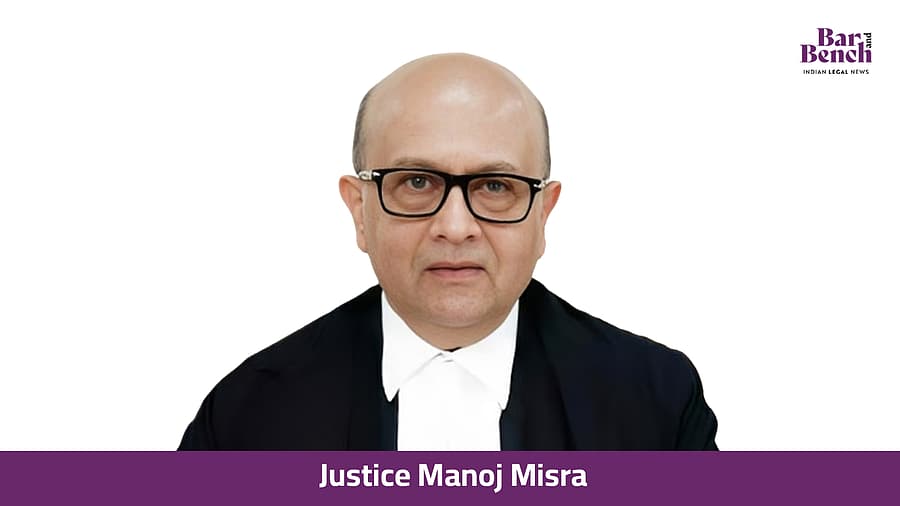
Supreme Court Justice Misra Recuses From ISKCON Case
Supreme Court Justice Manoj Misra recently recused himself from hearing a batch of review petitions filed by the International Society of Krishna Consciousness (ISKCON) Mumbai, which sought reconsideration of the top court’s May 2025 ruling that recognized ISKCON Bengaluru as an independent legal entity and owner of the Hare Krishna Temple in Bengaluru. Justice Misra cited personal reasons for his recusal, necessitating the reconstitution of the three-judge bench that was hearing the case. The Court's order noted that Justice Satish Chandra Sharma, another member of the bench, was also due to retire in November, further complicating the bench's composition.
This recusal carries significant legal implications for practitioners, particularly in high-stakes litigation before the Supreme Court. It underscores the paramount importance of judicial impartiality and the avoidance of any perceived conflict of interest, even if the reasons are personal. For attorneys, such an event highlights the procedural intricacies of Supreme Court practice, where the composition of benches can impact the timeline and flow of a case. A recusal, especially in a review petition concerning a long-standing dispute between prominent religious organizations, can lead to delays as the Chief Justice of India must reconstitute the bench, potentially affecting the strategic planning of legal teams.
The legal context of this development involves the Supreme Court's review jurisdiction under Article 137 of the Constitution of India, which allows the Court to review its own judgments. The original dispute centered on the legal identity of ISKCON Bengaluru and its ownership of the temple, with the Supreme Court having previously ruled that ISKCON Bengaluru is a distinct legal entity registered under the Karnataka Societies Registration Act, 1960, and not a branch of ISKCON Mumbai. The Chief Justice of India holds the administrative power to constitute benches, and a recusal necessitates this administrative action. The key parties involved are Justice Manoj Misra (the recusing judge), Justices MM Sundresh, Satish Chandra Sharma, and PK Mishra (the original bench members), ISKCON Mumbai (the petitioner), ISKCON Bengaluru (the respondent), and the Chief Justice of India (responsible for bench constitution).
Practitioners involved in Supreme Court litigation, especially in review petitions or cases before specific benches, must be prepared for potential recusals and the subsequent reconstitution of benches. This can impact hearing schedules and potentially the judicial outlook on a case, although the merits remain paramount. Understanding the grounds for recusal, even if personal, is important for appreciating the integrity of the judicial process. Lawyers should advise clients that such procedural developments are part of the judicial landscape and can influence the pace of litigation, requiring flexibility in legal strategy. The underlying dispute's focus on the independent legal status of religious organizations also highlights the need for clear organizational structures and documentation to avoid protracted legal battles. The outcome of the review petitions, following the recusal and bench reconstitution, is not yet reported.
How does this affect you?
Get an AI analysis of this article grounded in your jurisdictions, practice areas, and any policy documents you've uploaded to Wansom.
Finish Reading the Full Story and the Expert Analysis.
Get the latest legal & regulatory intelligence in India
Wansom is AI and can make mistakes.