
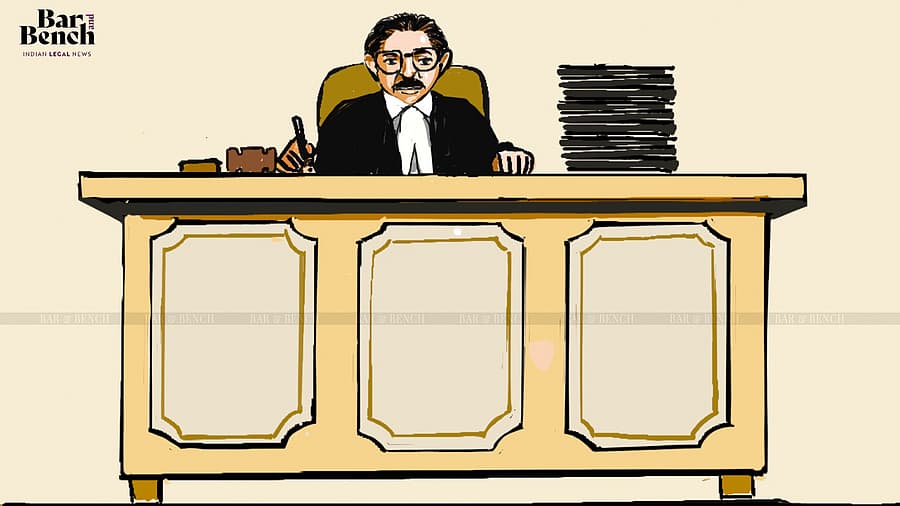
Supreme Court: Judicial Eligibility Criteria and Legal Aid Discussed
On August 21, 2026, in Bhumika Trust v. Union of India, the Supreme Court, with Justice K Vinod Chandran dissenting, modified the direction issued 15 months earlier in All India Judges Association v. Union of India. The 3 years of practice at the Bar that had been made a condition of eligibility for the Civil Judge (Junior Division) examination were reduced to 1.The judgment has been received as a relaxation. Read in full, it is not.Under the framework, the Court has now laid down that recruitment notifications issued during the transitional period up to March 31, 2027 may proceed without the practice condition. Those issued on or after April 1, 2027 will require 1 year of verified active practice. A candidate who clears the examination is not appointed a judge. He or she is appointed a trainee judicial officer and must then complete 1 year of intensive training at the State Judicial Academy - a year the Court has deemed equivalent to 1 year of practice at the Bar - followed by a year of structured law clerkship, 6 months with a district and sessions judge and 6 months attached to a sitting High Court Judge. Through both years, the trainee receives a fixed emolument equal to one-half of the remuneration of a judicial magistrate first class. There is no designation. There is no seniority. Entry into regular judicial service follows only upon satisfactory evaluation at the end.A person who has succeeded in a competitive selection to a constitutional office spends the first 2 y
How does this affect you?
Get an AI analysis of this article grounded in your jurisdictions, practice areas, and any policy documents you've uploaded to Wansom.
Finish Reading the Full Story and the Expert Analysis.
Get the latest legal & regulatory intelligence in India
Wansom is AI and can make mistakes.