
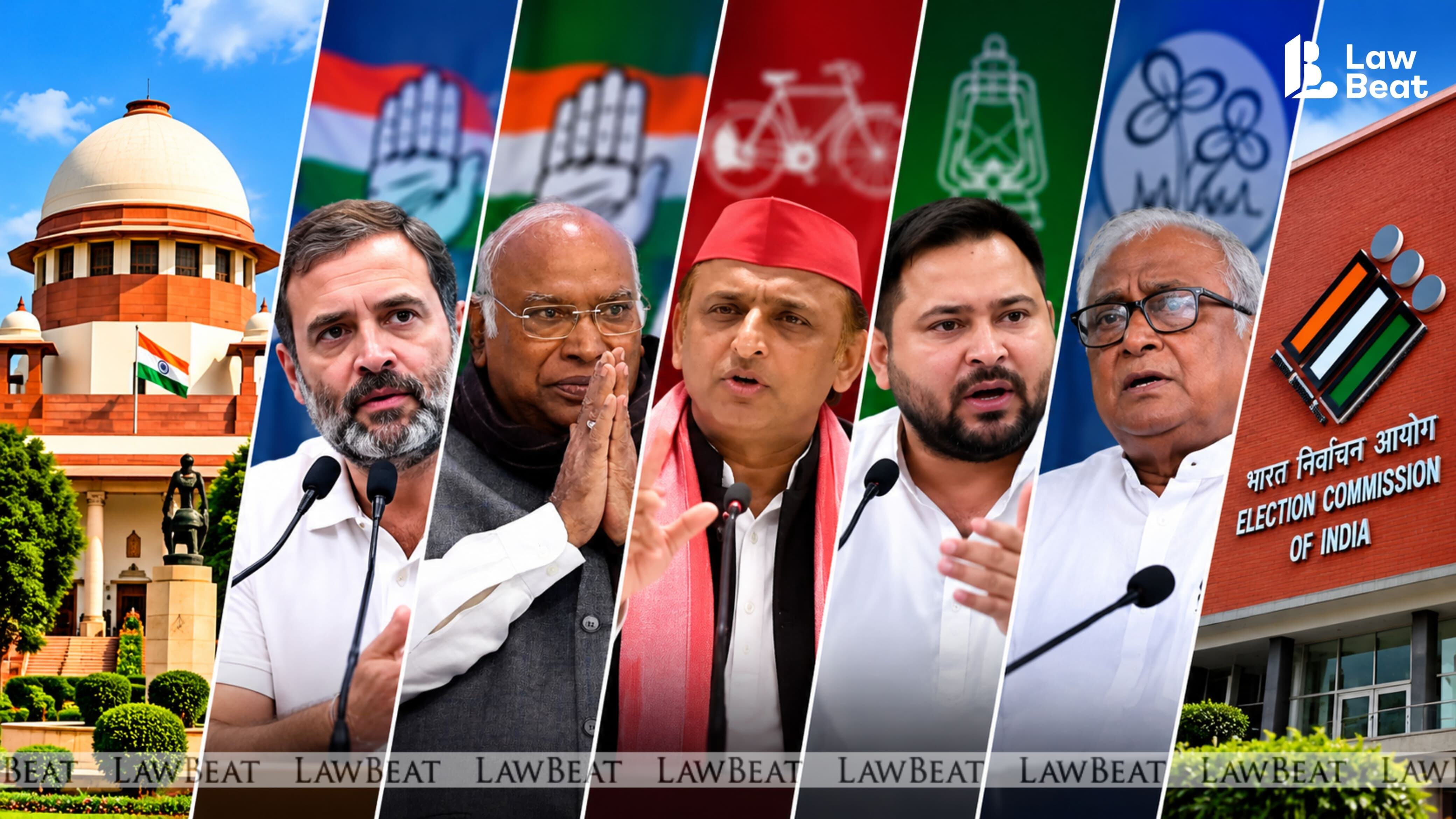
Supreme Court: Issues Notice on Rahul Gandhi INDIA Bloc ECI Voter Deletion Petition
Summary
- The Supreme Court has issued notice to the ECI, CEC Gyanesh Kumar, and other Election Commissioners regarding a petition challenging the Special Intensive Revision of electoral rolls.
- The petition, filed by Rahul Gandhi and other INDIA bloc leaders, alleges large-scale voter deletions and irregularities, including the unilateral exercise of collective powers by the CEC.
- Petitioners seek access to ECI files, minutes, and notings to verify the legality of decisions and question modifications to Form 6 and the ECINET/ERONET databases.
- The Court, while issuing notice, remarked that the judiciary cannot be browbeaten and indicated it would also review the conduct of one of the petitioners.
- The challenge focuses on whether recognized safeguards and the requirement for collective ECI action were followed, rather than the overall validity of the SIR itself.
Supreme Court Issues Notice on Voter Deletion Petition
The petitioners assert that the right to vote is a fundamental entitlement for every eligible citizen, transcending political affiliations, and its protection represents a constitutional imperative.
The Supreme Court of India has issued a formal notice to the Election Commission of India (ECI), Chief Election Commissioner Gyanesh Kumar, and Election Commissioners Sukhbir Singh Sandhu and Vivek Joshi. This action comes in response to a significant writ petition filed by Congress leader Rahul Gandhi and other prominent figures from the INDIA bloc, challenging alleged irregularities in the Special Intensive Revision (SIR) of electoral rolls.
A bench comprising Chief Justice Surya Kant and Justice Joymalya Bagchi sought detailed responses from the electoral body and its top officials regarding the opposition's challenge. The Court also noted, following references by lawyers to a march by Rahul Gandhi, that "Nobody can browbeat judiciary. We are not sitting in ivory towers." This petition, registered as W.P.(C) No. 001351/2026, was initially filed on October 12 and formally registered on October 13 after minor procedural issues were resolved. It has been tagged for hearing alongside other related cases already pending before the apex court, which also indicated its intention to examine the conduct of one of the petitioners. The legal proceedings unfold amidst public protests in Delhi demanding CEC Gyanesh Kumar's resignation over the very irregularities now under judicial scrutiny.
Allegations of Irregularities and Unilateral Action
The core of the INDIA bloc's petition centers on allegations of widespread voter deletions and significant irregularities observed during the Special Intensive Revision of electoral rolls. Petitioners, including Rahul Gandhi, Congress president Mallikarjun Kharge, Samajwadi Party chief Akhilesh Yadav, Rashtriya Janata Dal leader Tejashwi Prasad Yadav, NCP (Sharadchandra Pawar) leader Supriya Sule, and Shiv Sena (UBT) leader Sanjay Raut, contend that the Chief Election Commissioner, Gyanesh Kumar, unilaterally exercised the ECI's "collective powers" during this crucial revision process.
To substantiate their claims, the petitioners have requested the Supreme Court to mandate the production of the ECI's internal files, minutes of meetings, and notings. This request aims to ascertain whether the Commission's decisions were made lawfully and collectively. Furthermore, the petition specifically questions the modifications made to the statutory Form 6, as well as the design and operational integrity of the ECINET and ERONET electoral-roll databases. A key grievance highlighted is the "large-scale exclusion of electors without adequate notice, hearing or an effective mechanism for restoration," which directly impacts voter rights.
Legal Context and Petitioners' Stance
Filed under Article 32 of the Constitution, the writ petition underscores the petitioners' assertion that they are approaching the Court "in discharge of their public duties." The petitioners assert that the right to vote is a fundamental entitlement for every eligible citizen, transcending political affiliations, and its protection represents a constitutional imperative. This legal challenge, brought forth by prominent opposition leaders, including the Leader of the Opposition in the Lok Sabha, Rahul Gandhi, and the Leader of the Opposition in the Rajya Sabha, Mallikarjun Kharge, was filed through Advocate-on-Record Prasanna S.
Crucially, the petitioners acknowledge the Supreme Court's prior judgment in *Association for Democratic Reforms v. Election Commission of India* (May 27, 2026), which upheld the validity of the Special Intensive Revision itself. They explicitly state that their current petition does not seek to revisit or reopen the question of the SIR's overall validity. Instead, their concern is more narrowly focused: whether the safeguards previously recognized by the Supreme Court and the fundamental requirement for the Election Commission to act as a collective body were adhered to during the revision exercise.
Why This Matters
This Supreme Court intervention holds significant implications for the integrity of India's electoral process and the functioning of the Election Commission. The challenge to alleged unilateral decision-making by the Chief Election Commissioner, coupled with claims of large-scale voter deletions without due process, brings into sharp focus the procedural transparency and accountability of electoral roll revisions. The outcome of this petition could establish important precedents regarding the ECI's internal governance, the collective responsibility of its members, and the mechanisms available to citizens and political parties to challenge perceived electoral irregularities. It underscores the judiciary's role in safeguarding democratic processes and ensuring that every eligible citizen's right to vote is protected through fair and transparent means.
Practical Implications
Lawyers advising political parties, candidates, or NGOs involved in election monitoring should closely track the Supreme Court's proceedings in this petition, as its outcome could significantly impact the legal framework for challenging electoral roll revisions, ECI's procedural autonomy, and voter rights in India. It highlights potential grounds for future election-related litigation concerning alleged irregularities in electoral processes.
Source
How does this affect you?
Get an AI analysis of this article grounded in your jurisdictions, practice areas, and any policy documents you've uploaded to Wansom.
Finish Reading the Full Story and the Expert Analysis.
Get the latest legal & regulatory intelligence in India
Wansom is AI and can make mistakes.