
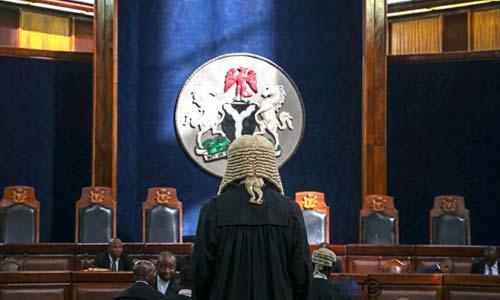
Supreme Court: INEC Electoral Act Party Primaries Judgment Reserved
Summary
- The Supreme Court of Nigeria has reserved judgment in an appeal filed by the Independent National Electoral Commission (INEC).
- INEC is challenging a Court of Appeal decision that struck down key provisions of the Electoral Act 2026.
- These provisions regulate political party membership registers and the mode of conducting party primaries.
- A seven-member panel of the apex court, presided over by Justice Adamu, heard the appeal.
Supreme Court Reserves Judgment in Key Electoral Appeal
Lawyers advising political parties or candidates must closely monitor this reserved Supreme Court judgment, as its outcome will directly impact electoral compliance and strategy, dictating the permissible methods for selecting candidates and maintaining transparent membership rolls.
The Supreme Court of Nigeria has concluded proceedings in a significant appeal initiated by the Independent National Electoral Commission (INEC), opting to reserve its judgment. This crucial legal action challenges a previous ruling by the Court of Appeal, which had invalidated specific, vital sections of the Electoral Act 2026. These particular provisions are central to regulating how political parties maintain their membership registers and the various procedures for conducting their primary elections.
The apex court's decision to reserve judgment means the seven-member panel, presided over by Justice Adamu, will deliberate further before issuing its final, binding pronouncement. The outcome of this appeal is highly anticipated, as it will determine the legal standing of INEC's regulatory powers over internal party affairs, particularly concerning the foundational aspects of candidate selection and party membership verification.
Legal Context of the Dispute
At the heart of this legal contest lies the interpretation and enforceability of the Electoral Act 2026, a cornerstone of Nigeria's electoral jurisprudence. INEC, as the constitutionally mandated body responsible for overseeing elections, relies on robust legislative provisions to ensure transparency and fairness across the political landscape. The provisions in question, which were struck down by the Court of Appeal, pertain directly to the integrity of the electoral process, specifically targeting the management of party membership lists and the methodology of primary elections.
Effective regulation of membership registers is critical for preventing electoral fraud, such as the padding of voter lists or the inclusion of ineligible individuals in party primaries. Similarly, clear guidelines on the conduct of primaries are essential for fostering internal party democracy, ensuring that candidates emerge through legitimate and verifiable processes. The Court of Appeal's decision to nullify these 'key provisions' therefore presented a significant challenge to INEC's oversight capabilities, prompting the commission to seek a definitive resolution from the nation's highest court.
Why This Judgment Matters for Nigerian Elections
The impending judgment from the Supreme Court carries profound implications for the operational framework of political parties and the overall credibility of Nigeria's electoral system. The ruling will definitively establish the legal boundaries for regulating political party primaries and membership registers, directly impacting how future elections are contested and managed. Should the Supreme Court affirm the Court of Appeal's decision, INEC's capacity to enforce stringent regulations on these internal party matters could be significantly diminished, potentially granting parties greater autonomy but also raising concerns about accountability.
Conversely, a reversal of the lower court's ruling would reaffirm and strengthen INEC's regulatory authority, reinforcing its role in upholding national electoral standards and ensuring compliance across all political entities. Lawyers advising political parties or candidates should closely monitor this reserved Supreme Court judgment, as its outcome will directly impact electoral compliance and strategy, dictating the permissible methods for selecting candidates and maintaining transparent membership rolls. The final decision will set a crucial precedent for electoral law, influencing the conduct of future elections and the broader health of democratic institutions in Nigeria.
Practical Implications
Lawyers advising political parties or candidates should closely monitor this reserved Supreme Court judgment, as its outcome will define the legal framework for party primaries and membership registers, directly impacting electoral compliance and strategy.
Source
How does this affect you?
Get an AI analysis of this article grounded in your jurisdictions, practice areas, and any policy documents you've uploaded to Wansom.
Finish Reading the Full Story and the Expert Analysis.
Get the latest legal & regulatory intelligence in Nigeria
Wansom is AI and can make mistakes.