
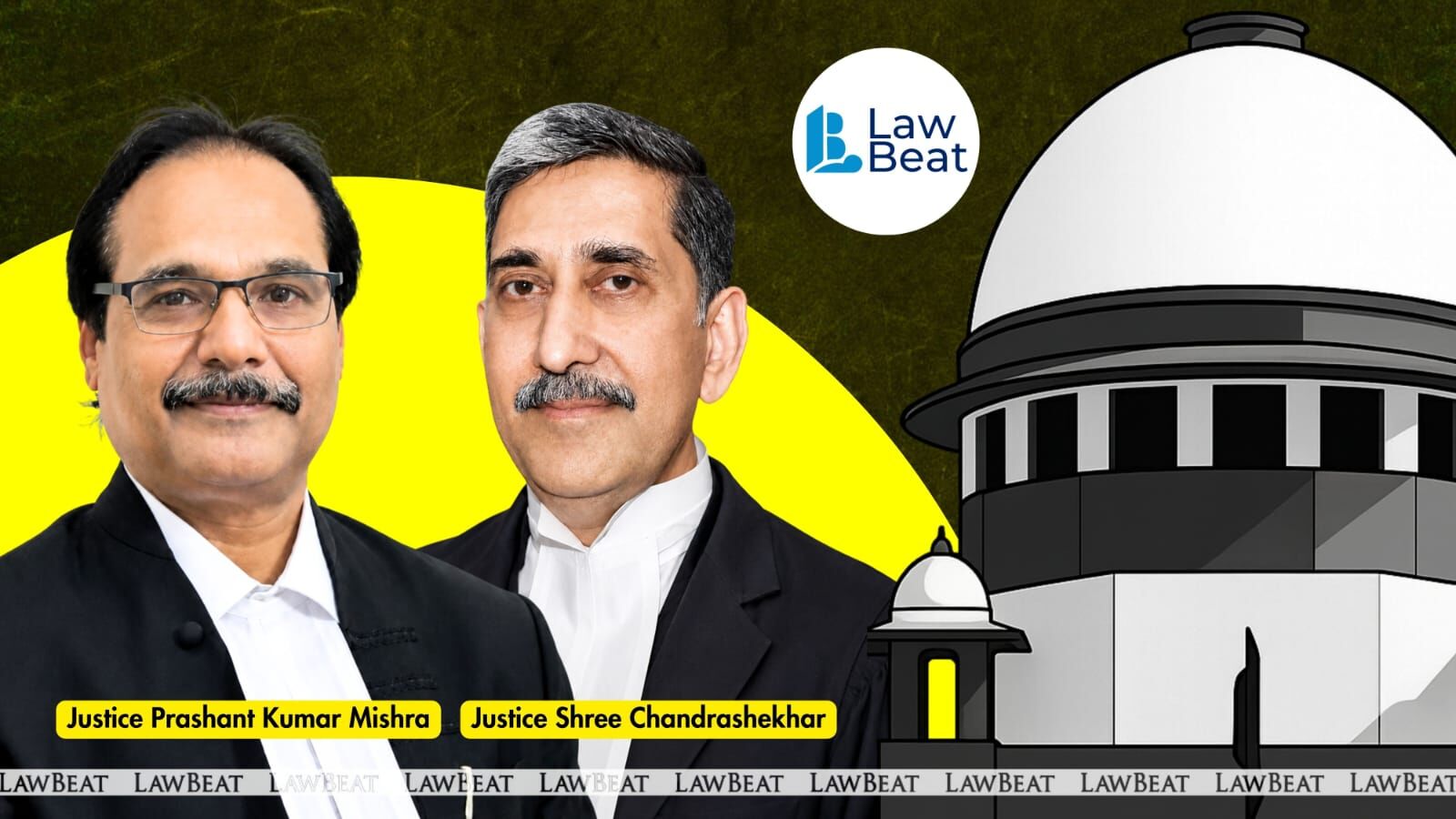
Supreme Court India: Revenue Entries Don't Grant Property Title
Summary
- The Supreme Court of India ruled that revenue entries like Jamabandi and Khasra Girdawari indicate possession but do not create or extinguish property title.
- Such entries must be assessed alongside all surrounding circumstances and evidence, as they are not conclusive proof of ownership.
- To prove property dedication to a religious institution, a clear and unequivocal intention to permanently divest ownership is required, not just long possession or revenue records.
- Adverse possession demands actual, open, continuous, and hostile possession, with a clear denial of the true owner's title, and the specific point of hostility must be proven.
- The Court dismissed an appeal concerning agricultural land in Punjab because neither property dedication nor adverse possession was adequately established by the appellants.
Supreme Court Clarifies Property Title Evidence
The Supreme Court of India has unequivocally stated that revenue entries, such as Jamabandis and Khasra Girdawaris, serve as evidence for the nature and continuity of possession but do not, by themselves, create or extinguish title to immovable property.
The Supreme Court of India has unequivocally stated that revenue entries, such as Jamabandis and Khasra Girdawaris, serve as evidence for the nature and continuity of possession but do not, by themselves, create or extinguish title to immovable property. This significant clarification underscores that while these records are relevant, they cannot be considered conclusive proof of ownership. The legal effect of such entries must be evaluated in conjunction with all surrounding circumstances and the entirety of the evidence presented in a case.
This ruling emerged from an appeal filed by Bhag Singh (deceased), represented by Mahant Kashmir Singh, concerning a protracted dispute over the title and possession of agricultural land. The case involved 4 Kanals and 18 Marlas of land situated in Muktsar, Punjab. The appellants had primarily relied on specific revenue entries to support their claims.
The core of the dispute involved competing assertions: one party based their claim on a registered sale deed dated May 13, 1965, while the appellants contended there was a prior dedication of the property. This alleged dedication was said to be in favor of Dera Bhai Mastan Singh for 'Dharam-Arth,' meaning religious and charitable purposes. Ultimately, the Supreme Court dismissed the appeal, finding the appellants' arguments insufficient to establish ownership.
Evidentiary Value of Revenue Entries Examined
Justices Prashant Kumar Mishra and Sree Chandrashekhar, presiding over the bench, meticulously clarified the evidentiary weight of revenue records. They affirmed that entries like Jamabandis and Khasra Girdawaris are indeed pertinent for demonstrating possession, but they do not confer or revoke property title. The Court highlighted that these records, while indicating who possesses the land and for what duration, do not inherently establish who legally owns it.
In the specific case, the appellants had presented revenue entries describing possession as “gair marusi bila lagan bawaja Dharam Arth,” which translates to possession without rent for religious/charitable purposes. The Court acknowledged that such an entry might suggest an association of possession with religious or charitable activities. However, it firmly stated that this type of entry does not constitute an assertion of hostile title, nor does it legally extinguish the ownership rights of the recorded proprietors. Consequently, the bench concluded that such an entry, standing alone, cannot form the basis for a decree founded on adverse possession.
Distinguishing Dedication from Adverse Possession
The Supreme Court further elucidated the distinct legal requirements for proving property dedication to a religious institution versus claiming title through adverse possession. For a valid dedication of immovable property, even without a formal deed, the party asserting it must demonstrate a clear and unequivocal intention from the original owner to permanently divest themselves of ownership and vest the property in the institution. The Court explicitly stated that mere long-term possession by a Mahant or a revenue entry indicating cultivation for 'Dharam-Arth' purposes is insufficient to prove a completed dedication.
Crucially, the Court emphasized that dedication and adverse possession operate on fundamentally different legal premises, requiring distinct evidentiary burdens. Dedication presumes that ownership has already been transferred and vested in the religious institution. In contrast, adverse possession presupposes that title initially belonged to another person and was subsequently extinguished through hostile possession. The appellants in this case had relied on both pleas as independent sources of title, but neither was legally established to the Court's satisfaction.
Regarding adverse possession, the Court reiterated that it demands actual, open, continuous, and hostile possession, coupled with the necessary hostile animus and an explicit denial of the true owner's title. Simple long or uninterrupted possession does not mature into adverse possession unless hostility towards the true owner is affirmatively proven. The appellants' own argument, attributing their possession to an earlier religious dedication, contradicted the notion of hostile possession. They failed to specify the point in time when their possession allegedly became hostile to the recorded proprietors, a critical requirement for any claim of adverse possession.
Implications for Property Ownership Claims
This Supreme Court judgment carries significant implications for property disputes across India, particularly concerning the evidentiary weight of revenue records. It serves as a crucial reminder that while Jamabandi, Khasra Girdawari, and similar entries provide valuable insights into possession, they are not substitutes for comprehensive proof of legal title. Litigants and legal practitioners must understand that establishing ownership requires a broader array of evidence beyond these administrative records.
The ruling also highlights the necessity for parties to clearly articulate and substantiate their legal arguments, especially when navigating complex concepts like property dedication or adverse possession. The Court's insistence on distinct proofs for each underscores that these are not interchangeable claims. Those asserting adverse possession must precisely plead and prove the exact moment their possession transformed from permissive or otherwise into a hostile act against the true owner, a burden that cannot be met by simply pointing to long-standing revenue entries.
Practical Implications
Lawyers must advise clients that revenue entries (Jamabandi, Khasra Girdawari) only prove possession, not title, necessitating comprehensive evidence for property ownership claims and careful distinction between adverse possession and property dedication arguments.
Source
How does this affect you?
Get an AI analysis of this article grounded in your jurisdictions, practice areas, and any policy documents you've uploaded to Wansom.
Finish Reading the Full Story and the Expert Analysis.
Get the latest legal & regulatory intelligence in India
Wansom is AI and can make mistakes.