
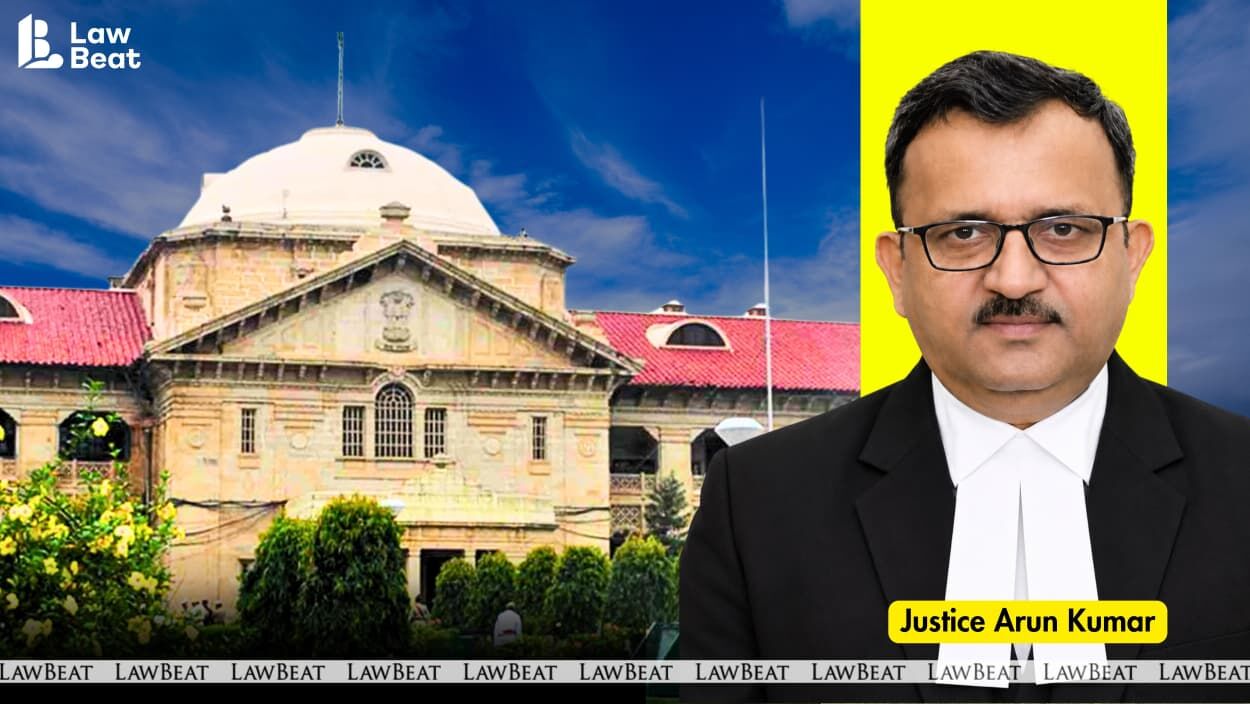
Allahabad High Court: Tribal Status Conversion Proof Needed for Land Deals
Summary
- The Allahabad High Court upheld orders voiding land purchases by Nanhki alias Naimunnisha, who claimed Bhuiyan Scheduled Tribe status.
- The court ruled that religious conversion does not automatically terminate Scheduled Tribe status, but requires proof of continued tribal identity and community connection.
- Naimunnisha failed to provide sufficient evidence of maintaining Bhuiyan customs, community participation, or recognition, despite her claim of birth into the tribe.
- The court considered cumulative circumstances like her new name, marriage, children, and family register entries, rather than any single factor, in determining the absence of continued tribal life.
- ST certificates and registered sale deeds are not conclusive and cannot override statutory prohibitions like Section 157-B of the UPZA&LR Act.
Court Upholds Voided Land Sales
The court emphasized that while religious conversion does not automatically extinguish a person's Scheduled Tribe status, the individual bears the burden of actively demonstrating continued tribal identity and strong community ties.
The Allahabad High Court recently affirmed a series of orders that had nullified several land transactions involving a woman who asserted her status as a member of a Scheduled Tribe. The court's decision, delivered by a bench led by Justice Arun Kumar, dismissed three connected writ petitions filed by Nanhki alias Naimunnisha. These petitions challenged rulings issued by the Deputy Collector of Duddhi, Sonbhadra, on January 22, 2026, which had declared her land purchases void and mandated that the disputed properties be managed according to legal provisions, potentially reverting to the State.
Nanhki alias Naimunnisha had acquired agricultural land in Sonbhadra through registered sale deeds, maintaining that both she and the sellers belonged to a Scheduled Tribe. She presented an ST certificate issued by the Tehsildar, Duddhi, as proof of her birth into the Bhuiyan Scheduled Tribe. Furthermore, she contended that the caste status of all parties was explicitly stated in the sale deeds and that she had continuously held possession of the properties. This case highlights the complex interplay between religious conversion and the requirement for Allahabad High Court tribal status conversion proof.
The Legal Standard for Tribal Identity
Central to the High Court's judgment was the clarification that a change in religious affiliation does not, by itself, automatically terminate an individual's tribal status. However, the court firmly established that individuals must provide compelling evidence demonstrating their continued retention of tribal identity and an ongoing connection with their community. This principle is particularly relevant when considering the provisions of Sections 157-B, 166, and 167 of the Uttar Pradesh Zamindari Abolition and Land Reforms (UPZA&LR) Act, which govern such land transfers.
The State presented a counter-argument, relying on inquiry reports, identity documents, and family registers. These records indicated that the petitioner, Nanhki alias Naimunnisha, had married Sirajuddin through Islamic rites, subsequently adopted the name Naimunnisha, resided with him for several decades, and raised two children, Ejajuddin and Haseena Bano. The family register explicitly recorded her religion as Muslim. The court underscored that the question of whether a person retains their tribal status despite conversion is fundamentally a matter of fact, necessitating an examination of tribal characteristics, customs, traditions, and sustained community ties, especially concerning the Allahabad High Court Bhuiyan tribe.
Implications for Proving Continued Status
The court's decision was not based on an automatic rule that marriage outside the community or religious conversion leads to the loss of Scheduled Tribe identity. Instead, it considered a “course of circumstances extending over several decades,” including her new name, prolonged association with her husband, the names of her children, and the family register entries. While acknowledging that no single factor was conclusive, the court stressed that these cumulative circumstances could not be disregarded when assessing whether she had maintained her tribal identity. The court emphasized that while religious conversion does not automatically extinguish a person's Scheduled Tribe status, the individual bears the burden of actively demonstrating continued tribal identity and strong community ties.
Crucially, the High Court found that Nanhki alias Naimunnisha had failed to produce satisfactory evidence to establish her continued adherence to Bhuiyan customs and traditions, her participation in the community's social life, or her ongoing recognition by the tribe. The court noted that the available material did not adequately demonstrate such continuity.
Furthermore, the court rejected arguments that an ST certificate, registered sale deeds, or revenue entries could override statutory prohibitions. It clarified that an ST certificate serves as relevant evidence but does not preclude an examination of an individual's continuing tribal status when other information raises questions. Similarly, the registration of a document merely confirms its recording; it does not validate a transaction that is prohibited by a mandatory legal provision, such as Section 157-B of the UPZA&LR Act, thus setting a precedent for proof of tribal identity after conversion.
Practical Implications
This ruling clarifies that religious conversion alone does not automatically extinguish Scheduled Tribe status, but places a significant burden on individuals to actively demonstrate continued tribal identity and community ties. Lawyers advising on land transactions or tribal rights must now focus on gathering comprehensive evidence of ongoing cultural and social connection, beyond mere certificates, to substantiate ST claims post-conversion, particularly under the UPZA&LR Act.
Source
How does this affect you?
Get an AI analysis of this article grounded in your jurisdictions, practice areas, and any policy documents you've uploaded to Wansom.
Finish Reading the Full Story and the Expert Analysis.
Get the latest legal & regulatory intelligence in India
Wansom is AI and can make mistakes.