
Supreme Court India Launches Mobile eSewa Vans
Summary
- The Supreme Court of India launched 26 Mobile eSewa Vans on Friday, September 4, 2026, as the first phase of a 73-van fleet.
- These vans are designed to deliver eCourts services, legal aid, and dispute resolution directly to citizens, aiming to bridge the digital divide and ensure universal access to justice.
- Equipped with high-definition video conferencing and high-speed connectivity, the vans enable remote court proceedings and virtual hearings from remote locations.
- The initiative, an extension of the eCourts Project, seeks to reduce travel time and costs for rural citizens and strengthen public trust in the judiciary.
- Chief Justice of India Surya Kant led the flag-off ceremony, which involved collaboration between the eCommittee, NALSA, and the Department of Justice.
Flag-Off Ceremony Marks Digital Leap
This broader push towards digital inclusion in the Indian judiciary is poised to impact how legal aid is delivered and how lawyers interact with the court system, especially in underserved regions, ultimately enhancing overall access to justice India.
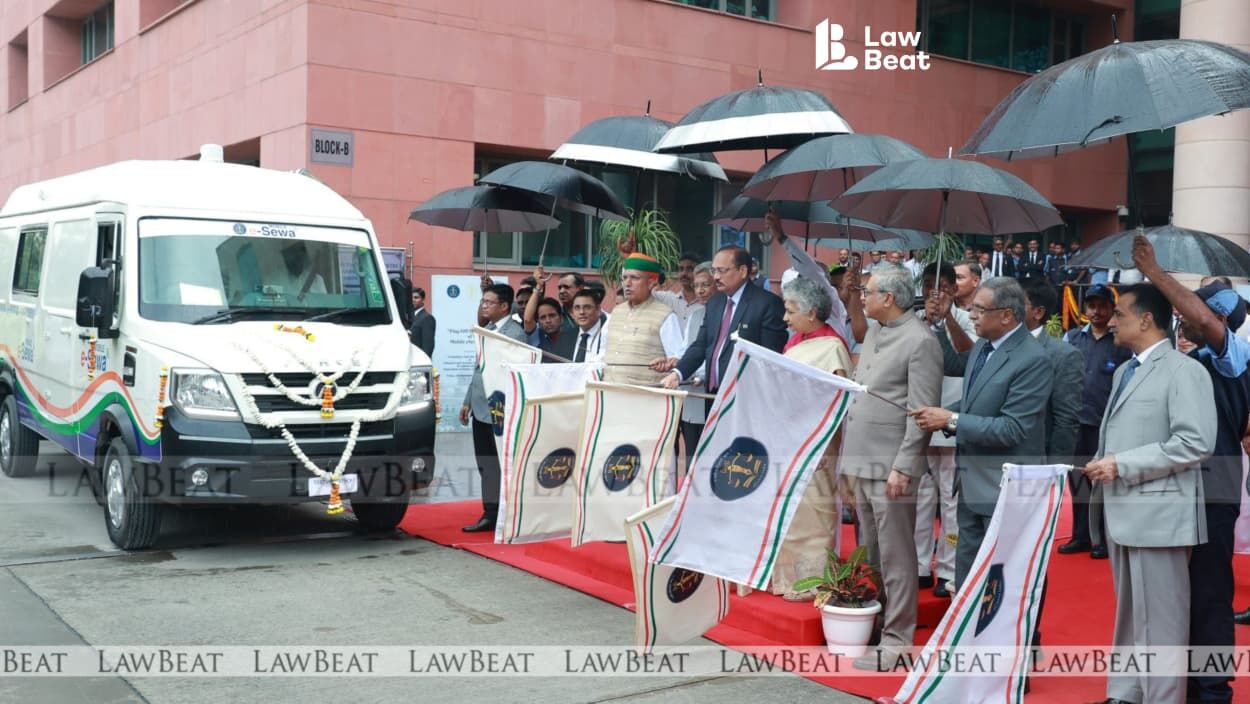
On Friday, September 4, 2026, a significant "Flag-Off Ceremony" took place at the Supreme Court of India's AB Lobby within the Administrative Buildings Complex in New Delhi, signaling a major advancement in the nation's digital justice delivery. This event marked the official launch of the Supreme Court India Mobile eSewa Vans, an initiative designed to extend eCourts services and legal aid directly to citizens. The ceremony was a collaborative effort, jointly organized by the eCommittee of the Supreme Court of India and the National Legal Services Authority (NALSA), in partnership with the Department of Justice, Government of India.
The Chief Justice of India, Surya Kant, who also serves as the Patron-in-Chief of the eCommittee, led the flag-off. He was joined by several distinguished figures, including Supreme Court Judges Justice Vikram Nath (Chairman of the eCommittee), Justice BV Nagarathna, Justice Pamidighantam Sri Narasimha, and Justice Arun Palli. The event also saw the presence of Shri Arjun Ram Meghwal, Minister of State (Independent Charge) for the Ministry of Law and Justice, Government of India, and R. Venkataramani, the Attorney General of India. Further dignitaries included Justice Anjani Kumar Mishra, Vice Chairman of the eCommittee, along with other Supreme Court judges, eCommittee members, and representatives from various judicial and governmental bodies, including Shri Bharat Parashar, Secretary General of the Supreme Court, Shri Niraj Verma, Secretary (Justice), and Shri Manan Kumar Mishra, Chairman of the Bar Council of India.
Mobile Units Bridge Digital Divide
The core mission of the Supreme Court India Mobile eSewa Vans is to bridge the digital divide, ensuring universal access to justice by delivering eCourts services, legal aid, and dispute resolution directly to the populace. Before the official flag-off, Chief Justice Surya Kant personally inspected the comprehensive technological features and infrastructure integrated into these specialized vehicles. During this inspection, he witnessed a live demonstration of the van's capabilities, connecting directly from one of the Mobile eSewa Vans to both a High Court and a District Court.
This live interaction effectively validated the efficacy of the onboard digital systems, confirming the vans' readiness to facilitate seamless remote court proceedings, virtual hearings, and various citizen-centric judicial engagements directly from the field. Each van is equipped with high-definition video conferencing capabilities and high-speed multi-network connectivity, making it a self-contained unit capable of extending judicial reach far beyond traditional court infrastructure.
Strategic Deployment for Universal Access
At the ceremony, twenty-six Supreme Court India Mobile eSewa Vans were launched, representing the initial tranche of a much larger fleet. A total of seventy-three such Mobile eSewa Vans are slated for progressive deployment across designated High Court and District Court jurisdictions throughout the country. This strategic rollout aims to carry the reach of India digital justice delivery beyond the confines of physical courtroom walls, specifically targeting villages, tribal regions, and other far-flung areas where geographical access to court complexes remains significantly limited.
This initiative, conceived as a vital extension of the broader eCourts Project India, is expected to yield substantial benefits for rural citizens. By bringing essential services directly to their communities, the Mobile eSewa Vans are projected to dramatically reduce both the travel time and procedural costs typically associated with accessing justice. This direct engagement is anticipated to strengthen public trust in the judiciary and foster greater digital inclusion within the justice delivery system across India.
Transforming India's Judicial Landscape
The introduction of the Supreme Court India Mobile eSewa Vans marks a pivotal step in advancing India's digital judiciary, aligning with the overarching goals of the eCourts Project India to modernize and democratize legal services. This initiative not only enhances the infrastructure for remote court proceedings India but also significantly bolsters the provision of NALSA Mobile eSewa, ensuring that legal assistance is accessible even in the most remote locations. The ability to conduct virtual hearings and citizen-centric judicial engagements from these mobile units will fundamentally alter how justice is delivered, making it more responsive and inclusive.
For legal professionals, this development signals a transformative shift. Lawyers should anticipate increased accessibility to eCourt services and virtual hearings, particularly for clients residing in remote areas, which could streamline case management and reduce the necessity for extensive travel for certain proceedings. This broader push towards digital inclusion in the Indian judiciary is poised to impact how legal aid is delivered and how lawyers interact with the court system, especially in underserved regions, ultimately enhancing overall access to justice India.
Practical Implications
Lawyers should anticipate increased accessibility to eCourt services and virtual hearings, particularly for clients in remote areas, potentially streamlining case management and reducing travel for certain proceedings. This initiative signifies a broader push towards digital inclusion in the Indian judiciary, which may impact how legal aid is delivered and how lawyers interact with the court system in underserved regions.
Source
How does this affect you?
Get an AI analysis of this article grounded in your jurisdictions, practice areas, and any policy documents you've uploaded to Wansom.
Finish Reading the Full Story and the Expert Analysis.
Wansom is AI and can make mistakes.