
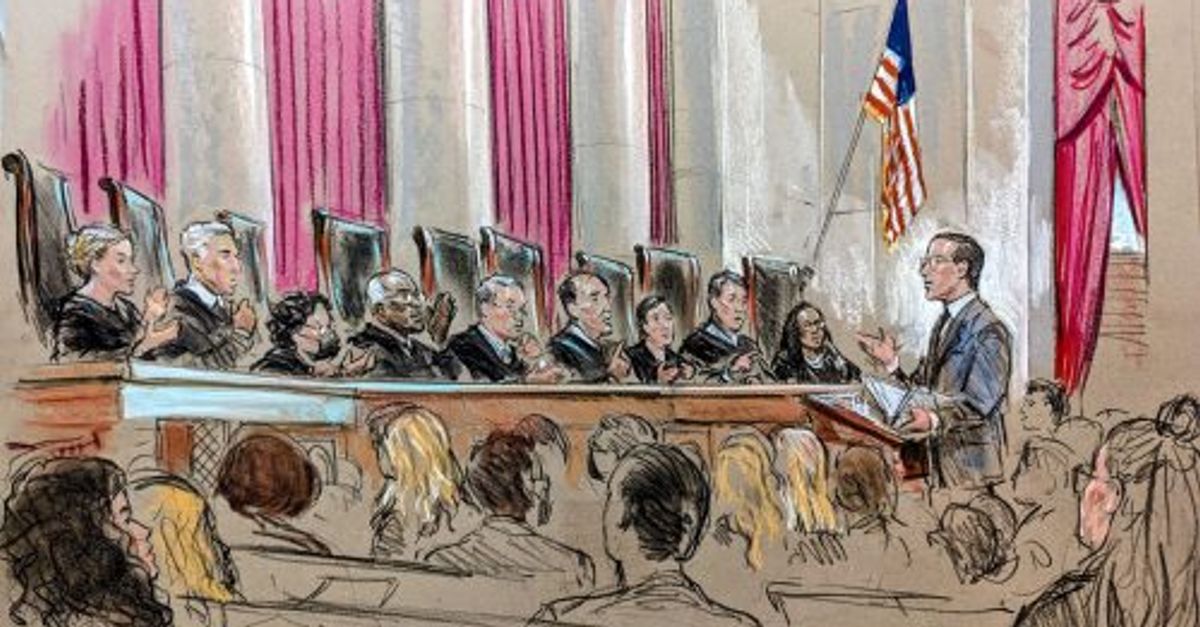
US Supreme Court: Ideological Voting Patterns Show Key Centrist Justices
Summary
- An analysis of US Supreme Court ideological voting patterns examined all merits decisions since Justice Ketanji Brown Jackson joined the court four years ago.
- Chief Justice John Roberts, Justice Amy Coney Barrett, Justice Brett Kavanaugh, and Justice Neil Gorsuch were found to vote close to a 50/50 conservative/liberal outcome split.
- Justices Samuel Alito and Clarence Thomas were positioned considerably farther to the left, while Justices Sonia Sotomayor, Elena Kagan, and Justice Jackson were considerably farther to the right.
- When the analysis is restricted to closely divided cases, almost every justice appears more ideological, indicating a shift from the overall docket.
Examining the Supreme Court's Ideological Landscape
This focused analysis of closely divided cases tends to amplify the ideological appearance of nearly every justice, suggesting a more polarized court in its most impactful decisions.
An extensive review of all merits decisions rendered since Justice Ketanji Brown Jackson's appointment four years ago sought to delineate the ideological leanings of the Supreme Court's members. This comprehensive study aimed to identify which justices exhibited the most pronounced ideological tendencies across the full spectrum of cases. The analysis revealed a judicial body characterized by distinct ideological extremes, yet it also highlighted the presence of several justices who consistently positioned themselves closer to the court's center. This initial assessment provides a foundational understanding of the court's composition when considering all types of rulings, from unanimous agreements to highly contested disputes, offering a baseline for understanding the court's overall ideological balance.
A Spectrum of Judicial Approaches
The study quantified the proximity of several justices to a balanced 50/50 split between conservative and liberal outcomes. Chief Justice John Roberts, for instance, demonstrated a voting record that was merely 3.4% away from an equal distribution of conservative and liberal decisions, indicating a position very near the ideological midpoint. Justice Amy Coney Barrett exhibited an even closer alignment to the center, diverging by only 2.5%. Justice Brett Kavanaugh's voting patterns placed him 5.1% from the midpoint, while Justice Neil Gorsuch was found to be 6.2% from the center. In stark contrast, Justices Samuel Alito and Clarence Thomas were identified as considerably farther to the left of this ideological midpoint, suggesting a consistent pattern in their judicial philosophy. Conversely, Justices Sonia Sotomayor, Elena Kagan, and Justice Jackson were positioned considerably farther to the right. These figures, derived from the entirety of the court's merits docket, offer a broad overview of each justice's general ideological orientation before considering the nuances of highly contested cases.
The Defining Role of Close Decisions
While the preceding figures encompass all rulings, public perception of the US Supreme Court is frequently shaped by its most contentious and closely divided cases. A 5-4 decision, for example, often carries profound implications, potentially redefining the scope of fundamental constitutional rights for millions. Similarly, a 6-3 ruling can generate significant media attention, frequently leading to headlines that underscore the court's perceived conservative supermajority and its potential impact on national policy. Consequently, an examination focused exclusively on these narrowly decided cases serves as a crucial test: does the ideological structure observed across the entire merits docket remain consistent, or does it undergo substantial alteration when the analysis is confined to the court's most contested judgments? The findings indicate an affirmative answer, though with an important caveat. This focused analysis of closely divided cases tends to amplify the ideological appearance of nearly every justice, suggesting a more polarized court in its most impactful decisions. Much of this observed shift, however, is attributed to...
Source
How does this affect you?
Get an AI analysis of this article grounded in your jurisdictions, practice areas, and any policy documents you've uploaded to Wansom.
Finish Reading the Full Story and the Expert Analysis.
Wansom is AI and can make mistakes.