
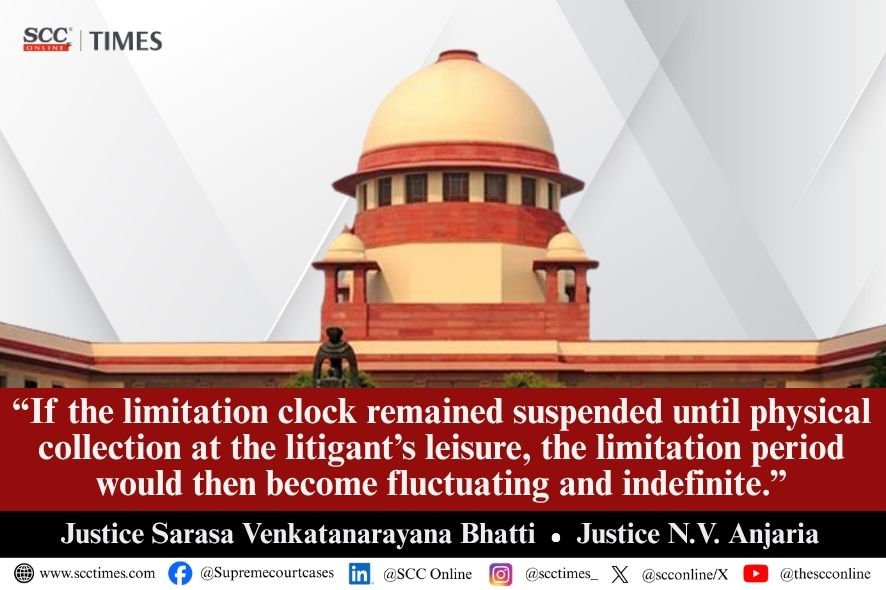
Supreme Court: IBC Appeal Limitation Starts From NCLAT Pronouncement
Summary
- The Supreme Court has clarified the limitation period for appeals under the Insolvency and Bankruptcy Code.
- The statutory time for an IBC appeal now runs from the date of the NCLAT's pronouncement of its order.
- The period does not commence from the date a certified copy of the NCLAT order is collected.
- The Court examined the statutory time-limit, exclusion of time for obtaining copies, and effects of application delays.
- This ruling requires immediate action from appellants following an NCLAT decision to avoid missing deadlines.
Supreme Court Clarifies IBC Appeal Limitation Period
This ruling definitively states that the time for appeal NCLAT pronouncement is the trigger, rather than the date on which a certified copy of the NCLAT order is eventually collected by the appellant.
The Supreme Court has issued a definitive ruling on the commencement of the limitation period for filing appeals under the Insolvency and Bankruptcy Code (IBC). This significant pronouncement establishes that the statutory time for an Insolvency and Bankruptcy Code appeal begins from the date the National Company Law Appellate Tribunal (NCLAT) delivers its order. This clarification resolves ambiguity surrounding a critical procedural aspect for parties involved in corporate insolvency resolution.
The apex court's examination specifically addressed the statutory time-limit for appeals, a fundamental component of legal certainty. It meticulously considered the practice of excluding time spent in the process of obtaining a certified copy of an order. Furthermore, the Court delved into the ramifications of any delay on the part of an appellant in applying for such a certified copy, ensuring a comprehensive review of the factors influencing appeal timelines.
This ruling definitively states that the time for appeal NCLAT pronouncement is the trigger, rather than the date on which a certified copy of the NCLAT order is eventually collected by the appellant. This distinction is crucial for understanding the precise window available for challenging NCLAT decisions in higher forums, thereby impacting the strategic considerations for all stakeholders.
Legal Framework and Procedural Nuances
The Insolvency and Bankruptcy Code (IBC) provides a structured framework for insolvency resolution, with the NCLAT serving as a key appellate body for decisions made by the National Company Law Tribunal (NCLT). Appeals from NCLAT orders are typically governed by Section 62 IBC limitation period, which stipulates a specific timeframe within which such challenges must be filed before the Supreme Court. The recent Supreme Court ruling IBC provides essential clarity on how this period is to be calculated.
Historically, legal practice often allowed for the exclusion of the time required to obtain a certified copy of a judgment or order when calculating limitation periods for appeals. This provision aimed to ensure that parties were not prejudiced by administrative delays in receiving the official documentation necessary to formulate their appeal. The Supreme Court's recent decision, however, refines the application of this principle specifically for IBC appeals, emphasizing the importance of the pronouncement date.
By focusing on the NCLAT pronouncement, the Court underscores a principle of judicial efficiency and finality. The examination included how delays in applying for the certified copy of the NCLAT order could impact the overall appeal timeline, reinforcing the need for diligence from parties seeking to appeal. This judicial scrutiny ensures that the statutory time-limit for appeals is interpreted consistently with the objectives of the IBC.
Implications for Appeal Strategy and Compliance
The Supreme Court's ruling has profound implications for legal practitioners, compliance officers, and all entities engaged in proceedings under the Insolvency and Bankruptcy Code. With the time for appeal NCLAT pronouncement now unequivocally established as the starting point for the limitation period, the previous reliance on the date of certified copy collection is no longer viable for IBC appeals. This necessitates an immediate shift in how appeal deadlines are monitored and managed.
Parties intending to challenge an NCLAT decision must now act with heightened urgency following the delivery of the order. The ruling effectively mandates that the preparation for an appeal, including the application for a certified copy NCLAT order, must commence without delay from the moment the NCLAT's decision is pronounced. Failure to do so risks missing the statutory window for appeal, irrespective of when the certified copy is eventually obtained.
This judicial clarification on IBC appeal limitation Supreme Court NCLAT pronouncement provides certainty but also places a greater burden on appellants to be proactive. It fundamentally alters appeal strategy, requiring legal teams to be prepared to initiate the appeal process promptly upon the NCLAT's decision, ensuring that all procedural requirements are met within the strict statutory time-limit.
Practical Implications
Lawyers and compliance officers handling IBC matters must note that the statutory limitation period for filing appeals now definitively runs from the date of the NCLAT's pronouncement, not the collection of the certified copy. This necessitates immediate action upon pronouncement to avoid missing appeal deadlines, fundamentally altering appeal strategy and deadline management.
Source
Source: Original reporting via SCC Times
How does this affect you?
Get an AI analysis of this article grounded in your jurisdictions, practice areas, and any policy documents you've uploaded to Wansom.
Finish Reading the Full Story and the Expert Analysis.
Get the latest legal & regulatory intelligence in India
Wansom is AI and can make mistakes.