
India Supreme Court: Impleading State Essential for Public Exchequer Relief
Summary
- The Supreme Court of India ruled that the State must be formally impleaded as a party when relief is sought against it, particularly involving the public exchequer.
- A writ petition is fundamentally defective if the State is not formally joined, and representation by officers does not rectify this procedural flaw.
- The Court rejected a lecturer's claim for absorption, clarifying that Article 14 does not support "negative equality" where an illegal benefit is demanded based on another's similar receipt.
- The case involved a Maharashtra lecturer whose termination was quashed by the High Court, which also directed his absorption and Rs 10 lakh compensation.
- Despite rejecting the absorption claim, the Supreme Court awarded the lecturer Rs 10 lakh in compensation using its powers under Article 142.
Case Background and High Court's Intervention
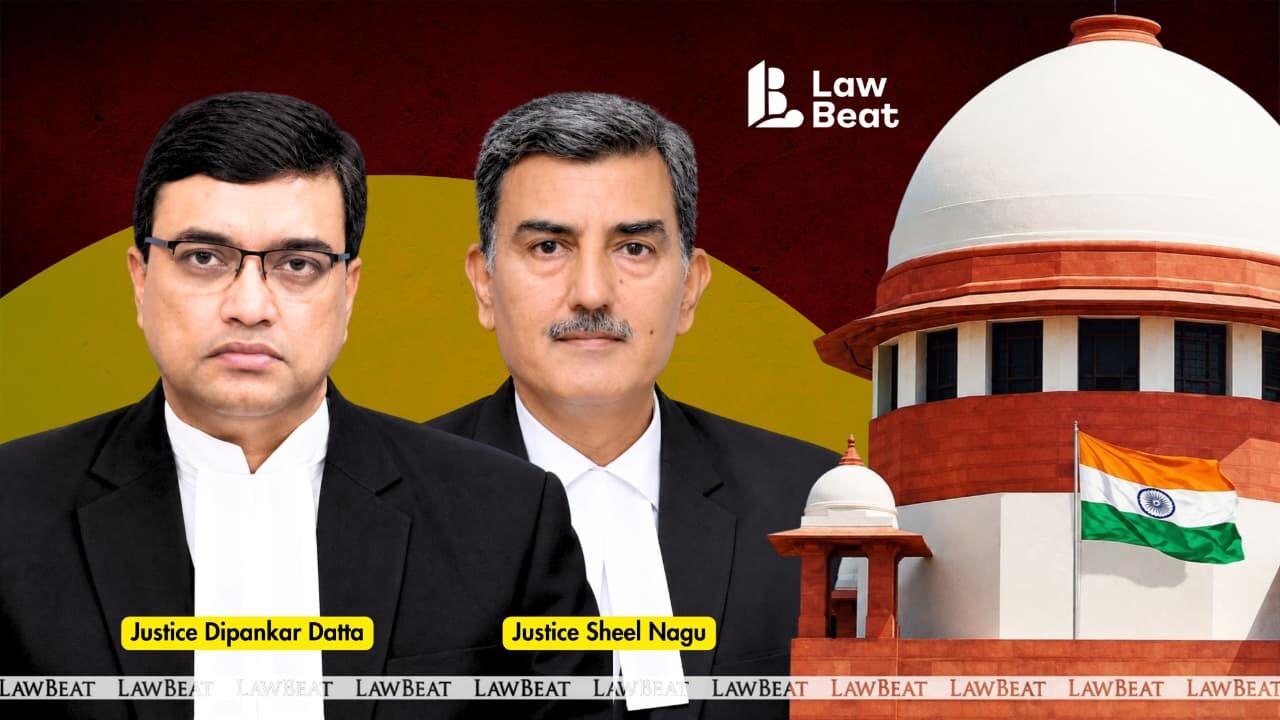
A central issue identified by the Supreme Court, comprising Justices Dipankar Datta and Sheel Nagu, was a fundamental procedural defect in Sudhir's case.
The Supreme Court of India recently addressed an appeal stemming from a long-standing employment dispute involving Sudhir, a retired lecturer from Maharashtra. Sudhir was appointed to the Commerce Faculty of a college during the 1990-91 academic session, an institution operating strictly on a "no grant-in-aid basis." His service was terminated on August 17, 1999, around the same time the University authorized the college management to close the Commerce Faculty due to insufficient student enrollment for the 1999-2000 academic year.
Following his termination, Sudhir challenged the decision before the University and College Tribunal in Nagpur, which dismissed his appeal on April 24, 2000. Subsequently, he approached the Bombay High Court. The High Court intervened, setting aside the tribunal's order and quashing Sudhir’s termination. It further directed the Joint Director to include his name in the list of surplus lecturers/teachers and facilitate his absorption into another college. Additionally, the High Court mandated the Management to pay Sudhir Rs 10 lakh as compensation, intended to cover arrears. These judgments, dated October 7, 2015, and January 12, 2016, were then challenged by the State of Maharashtra before the Supreme Court.
The Critical Procedural Flaw
A central issue identified by the Supreme Court, comprising Justices Dipankar Datta and Sheel Nagu, was a fundamental procedural defect in Sudhir's case. The Court emphasized that the State of Maharashtra had never been formally impleaded as a party in the writ proceedings. The bench unequivocally stated that any writ petition or suit seeking substantive relief against the State, particularly when it involves the public exchequer or a declaration of rights concerning State property, is fundamentally defective and not maintainable if the State is not formally joined as a necessary party.
Sudhir had attempted to rectify this omission in March 2015, nearly 15 years after the initial writ petition was filed, by seeking to implead only the "Joint Director" as the sixth respondent. However, the Supreme Court clarified that merely representing the State through its officers, even if an Assistant Government Pleader contested the matter on its merits, does not cure this critical defect. The Court firmly rejected Sudhir's argument that the petition was maintainable despite the absence of the State as a formal party, underscoring the imperative for the State to be properly impleaded for relief against the public exchequer in India.
Substantive Claims and Legal Principles
Beyond the procedural infirmity, the Supreme Court also addressed the substantive claims regarding Sudhir's absorption. The State of Maharashtra had argued that its policy for absorbing surplus lecturers/teachers was exclusively applicable to grant-in-aid colleges, contending that the High Court had exceeded its jurisdiction by directing Sudhir’s absorption contrary to this established policy. Sudhir, conversely, relied on Section 79(4) of the Maharashtra Universities Act, 1994 (since repealed and replaced by the Maharashtra Public Universities Act, 2016), asserting that this provision mandated the absorption of surplus lecturers/teachers from all affiliated colleges, without differentiation between aided and unaided institutions.
Furthermore, Sudhir sought parity by referencing the absorption of another lecturer, Bhaurao s/o Pundlikrao Kadav. However, the Supreme Court rejected this claim for absorption, clarifying a crucial aspect of Article 14 of the Constitution of India. The Court reiterated that Article 14, which guarantees equality before the law, does not endorse "negative equality." This principle means that an individual cannot demand an illegal or irregular benefit simply because it was erroneously or improperly granted to someone else. Therefore, Sudhir's reliance on another lecturer's absorption did not establish a valid claim for his own.
Supreme Court's Final Disposition
Despite identifying the defective writ petition and rejecting Sudhir's claim for absorption based on both procedural and substantive grounds, the Supreme Court exercised its extraordinary powers. Acknowledging the protracted nature of the litigation and the circumstances of the case, the bench, utilizing its power under Article 142 of the Constitution, awarded Sudhir a compensation of Rs 10 lakh. This compensation was granted notwithstanding the rejection of his primary claim for absorption into another college.
This ruling by the India Supreme Court serves as a significant reminder for litigants and legal practitioners regarding the indispensable requirement to formally implead the State as a necessary party when seeking any relief that impacts the public exchequer or State property. Failure to do so renders such proceedings fundamentally flawed and not maintainable, irrespective of the merits of the substantive claim.
Practical Implications
Lawyers must ensure the State is formally impleaded as a necessary party in any writ petition or suit seeking substantive relief against the public exchequer or State property, as failure to do so renders the petition fundamentally defective. Additionally, practitioners should be aware that claims based on 'negative equality' (demanding an illegal benefit because it was granted to another) are not maintainable under Article 14.
Source
Source: Original reporting via Live Law
How does this affect you?
Get an AI analysis of this article grounded in your jurisdictions, practice areas, and any policy documents you've uploaded to Wansom.
Finish Reading the Full Story and the Expert Analysis.
Get the latest legal & regulatory intelligence in India
Wansom is AI and can make mistakes.