
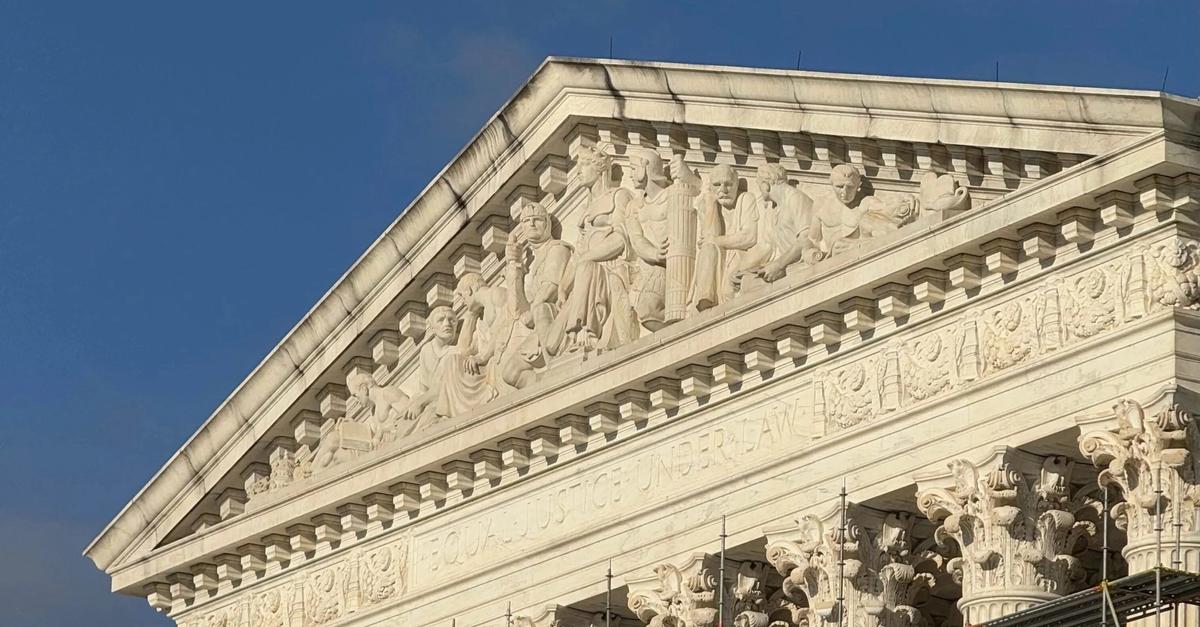
Supreme Court Hears Oral Arguments, Considers Hundreds of Review Petitions
The Supreme Court of the United States, through Chief Justice John Roberts, issued an administrative stay on Thursday, October 10, 2024, temporarily blocking a Fourth Circuit ruling that would have allowed only federal candidates to access more favorable political advertising rates, while the Court considers the matter further.
This development is significant for political campaigns, parties, and potentially joint fundraising committees, as it maintains the status quo regarding broadcasting rates for political advertisements. The dispute centers on whether these preferential rates, typically available to candidates for federal office, should also extend to political parties and joint fundraising committees. The Trump administration, along with the National Republican Senatorial Committee and National Republican Congressional Committee, sought the stay, arguing that the Fourth Circuit's order, which compelled the Federal Communications Commission to act on a challenge to its notice extending these rates, was improperly issued or timed. The Supreme Court's intervention, even if temporary, highlights the contentious nature of campaign finance regulations and the FCC's role in setting such rates.
The legal context involves the Communications Act of 1934, specifically provisions related to political broadcasting, and the Federal Communications Commission's regulations and interpretations thereof. The Fourth Circuit's ruling, now on hold, would have mandated the FCC to address a challenge to its notice extending candidate rates. The Supreme Court's decision to grant an administrative stay indicates a willingness to examine the FCC's actions and the scope of its authority in this area, particularly concerning the definition of 'candidate' and the application of favorable rates. The case also touches upon the administrative procedures and the court's role in overseeing regulatory actions.
The key parties involved are the U.S. Supreme Court, Chief Justice John Roberts, the U.S. Court of Appeals for the Fourth Circuit, the Federal Communications Commission, the Trump administration, the National Republican Senatorial Committee, and the National Republican Congressional Committee. The excerpt also mentions a separate, still-pending application concerning transgender inmates' healthcare, indicating the Court's broader engagement with significant legal issues during its October term.
Practitioners should monitor the Supreme Court's upcoming decisions on this broadcasting rate dispute, as the outcome could significantly impact the financial strategies of political campaigns and parties. The Court's eventual ruling will clarify the FCC's authority and the eligibility criteria for preferential advertising rates, potentially requiring adjustments to campaign budgeting and media buying. Furthermore, the ongoing consideration of the transgender inmates' healthcare policy suggests that attorneys involved in civil rights and prison litigation should also pay close attention to the Court's docket.
How does this affect you?
Get an AI analysis of this article grounded in your jurisdictions, practice areas, and any policy documents you've uploaded to Wansom.
Finish Reading the Full Story and the Expert Analysis.
Get the latest legal & regulatory intelligence in United States
Wansom is AI and can make mistakes.