
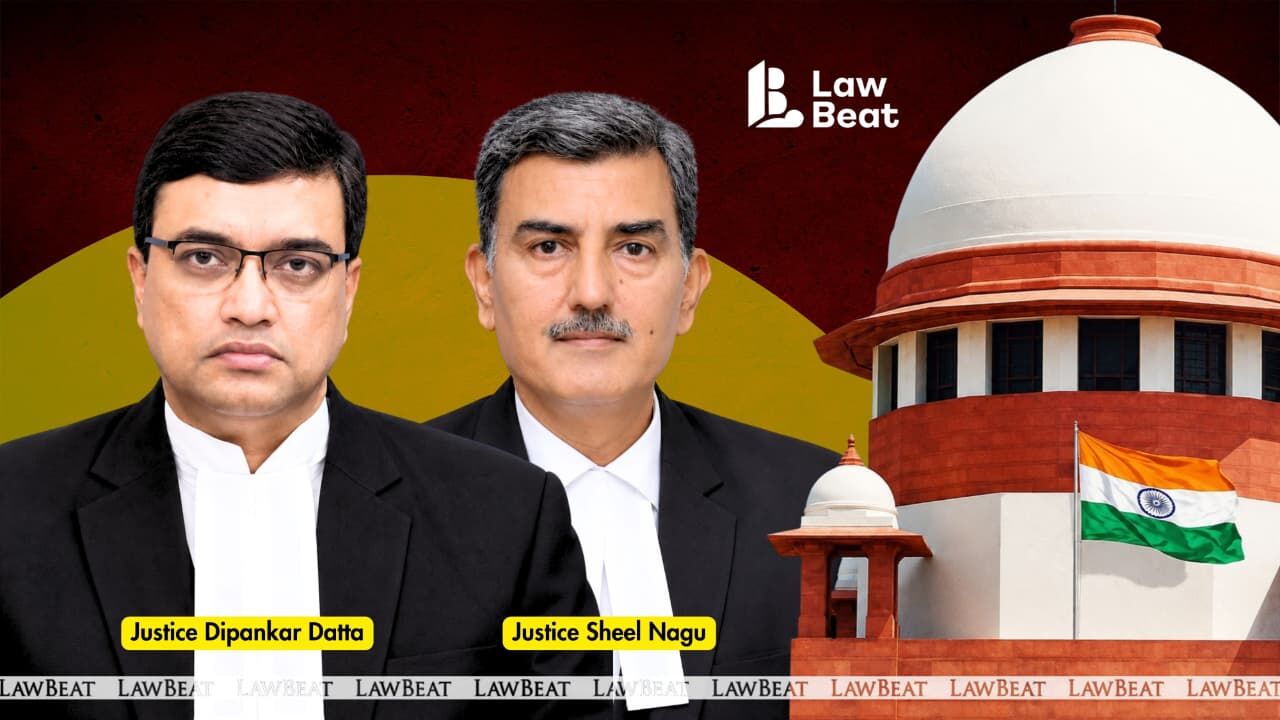
Supreme Court Grants Bail to Former Rajasthan Minister in PHED Scam
In a significant ruling, the Supreme Court of India recently granted bail to former Rajasthan minister Mahesh Chandra Joshi and co-accused Mukesh Pathak in the Public Health Engineering Department (PHED) scam case, emphasizing that prolonged pre-trial detention cannot be allowed to degenerate into punishment without trial. The case involves alleged irregularities in tenders floated by the PHED under the “Jal Jeevan Mission.” A Bench of Justices Dipankar Datta and Sheel Nagu made this observation, highlighting that the gravity of allegations of large-scale financial impropriety and institutional collusion cannot, by itself, justify indefinite pre-trial detention, especially when the investigation is complete, evidence seized, and the trial is unlikely to conclude in the near future.
This judgment carries substantial legal significance for practitioners, reinforcing the fundamental right to personal liberty and a speedy trial enshrined in Article 21 of the Indian Constitution. It provides a crucial precedent for bail jurisprudence, particularly in complex cases involving economic offences where investigations are often protracted and voluminous. Attorneys should note the court's clear directive to balance the severity of the offence with the rights of the undertrial, offering a strong basis for arguing bail applications where pre-trial detention has been extensive and the trial process is expected to be lengthy. This ruling underscores the judiciary's role in preventing pre-trial incarceration from becoming a de facto punishment.
The legal context for this decision is rooted in India's constitutional framework, specifically Article 21, which guarantees the right to life and personal liberty, implicitly including the right to a speedy trial. The ruling aligns with established principles of bail jurisprudence, which generally favour 'bail not jail' unless specific conditions warrant continued detention. Key parties involved include the Supreme Court of India, the former Rajasthan minister Mahesh Chandra Joshi, co-accused Mukesh Pathak, and the Public Health Engineering Department (PHED) of Rajasthan, which is at the centre of the alleged scam related to the “Jal Jeevan Mission.” The investigating agency, though not explicitly named, is also a key party, having filed charge sheets in the matter.
For attorneys and businesses, the key takeaway is to meticulously document and present arguments regarding the completion of investigation, the seizure of all relevant evidence, and the projected duration of the trial when seeking bail for clients facing prolonged pre-trial detention. This judgment provides a robust legal tool to challenge indefinite incarceration, even in cases involving serious allegations of financial impropriety. It signals that while the nature of the offence is a factor, it does not override the constitutional mandate for a speedy trial and the protection of individual liberty, particularly when the procedural aspects of investigation are largely concluded.
How does this affect you?
Get an AI analysis of this article grounded in your jurisdictions, practice areas, and any policy documents you've uploaded to Wansom.
Finish Reading the Full Story and the Expert Analysis.
Wansom is AI and can make mistakes.