
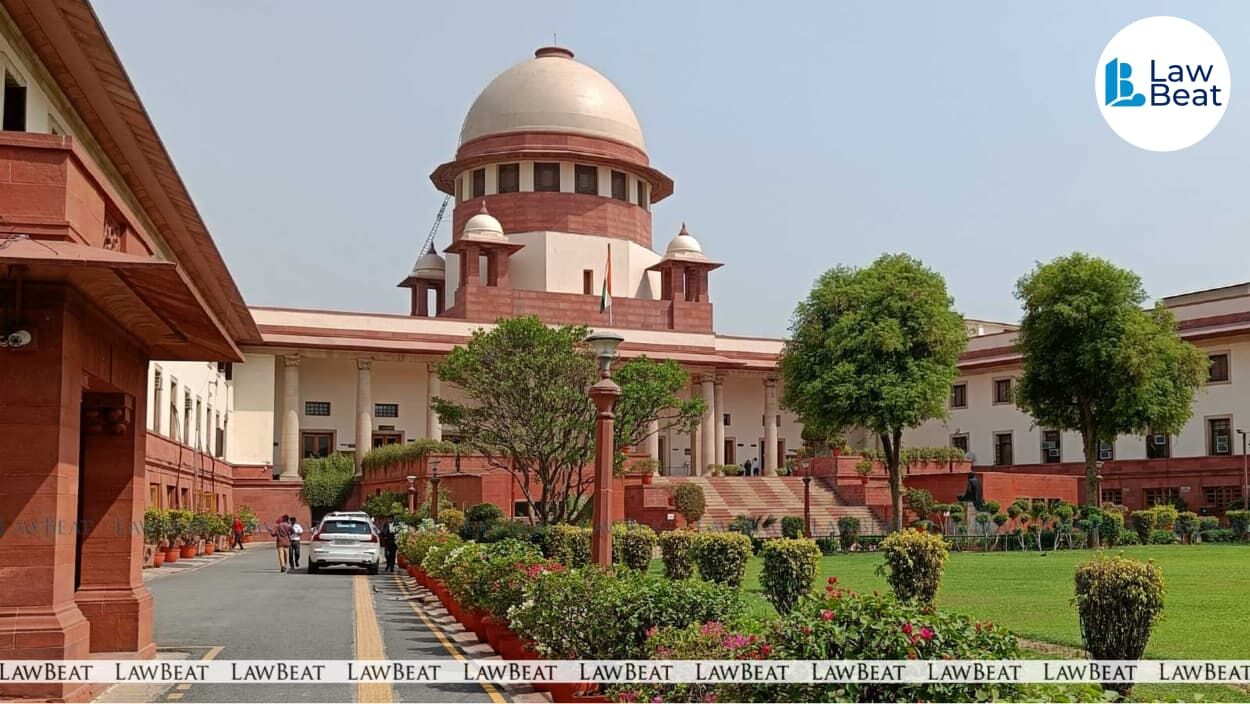
Supreme Court: Fortis Forensic Probe Refusal Rejected, Audit Stands
Summary
- The Supreme Court refused to block a Delhi High Court order for a forensic audit into Fortis Healthcare's share transactions.
- This audit is part of enforcement proceedings for a ₹5,300 crore arbitral award owed by former promoters Malvinder and Shivinder Singh to Daiichi Sankyo.
- Fortis Healthcare argued it was not a judgment debtor and should not be treated as an alter ego for the former promoters' liabilities.
- The Delhi High Court's order mandates an investigation into Fortis shares from May 2016, scrutinizing pledges, sales, and inter-company loans for asset dissipation.
- The ruling emphasizes the judiciary's readiness to order deep forensic probes into public companies to ensure arbitral award enforcement.
Supreme Court Upholds Forensic Probe
This decision underscores the judiciary's willingness to mandate extensive forensic investigations into publicly listed companies to enforce arbitral awards, particularly when allegations of asset dissipation by erstwhile promoters arise.
The Supreme Court of India has declined to intervene with a Delhi High Court directive mandating a comprehensive forensic audit into Fortis Healthcare Limited's share movements and associated transactions. This decision, handed down by a bench led by CJI Surya Kant, upholds the High Court's August 31 order, which forms a critical part of the ongoing enforcement proceedings related to a significant arbitral award owed to Daiichi Sankyo. Fortis Healthcare had sought to challenge the audit, arguing that as a publicly listed entity, it should not be treated as an alter ego for the recovery of the substantial sum.
During the Supreme Court proceedings, Senior Advocate AM Singhvi, representing Fortis, contended that the company was neither a party to the original arbitration nor a judgment debtor. He highlighted that the Singh brothers, the former promoters, had exited the company in 2018, and a Malaysian entity, IHH, had subsequently invested ₹4,000 crore. However, Senior Advocate Mukul Rohatgi, appearing for Daiichi Sankyo, presented counter-arguments.
The Supreme Court ultimately concluded that an independent audit was essential. This ruling effectively rejects Fortis's plea that an "open-ended forensic inquiry" was unwarranted, especially given its status as a public company and the alleged lack of a legal basis for "corporate veil lifting" to link it directly to the former promoters' liabilities. The outstanding amount in question, arising from the Daiichi Sankyo Fortis arbitral award, has now escalated to approximately ₹5,300 crore.
Background to the Dispute
The genesis of this complex legal battle lies in an arbitral award issued in Singapore on April 29, 2016. This award directed Malvinder Mohan Singh and Shivinder Mohan Singh, along with other judgment debtors, to pay Daiichi Sankyo approximately ₹2,562 crore, inclusive of pre-award and post-award interest. The validity of this award was subsequently affirmed through Indian legal proceedings, paving the way for its enforcement.
Enforcement efforts gained a new dimension when concerns emerged regarding the alleged dissipation of assets, specifically the diminution of the Singh brothers' shareholding in Fortis. At the time the arbitral award was first rendered, entities under the control of the Singh brothers held a significant stake in Fortis through Fortis Healthcare Holdings Pvt Ltd (FHHPL). To safeguard potential recovery, the Delhi High Court had, between 2016 and 2017, recorded assurances that the value of certain unencumbered Fortis shares would be preserved for the satisfaction of the award.
Further reinforcing these protective measures, the India Supreme Court later issued a directive mandating the maintenance of status quo concerning FHHPL’s shareholding in Fortis. This historical context underscores the judiciary's long-standing engagement with the issue of asset preservation in this particular case, setting the stage for the current forensic probe.
Scope of the Forensic Audit
The Delhi High Court's August 31 order, issued by Justice Subramonium Prasad, specifically allowed three applications that sought an investigation into the alleged dissipation of assets. To conduct this detailed examination, the court appointed S Ramanand Aiyar & Co., a firm of Chartered Accountants, as the forensic auditor. The mandate for this audit is extensive, requiring the reconstruction of the complete chain of transactions involving Fortis shares.
The audit's scope commences from May 24, 2016, a pivotal date marking the first assurance given regarding the preservation of assets. Key areas of scrutiny include the evolution of FHHPL’s shareholding, encompassing the creation and invocation of pledges, subsequent top-ups, the release of securities, and the sale of any pledged shares. Furthermore, the auditor is tasked with examining all other transactions that have impacted the shareholding structure.
A crucial aspect of the investigation involves scrutinizing transactions with various banks and financial institutions. The auditor will determine whether loans obtained by downstream entities were legitimate business transactions or if they served as a mechanism to dissipate assets that could otherwise have been available for the execution of the arbitral award. This deep dive aims to uncover any potential financial maneuvers designed to circumvent the enforcement of the Daiichi Sankyo Fortis arbitral award.
Legal and Practical Implications
Fortis Healthcare's primary contention before the Supreme Court was that it should not be subjected to such an intrusive inquiry, especially since it was neither a party to the original arbitration nor a judgment debtor. The company argued that the Delhi High Court had effectively treated it as an "alter ego" of the Singh brothers without establishing a proper legal or factual basis for lifting the corporate veil. This argument was countered by questions from Justice Bagchi, who inquired if Fortis was unaware of the Supreme Court's 2017 status quo order concerning FHHPL’s shareholding.
This decision underscores the judiciary's willingness to mandate extensive forensic investigations into publicly listed companies to enforce arbitral awards, particularly when allegations of asset dissipation by erstwhile promoters arise. The refusal by the Supreme Court to interfere with the Delhi High Court Fortis forensic audit signals a robust stance against attempts to shield assets through complex corporate structures. It highlights the potential for corporate veil lifting even in cases involving public companies, especially when there are concerns about Malvinder Shivinder Singh asset dissipation.
For legal practitioners, this ruling reinforces the need to advise clients on the heightened scrutiny that share transactions and inter-company loans may face during enforcement proceedings. The comprehensive nature of the ordered audit, covering pledges, sales, and the legitimacy of financial transactions, sets a precedent for thorough judicial oversight in cases where judgment debtors are suspected of attempting to evade their liabilities. The India Supreme Court enforcement proceedings demonstrate a clear intent to ensure that arbitral awards are not rendered nugatory by corporate maneuvering.
Practical Implications
This ruling reinforces the judiciary's willingness to order deep forensic audits into public listed companies to enforce arbitral awards, particularly when allegations of asset dissipation by erstwhile promoters arise. Lawyers should advise clients on the potential for corporate veil piercing and intense scrutiny of share transactions and inter-company loans in enforcement proceedings.
Source
How does this affect you?
Get an AI analysis of this article grounded in your jurisdictions, practice areas, and any policy documents you've uploaded to Wansom.
Finish Reading the Full Story and the Expert Analysis.
Get the latest legal & regulatory intelligence in India
Wansom is AI and can make mistakes.