
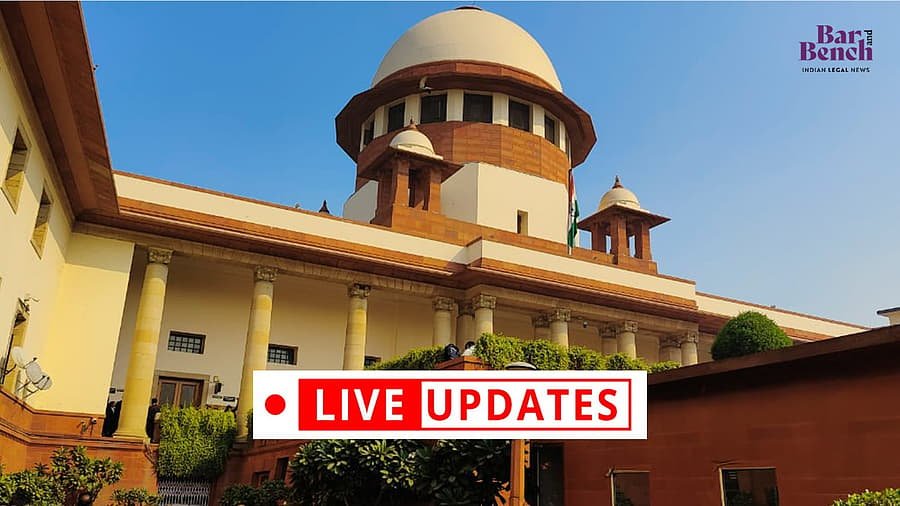
Supreme Court: Electoral Roll Protest Police Action Cases Listed
Summary
- The Supreme Court will hear all Delhi protest cases on Thursday, October 15, 2026, with petitioners instructed to correct filing defects.
- A CJI Surya Kant-led bench may also address connected petitions regarding alleged non-compliance with October 11 directives, police action against lawyers and journalists, and contempt proceedings.
- Oral mentionings are expected today, including concerns about Rahul Gandhi and other INDIA bloc leaders entering the Supreme Court premises yesterday evening.
- The protests in Delhi are against alleged irregularities in the Special Intensive Revision of electoral rolls and actions by Chief Election Commissioner Gyanesh Kumar.
- Petitions raise concerns about transport restrictions, illegal detentions, police action against various groups, and alleged defiance of judicial directions.
Supreme Court to Address Protest Cases
The inclusion of alleged police action against lawyers and journalists, alongside claims of non-compliance with judicial orders and the potential for contempt proceedings, elevates these cases beyond mere protest management.
The Supreme Court is poised to hear a series of cases on Thursday, October 15, 2026, all stemming from recent protests in Delhi. These matters are currently listed before a bench comprising Chief Justice of India (CJI) Surya Kant, along with Justices Joymlaya Bagchi and V Mohana. The Court has instructed petitioners to rectify any existing filing deficiencies to ensure the cases can proceed to a full listing.
Separately, a bench led by CJI Surya Kant has indicated its intention to consider related petitions as early as tomorrow. These connected matters are expected to delve into allegations of non-compliance with the Court's directives issued on October 11, reported police actions targeting legal professionals and journalists, and the potential initiation of contempt proceedings. This suggests a comprehensive review of the judicial and law enforcement responses to the ongoing demonstrations.
Additionally, members of the Supreme Court Bar are anticipated to make oral submissions before the CJI-led bench today. Among the specific issues expected to be raised are the events of yesterday evening, when Rahul Gandhi and other prominent figures from the INDIA bloc entered the Supreme Court's premises, reportedly amidst a significant assembly of legal practitioners and their supporters. This incident highlights the heightened political and public interest surrounding these proceedings.
Underlying Protests and Allegations
The petitions before the Supreme Court concern widespread protests in Delhi that have been ignited by alleged irregularities in the Special Intensive Revision (SIR) of electoral rolls and actions attributed to Chief Election Commissioner (CEC) Gyanesh Kumar. These demonstrations follow a report published by the Indian Express, which claimed that CEC Gyanesh Kumar made several decisions regarding the SIR unilaterally, despite objections raised by two other Election Commissioners.
The grievances articulated in the various petitions are extensive, covering a range of concerns from restrictions imposed on public transportation and general movement to claims of illegal detentions. Furthermore, the petitions specifically highlight alleged police action against lawyers, journalists, and protesters, raising serious questions about the conduct of law enforcement during the demonstrations. A significant aspect of these complaints also involves the alleged defiance of judicial directions in the handling of these protest-related matters.
Judicial Scrutiny and Rule of Law
The Supreme Court's decision to consolidate and hear these diverse petitions underscores the gravity of the issues at stake, particularly concerning the integrity of electoral processes and the rights of citizens to protest. The allegations of unilateral decision-making by the Chief Election Commissioner, as reported by the Indian Express, place the spotlight on the functioning of independent constitutional bodies and the checks and balances within the electoral system. The Court's examination will be crucial in clarifying the boundaries of authority and accountability.
Moreover, the inclusion of alleged police action against lawyers and journalists, alongside claims of non-compliance with judicial orders and the potential for contempt proceedings, elevates these cases beyond mere protest management. It brings into sharp focus fundamental questions about the rule of law, freedom of expression, and the protection of legal and journalistic professions during times of public unrest. The outcomes of these hearings could set important precedents for how future protests are managed and how allegations of official misconduct are addressed.
Source
How does this affect you?
Get an AI analysis of this article grounded in your jurisdictions, practice areas, and any policy documents you've uploaded to Wansom.
Finish Reading the Full Story and the Expert Analysis.
Get the latest legal & regulatory intelligence in India
Wansom is AI and can make mistakes.