
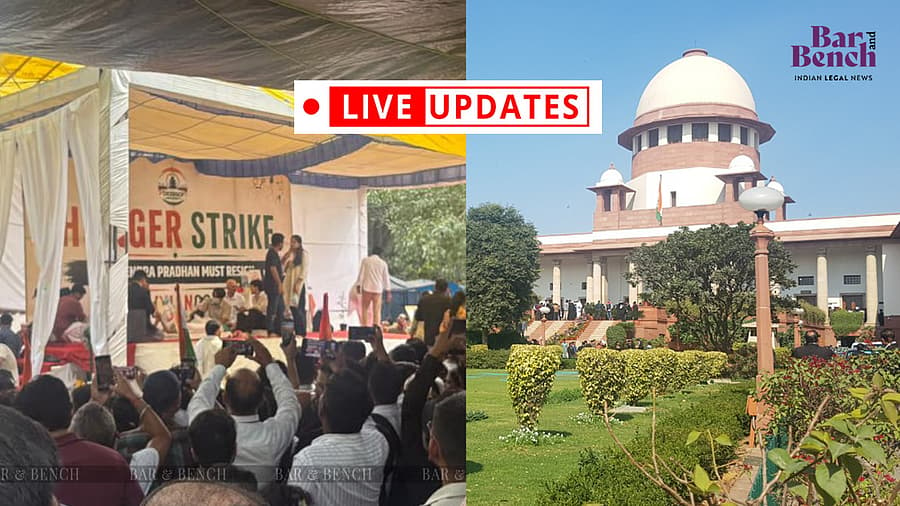
Supreme Court: Delhi Metro Protest Regulation Assured, No Blanket Ban
Summary
- The Supreme Court intervened after 57 Delhi Metro stations were shut ahead of a CJP protest.
- The Solicitor General assured the court that authorities would reconsider the complete prohibition on metro services.
- The court directed that metro and railway services should be regulated, not completely prohibited, to minimize public inconvenience.
- The ruling emphasized the principle of proportionality in managing public transport during protests.
- Authorities were instructed to widely publicize decisions regarding regulated metro movement to avoid further commuter disruption.
Supreme Court Intervenes in Delhi Metro Shutdown
The court's stance highlights a critical legal principle: while authorities possess powers to maintain public order, these powers must be exercised judiciously.
The Supreme Court of India recently addressed the widespread disruption caused by the closure of 57 Delhi Metro stations in anticipation of a planned CJP protest. This significant shutdown of public transport infrastructure prompted the apex court to intervene, suggesting a critical distinction between outright prohibition and the mere regulation of metro and other train services. The court's intervention aimed to mitigate the severe inconvenience faced by the public due to such extensive closures.
During the proceedings, the Solicitor General provided a crucial assurance to the Supreme Court. He agreed to engage with the relevant authorities to encourage a reconsideration of the blanket prohibition on metro operations. This commitment was made with the understanding that public transport, including metro trains and other railway services, should be permitted to operate in a suitably regulated manner. The primary objective articulated was to prevent undue hardship to the residents of Delhi and the broader public, aligning with the fundamental principle of proportionality in managing public order during protest movements.
Following this assurance, the Supreme Court explicitly clarified that there would be no complete prohibition on the movement of Delhi Metro trains. Furthermore, the court issued a directive mandating that any considered decision taken by the authorities regarding the regulated operation of metro and railway services must be given wide publicity. This measure was deemed essential to minimize inconvenience for commuters and to avoid any further disruption to the public at large, ensuring transparency and predictability in DMRC protest movement regulation.
Legal Context and Proportionality in Public Order
The Supreme Court's deliberations were informed by specific communications brought to its attention by legal counsel. These included a document dated October 8, 2026, originating from the office of the Joint Commissioner of Police, Transport Range, and addressed to the Managing Director of the Delhi Metro Rail Corporation (DMRC). Additionally, a communication dated October 9, 2026, reportedly issued by the Railways to all zonal railways, was also referenced. These documents likely pertained to the operational directives concerning public transport during the protest.
A key piece of evidence cited was an order dated August 24, 2026, issued by an Assistant Commissioner of Police. This order was presented as having been purportedly exercised under the powers granted by Section 70 of the Delhi Police Act. The invocation of this specific legal provision underscores the statutory framework within which authorities typically operate when imposing restrictions on public movement and services. The Supreme Court, under the direction of CJI Surya Kant, emphasized that any such exercise of power must adhere to the principle of proportionality, distinguishing between a complete ban and a regulated approach.
The court's stance highlights a critical legal principle: while authorities possess powers to maintain public order, these powers must be exercised judiciously. A complete cessation of essential public services like the Delhi Metro, even in the face of anticipated protests, may be deemed disproportionate if less restrictive regulatory measures could achieve the same objective of public safety without causing widespread public inconvenience. This ruling sets a precedent for how public transport protest management should balance security concerns with citizens' right to mobility.
Implications for Public Services and Future Protests
The directive from the Supreme Court regarding the need for due publicity for any decisions on metro operations carries significant implications. It underscores the importance of transparent communication from authorities to the public, especially when disruptions to daily life are anticipated. By ensuring wide dissemination of information about regulated services, the aim is to empower commuters to plan their journeys effectively and avoid unnecessary hardship, thereby reducing the negative impact of protest-related measures.
This judicial emphasis on regulation over prohibition, particularly concerning public transport during protest events, establishes a crucial framework for future actions by law enforcement and transport agencies. It suggests that blanket bans on services like the Delhi Metro, even in response to significant events such as a CJP protest, should be a last resort. Instead, authorities are encouraged to explore and implement suitably regulated movement strategies that uphold public order while minimizing the disruption to the daily lives of millions of citizens who rely on public transport. This approach reflects a nuanced understanding of managing urban mobility in the context of protest rights and public convenience.
Practical Implications
Lawyers advising on public order, protest rights, or transport regulations should note the Supreme Court's emphasis on proportionality and regulation over complete prohibition of public transport during protests. This ruling provides a precedent for challenging or advising on similar blanket restrictions that cause undue public inconvenience.
Source
How does this affect you?
Get an AI analysis of this article grounded in your jurisdictions, practice areas, and any policy documents you've uploaded to Wansom.
Finish Reading the Full Story and the Expert Analysis.
Get the latest legal & regulatory intelligence in India
Wansom is AI and can make mistakes.