
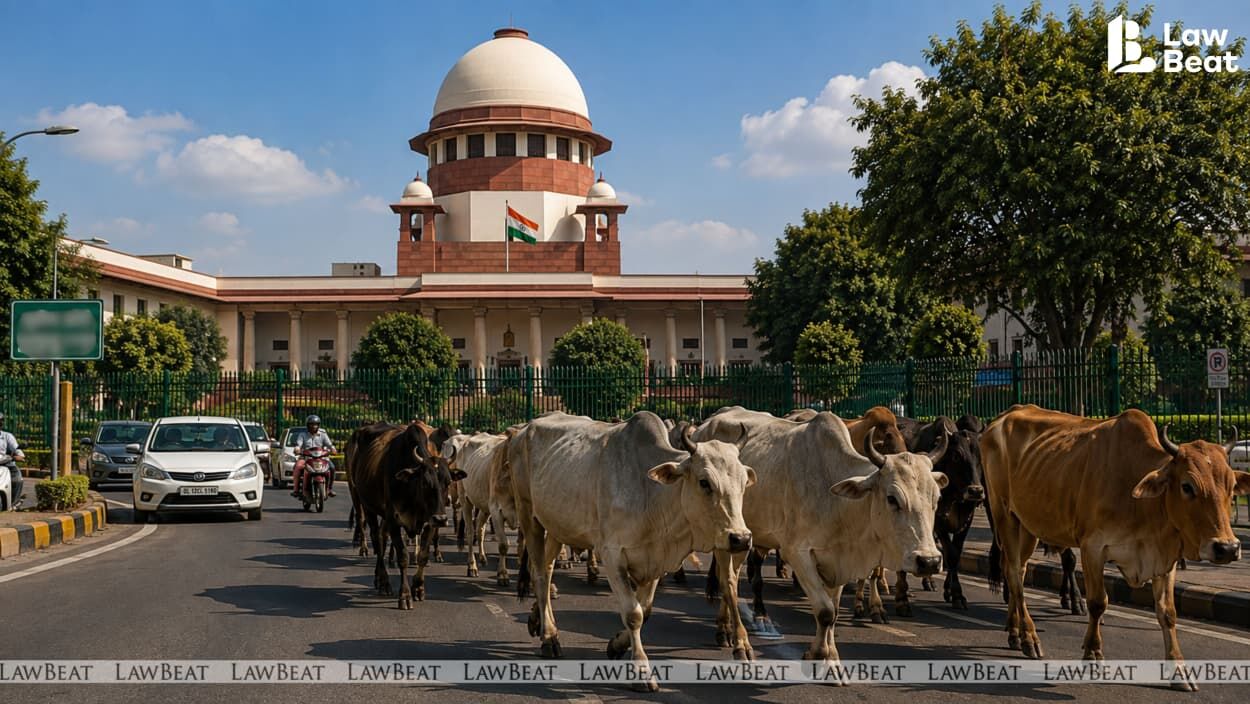
Supreme Court India: Orders Stray Cattle Compensation Mechanism
Summary
- The Supreme Court of India directed central and state governments to establish a compensation mechanism for accidents caused by bovine animals.
- This new framework will cover both pedestrians and motorists and mandates the tagging of all cattle.
- Owners who abandon cattle after they cease to be useful must be held responsible for their safe transfer to designated shelters.
- The directive requires competent authorities to promulgate new rules or amend existing laws to implement the compensation framework.
- The ruling was prompted by a specific case involving a fatal stray bull accident, though the compensation awarded in that instance is not to be treated as a precedent.
Supreme Court Mandates Compensation for Bovine Accidents
India's Supreme Court has ordered the Central and State governments to establish a comprehensive system for compensating victims of accidents involving bovine animals.
India's Supreme Court has ordered the Central and State governments to establish a comprehensive system for compensating victims of accidents involving bovine animals. This new framework is intended to cover both pedestrians and motorists who suffer injuries or fatalities due to such incidents. Justices Sanjay Karol and N Kotiswar Singh, presiding over the bench, underscored the frequency of these "not few and far between" accidents directly caused by cattle.
The directive extends beyond mere compensation, emphasizing accountability for animal owners. The Court explicitly stated that individuals who abandon cattle once they are no longer economically useful must be held responsible. This responsibility includes ensuring the safe transfer of these animals to designated shelters.
Furthermore, the Supreme Court instructed all states that have enacted their own laws pertaining to cattle to ensure the immediate and complete implementation of their respective regulations. This overarching mandate aims to tackle a significant public safety and animal welfare issue across the nation, establishing a new state compensation mechanism for cattle accidents.
New Rules to Govern Liability and Animal Welfare
To facilitate the compensation mechanism, the Court directed that competent authorities should either introduce necessary amendments to existing laws or promulgate new rules. These regulatory changes will formalize the process for awarding compensation in both pedestrian and vehicular accidents involving bovine animals. A critical component of the new system will be the mandatory tagging of all animals, forming the basis of new cattle tagging regulations India-wide.
The Court highlighted that animal tagging is crucial for tracking individual animals, facilitating long-term health services, and linking them to essential veterinary check-ups and vaccinations. Recognizing the prevalent issue of owners abandoning animals, the Supreme Court reiterated that such owners bear the responsibility for safely transferring these animals to appropriate shelters, thereby addressing owner responsibility for abandoned animals in India.
Upon transfer, shelter authorities are required to issue a receipt acknowledging the animal's arrival and update or enter its details into the central tagging database. To ensure the smooth operation of these new directives, the Court also mandated that each Corporation or Department involved must appoint a nodal officer. This officer will oversee tagging initiatives, digitize records, and manage the efficient functioning of the shelters.
A Case Study and Broader Implications
The Supreme Court's comprehensive directives emerged from a specific plea for compensation filed by Nisha. Her husband, Vijay Kumar, tragically died on September 21, 2007, in Sangrur after being struck by a stray bull. Initially, a single judge had awarded compensation to Nisha, applying principles from the Motor Vehicles Act, 1988, based on factors like the deceased's income and age.
However, a division bench subsequently overturned this order in its judgment dated November 12, 2025. Despite this, the Supreme Court, considering the protracted legal battle and the severe injuries Kumar sustained before his death, awarded a lump sum compensation of Rs 15 lakh, to be remitted within four weeks. The Court clarified that this specific award was based on the unique facts and circumstances of the case and should not be considered a precedent.
Nevertheless, the Court chose to address the broader issue, acknowledging that such incidents are "not unique or unheard of." It noted the common occurrence of bovine-related accidents reported in newspapers, often resulting in loss of life for either animals or humans. The bench emphasized that animals are "not meant to be natural speed breakers" on public roads and streets, highlighting the severe problem of collisions caused by animals suddenly appearing in front of vehicles, thus addressing stray animal road accident liability and India bovine accident compensation.
Practical Implications
Lawyers and compliance officers should monitor the promulgation of new state-level rules and amendments for compensation in stray cattle accidents, as this will establish new avenues for claims and potentially shift liability for animal owners. This directive signals a significant regulatory development impacting road safety and animal welfare.
Source
Source: Original reporting via Live Law
How does this affect you?
Get an AI analysis of this article grounded in your jurisdictions, practice areas, and any policy documents you've uploaded to Wansom.
Wansom is AI and can make mistakes.