
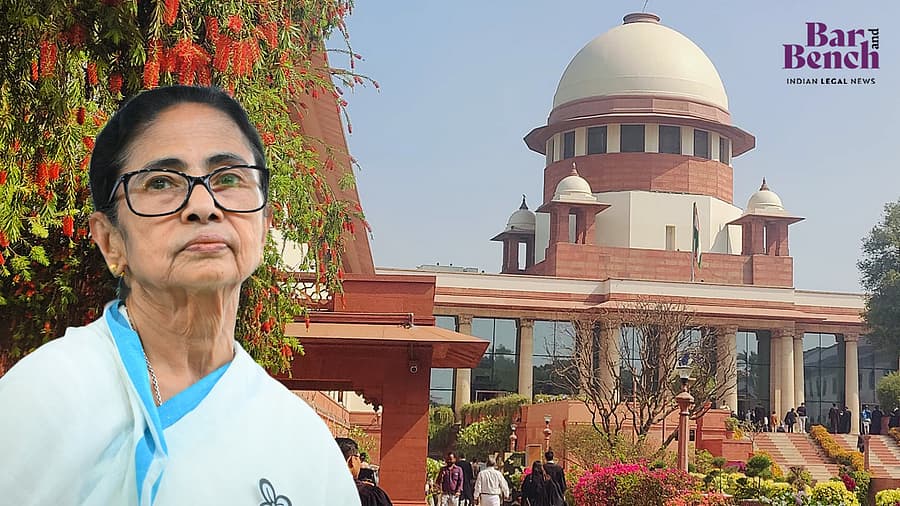
Supreme Court Directs Calcutta HC: Hear TMC Name Board Dispute
Summary
- The Supreme Court declined to hear a plea from the Trinamool Congress regarding the removal of a name board from its Kolkata office.
- The Court directed the Calcutta High Court to expeditiously decide the matter, noting a related petition is already pending there.
- The dispute originated when Kolkata Municipal Corporation officials, accompanied by police, removed a billboard from the TMC's Camac Street office.
- TMC's senior counsel, Kapil Sibal, argued that no prior notice was issued before the municipal action and that the High Court had suggested the cause of action might not survive.
What Transpired at the Supreme Court
This development indicates that the legal battle over municipal actions against political party properties will now be decided expeditiously by the Calcutta High Court, as directed by the Supreme Court.
The Supreme Court recently declined to intervene in a legal challenge brought by the Trinamool Congress (TMC) concerning the removal of a name board from its office in Kolkata. A bench comprising Chief Justice of India Surya Kant, Justice Joymalya Bagchi, and Justice V Mohana, instead directed that all contentions raised by the political party be presented before the Calcutta High Court. This decision effectively remands the matter to the lower court, where a related petition from the TMC is already awaiting resolution.
The apex court specifically requested the Calcutta High Court to ensure an expeditious determination of all issues pertinent to the case. This directive underscores the Supreme Court's preference for the existing judicial process to run its course at the High Court level, rather than taking up the matter directly. The ruling means the legal battle over the TMC name board will now proceed swiftly in Calcutta.
Background to the Dispute
The core of the dispute revolves around the removal of a billboard bearing the Trinamool Congress's name from the top of its Camac Street office building in Kolkata. Reports indicate that officials from the Kolkata Municipal Corporation (KMC), accompanied by police personnel, entered the premises to carry out this action. This municipal enforcement led to the immediate legal challenge by the political party.
Following the removal, the Trinamool Congress initially sought redress from the Calcutta High Court. However, its efforts to secure any form of interim relief against the municipal action proved unsuccessful at that stage. This lack of immediate judicial intervention prompted the party to elevate its grievance to the Supreme Court, seeking a higher judicial review of the matter.
TMC's Arguments and Legal Strategy
During the Supreme Court proceedings, Senior Advocate Kapil Sibal represented the Trinamool Congress, presenting the party's arguments against the municipal action. Sibal highlighted a critical procedural lapse, asserting that the municipal authorities had undertaken the removal of the TMC Camac Street office billboard without issuing any prior notice. This alleged lack of due process formed a significant part of the party's plea.
Furthermore, Sibal conveyed the Trinamool Congress's concern that the Calcutta High Court had previously indicated that the cause of action for their petition might no longer survive, given that the name board removal had already taken place. He articulated the High Court's perceived stance, stating that "no cause of action survives because the signboard has already been removed." This argument underscored the party's apprehension about the viability of their case at the High Court level, prompting their appeal to the Supreme Court.
Implications for the Calcutta High Court
The Supreme Court's decision to decline direct intervention and instead direct the Calcutta High Court to hear the matter carries significant implications for the ongoing Kolkata Municipal Corporation billboard dispute. By requesting the High Court to "determine all the issues that arise for consideration expeditiously," the apex court has effectively put the onus on the Calcutta High Court to deliver a swift resolution. This directive ensures that the legal arguments regarding the TMC name board removal Calcutta High Court will be thoroughly examined without undue delay.
This development indicates that the legal battle over municipal actions against political party properties will now be decided expeditiously by the Calcutta High Court, as directed by the Supreme Court. Lawyers should monitor the Calcutta High Court's proceedings for potential precedents regarding due process and property rights in municipal enforcement actions. The Supreme Court's instruction for an expedited review means the Calcutta High Court will soon address the core issues of whether proper procedure was followed and the extent of municipal authority in such matters.
Practical Implications
This development indicates that the legal battle over municipal actions against political party properties will now be decided expeditiously by the Calcutta High Court, as directed by the Supreme Court. Lawyers should monitor the Calcutta High Court's proceedings for potential precedents regarding due process and property rights in municipal enforcement actions.
Source
How does this affect you?
Get an AI analysis of this article grounded in your jurisdictions, practice areas, and any policy documents you've uploaded to Wansom.
Finish Reading the Full Story and the Expert Analysis.
Wansom is AI and can make mistakes.