
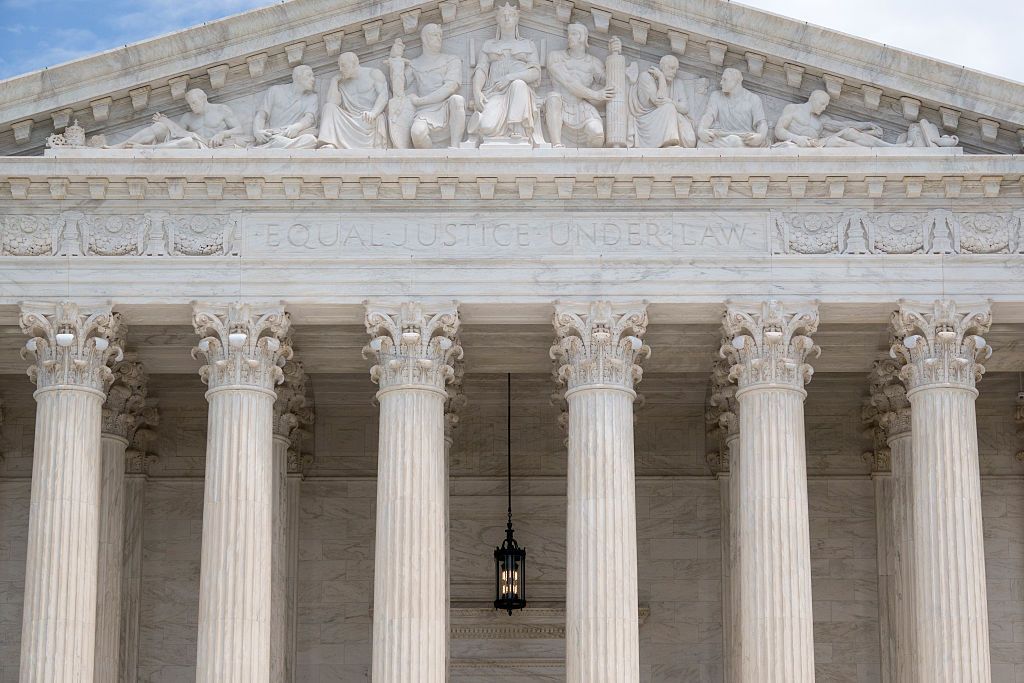
Supreme Court: Denies DEI, Gun Ban Appeals in Key Cases
Summary
- The Supreme Court denied review in several significant cases on Monday, including challenges to DEI requirements and gun bans.
- Among the denials was a California ophthalmologist's challenge to diversity requirements in medical education.
- The Court also declined to hear a dispute over Maryland's ban on carrying firearms in designated sensitive places.
- These denials mean lower court rulings upholding these DEI provisions and gun restrictions remain in effect.
- Separately, the Court invited the U.S. solicitor general to weigh in on cases against the Taliban and added two new cases to its oral argument docket.
Supreme Court Declines Key Appeals
Lawyers should advise clients that the Supreme Court's denial of review means existing lower court rulings upholding DEI requirements and bans on firearms in 'sensitive places' remain in effect.
The Supreme Court announced on Monday its decision to deny review in several significant cases, effectively allowing lower court rulings to stand. These actions, stemming from the justices' private conference held on Friday, included the rejection of appeals concerning diversity, equity, and inclusion (DEI) requirements, as well as challenges to firearm prohibitions in designated sensitive locations.
Among the cases where certiorari was denied were a dispute between the Trump administration and University of California scholars regarding cuts to research funding, and a challenge brought by a California ophthalmologist against diversity-related mandates for continuing medical education courses. Additionally, the Court declined to hear a case contesting Maryland's ban on carrying firearms in specific sensitive places, thereby leaving the existing state law in effect.
DEI and Second Amendment Challenges Denied
The Supreme Court's decision to deny review in these matters means that the legal challenges to DEI requirements and gun bans in 'sensitive places' will not be heard by the nation's highest court. This outcome maintains the current legal landscape where lower court decisions upholding these provisions remain binding. The ophthalmologist's case specifically targeted diversity requirements in medical education, a facet of broader DEI legal challenges denied by the Court's inaction.
Similarly, the Maryland gun ban challenge, which sought to overturn restrictions on firearms in Second Amendment sensitive places, will not receive a hearing from the justices. This signals that the current regulatory framework for firearm possession in such areas in Maryland is undisturbed by the Supreme Court at this time. Lawyers should advise clients that the Supreme Court's denial of review means existing lower court rulings upholding DEI requirements and bans on firearms in 'sensitive places' remain in effect.
Other Court Actions
Beyond the denials, the Court also took other procedural steps on Monday. It extended an invitation to the United States solicitor general, requesting the government's perspective on a trio of cases initiated against the Taliban by victims of terrorist attacks. This request for the solicitor general's views is a common practice when the Court is considering whether to grant review in complex cases involving federal interests.
Furthermore, the Court had previously disclosed, immediately following Friday's conference, the addition of two new cases to its oral argument docket for the current term. These include *Mullin v. Refugee and Immigrant Center for Education and Legal Services*, which addresses the Trump administration's authority to suspend asylum access for immigrants at the U.S.-Mexico border, and *Robinhood Markets, Inc. v. Sodha*, concerning whether a financial-services company violated federal securities laws by failing to disclose certain interim financial data during its initial public offering.
Practical Implications
Lawyers should advise clients that the Supreme Court's denial of review means existing lower court rulings upholding DEI requirements and bans on firearms in 'sensitive places' remain in effect. This signals that these specific legal challenges will not be heard by the highest court, maintaining the current legal landscape for compliance and enforcement in these areas.
Source
How does this affect you?
Get an AI analysis of this article grounded in your jurisdictions, practice areas, and any policy documents you've uploaded to Wansom.
Finish Reading the Full Story and the Expert Analysis.
Get the latest legal & regulatory intelligence in United States
Wansom is AI and can make mistakes.