
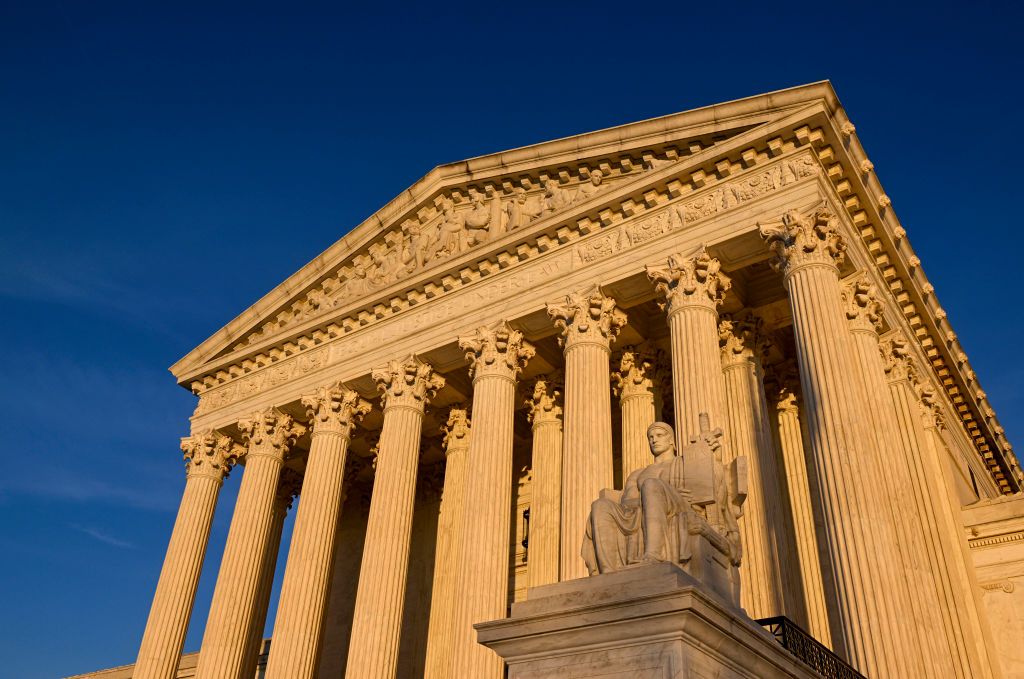
Supreme Court: Bivens Nielsen Watanabe Challenges Federal Officer Liability
Summary
- The Supreme Court will hear arguments in Nielsen v. Watanabe on November 9, potentially impacting the ability to sue federal officers for constitutional violations.
- The Bivens v. Six Unknown Named Agents (1971) decision currently allows individuals to seek money damages against federal officers without a specific federal statute.
- Unlike federal officers, state or local officers can be sued under 42 U.S.C. Section 1983 for constitutional violations.
- The Supreme Court has historically limited Bivens and some justices advocate for its complete overruling.
- The case raises questions about judicial remedies for constitutional violations and accountability for federal agents, including ICE officers.
Current Judicial Scrutiny
The potential elimination or severe restriction of Bivens claims would leave those injured by federal misconduct with drastically reduced recourse.
The Supreme Court is poised to re-examine the foundational ability to sue federal officers for constitutional violations, a move that could dismantle the primary mechanism for civil liability under federal law. On November 9, the justices will hear arguments in Nielsen v. Watanabe, a case that directly challenges the continued viability of a Bivens cause of action. This impending decision arrives at a moment when public discourse frequently highlights the necessity of holding federal agents, including those from Immigration and Customs Enforcement (ICE), accountable for alleged constitutional breaches.
The Bivens Precedent and Its Limitations
The legal avenue for seeking monetary damages against federal government officers for constitutional violations originates from a landmark 1971 Supreme Court ruling, Bivens v. Six Unknown Named Agents of the Federal Bureau of Narcotics. In this pivotal decision, the Court established that a cause of action for money damages could exist directly under the Fourth Amendment, even in the absence of an explicit federal statute granting such a right. This contrasts sharply with the established framework for state or local officers, who can be sued under 42 U.S.C. Section 1983 for similar constitutional transgressions.
Despite its initial establishment, the Bivens precedent has faced considerable judicial skepticism and a consistent refusal by the Supreme Court to extend its application. For decades, the Court has declined to apply Bivens to other types of constitutional rights violations committed by federal officers. Furthermore, several conservative justices have openly advocated for the complete overturning of the Bivens decision, signaling a long-standing desire within certain judicial circles to curtail this form of federal officer accountability. The upcoming Nielsen v. Watanabe argument will force the Court to confront these long-standing debates head-on.
Implications for Accountability and Justice
At the heart of the ongoing debate surrounding the Bivens doctrine lies a fundamental question concerning the separation of powers: whether the judiciary should be responsible for creating remedies for constitutional violations, or if this authority rests exclusively with Congress. Beyond this institutional concern, the issue profoundly impacts accountability. Without the Bivens framework, a significant void would emerge in how individuals can seek redress and how federal officers, including those from agencies like ICE, are held responsible for violating constitutional rights.
The potential elimination or severe restriction of Bivens claims would leave those injured by federal misconduct with drastically reduced recourse. This scenario raises serious questions about justice and the ability of the legal system to ensure that federal government officers are not immune from the consequences of their actions when they infringe upon fundamental rights. The decision in Nielsen v. Watanabe will therefore not only shape the future of federal litigation but also redefine the landscape of accountability for federal agents across the nation.
Practical Implications
Lawyers representing individuals alleging constitutional violations by federal officers must closely monitor the Supreme Court's decision in Nielsen v. Watanabe, as it could eliminate or severely restrict the primary avenue for seeking civil damages against such officers, necessitating exploration of alternative legal strategies or advising clients on reduced recourse.
Source
How does this affect you?
Get an AI analysis of this article grounded in your jurisdictions, practice areas, and any policy documents you've uploaded to Wansom.
Wansom is AI and can make mistakes.