
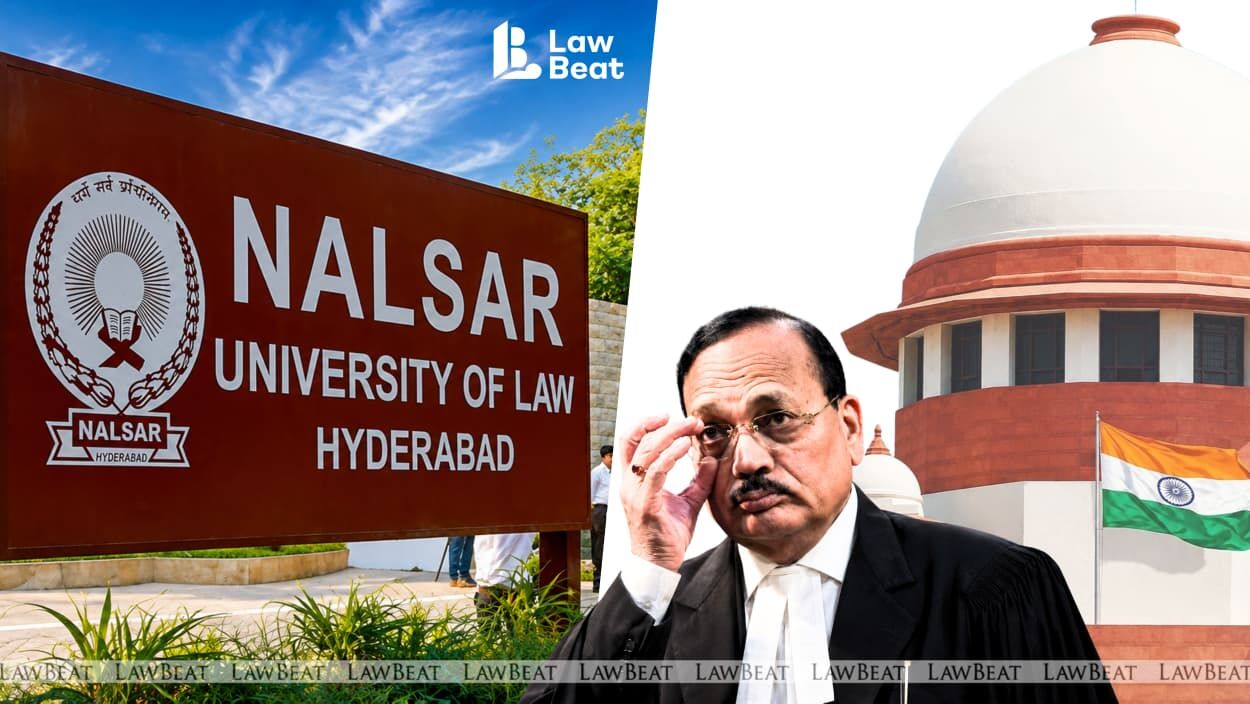
Supreme Court: BCI Lacks Power for Law Student Discipline
Summary
- The Supreme Court ruled that the Bar Council of India (BCI) lacks statutory authority to take disciplinary action against law students before their enrollment as advocates.
- Chief Justice of India Surya Kant, leading the bench, stated that student conduct falls exclusively under the jurisdiction of educational institutions, not the BCI.
- The BCI had initiated proceedings against NALSAR University's 2026 batch over their campaign against the CJI, but later withdrew its decision to bar their enrollment.
- The Court declared the BCI's communications regarding the NALSAR students to be without jurisdiction and ordered no punitive action against them.
- The BCI's role is limited to prescribing legal education standards and regulating enrolled advocates, not disciplining students.
Supreme Court Clarifies BCI Powers
The Supreme Court recently admonished the Bar Council of India (BCI) for initiating disciplinary proceedings against law students, unequivocally stating that the BCI lacks the statutory authority to oversee the conduct of individuals who have not yet enrolled as advocates.
The Supreme Court recently admonished the Bar Council of India (BCI) for initiating disciplinary proceedings against law students, unequivocally stating that the BCI lacks the statutory authority to oversee the conduct of individuals who have not yet enrolled as advocates. This significant ruling clarifies the jurisdictional limits of the Bar Council India student powers, affirming that such disciplinary action falls outside its purview until a student formally registers with the bar.
The apex court addressed a petition concerning the BCI's now-withdrawn decision to prevent the enrollment of the 2026 batch of NALSAR University of Law, Hyderabad. These students had engaged in a campaign against the Chief Justice of India, which prompted the BCI's initial intervention. A bench comprising Chief Justice of India Surya Kant, Justice Joymalya Bagchi, and Justice V Mohana presided over the matter, emphasizing that the power to regulate law student discipline rests solely with their respective educational institutions.
Chief Justice Surya Kant articulated that while the BCI is empowered to establish and enforce standards for legal education in India, it cannot extend its disciplinary reach to law students. He underscored that the BCI's jurisdiction and statutory competence are exclusively applicable to enrolled advocates. The court's stance firmly establishes that the conduct of law students remains within the domain of their universities or educational institutions, a principle about which, the Chief Justice noted, there can be no dispute.
Limits of BCI Jurisdiction
The Supreme Court's pronouncement meticulously delineated the boundaries of the Bar Council India student powers, asserting that the BCI only becomes relevant once a student graduates and registers as an advocate. Until that point, the responsibility for regulating student behavior and academic progress lies entirely with the educational institution. The bench highlighted that none of the NALSAR students involved in the controversy had yet enrolled as advocates, rendering the BCI's actions ultra vires.
Justice Joymalya Bagchi further elaborated on this distinction, affirming that while the BCI can legitimately scrutinize whether an individual meets the prerequisites for enrollment at the appropriate stage, it cannot dictate whether a student should be permitted to continue their legal education. He explicitly stated that the BCI is not authorized to impose a pre-emptive condition that would bar a student from enrollment upon graduation. Consequently, the Court declared that the BCI's communication dated August 13, 2026, along with all subsequent modifications related to this matter, were issued without proper jurisdiction.
This ruling provides crucial clarity on BCI jurisdiction NALSAR students and others, ensuring that disciplinary actions against law students are handled by the appropriate academic bodies, rather than a professional regulatory authority whose mandate begins post-enrollment. It reinforces the principle that legal education regulation India is a shared responsibility, with distinct roles for academic institutions and professional councils.
Genesis of the NALSAR Controversy
The BCI proceedings originated from a backdrop of concerns surrounding developments at NALSAR University and the proposed participation of Chief Justice of India Surya Kant as the chief guest at the university's 2026 convocation. The petition brought before the Supreme Court specifically challenged the BCI's withdrawn decision to bar the enrollment of the NALSAR Hyderabad's 2026 batch students due to their campaign, which was directed against the Chief Justice himself.
During earlier mentions of the plea, Senior Advocate K Parameshwar argued that the BCI had no business intervening in such matters. Chief Justice Surya Kant, leading the bench, had previously characterized the BCI's actions as "absolutely uncalled for." He reflected on his own student activism, stating that students have a right to protest, even if their views are mistaken. The Chief Justice emphasized that the interaction was a dialogue between him and the students, and the BCI had no legitimate role in it.
He further remarked that making a wrong statement in one's youth should not negate the right to protest. The Chief Justice encouraged the NALSAR students to pursue enrollment, join the Supreme Court bar, and even offered to empanel them for legal aid courses, underscoring a supportive stance towards student engagement rather than punitive measures.
Resolution and Court Directives
Ultimately, the Bar Council of India decided to close its proceedings against the 2026 batch of NALSAR University of Law. This decision followed a review of representations from various stakeholders, including Senior Advocates, members of the Bar, law students, and public-spirited citizens. The Council concluded that the students of the 2026 batch had no involvement in any disturbance or movement, and it advised students to express their opinions while upholding institutional decorum.
Noting that the impugned circular had already been withdrawn, the Supreme Court issued an order confirming that no punitive action should be taken against the NALSAR students or faculty concerning the incidents mentioned in the subject letters. The Court also directed that a counter-affidavit be filed within two weeks. This final directive from the Supreme Court BCI law student discipline case effectively nullified any lingering threat of disciplinary action from the BCI against the students, reinforcing the principle that law student enrollment disciplinary action is not within the BCI's remit.
This outcome firmly establishes that the BCI's role is to regulate the legal profession post-enrollment, not to pre-emptively discipline future members of the bar based on their conduct as students. The ruling provides a clear precedent for the scope of BCI jurisdiction NALSAR students and other law students across India.
Practical Implications
This ruling clarifies the jurisdictional limits of the Bar Council of India, establishing that its disciplinary powers apply only to enrolled advocates, not to law students. Lawyers and compliance officers advising educational institutions or students should note that student conduct matters fall exclusively under university jurisdiction, not the BCI, until the point of enrollment.
Source
Source: Original reporting via Live Law
How does this affect you?
Get an AI analysis of this article grounded in your jurisdictions, practice areas, and any policy documents you've uploaded to Wansom.
Finish Reading the Full Story and the Expert Analysis.
Wansom is AI and can make mistakes.