
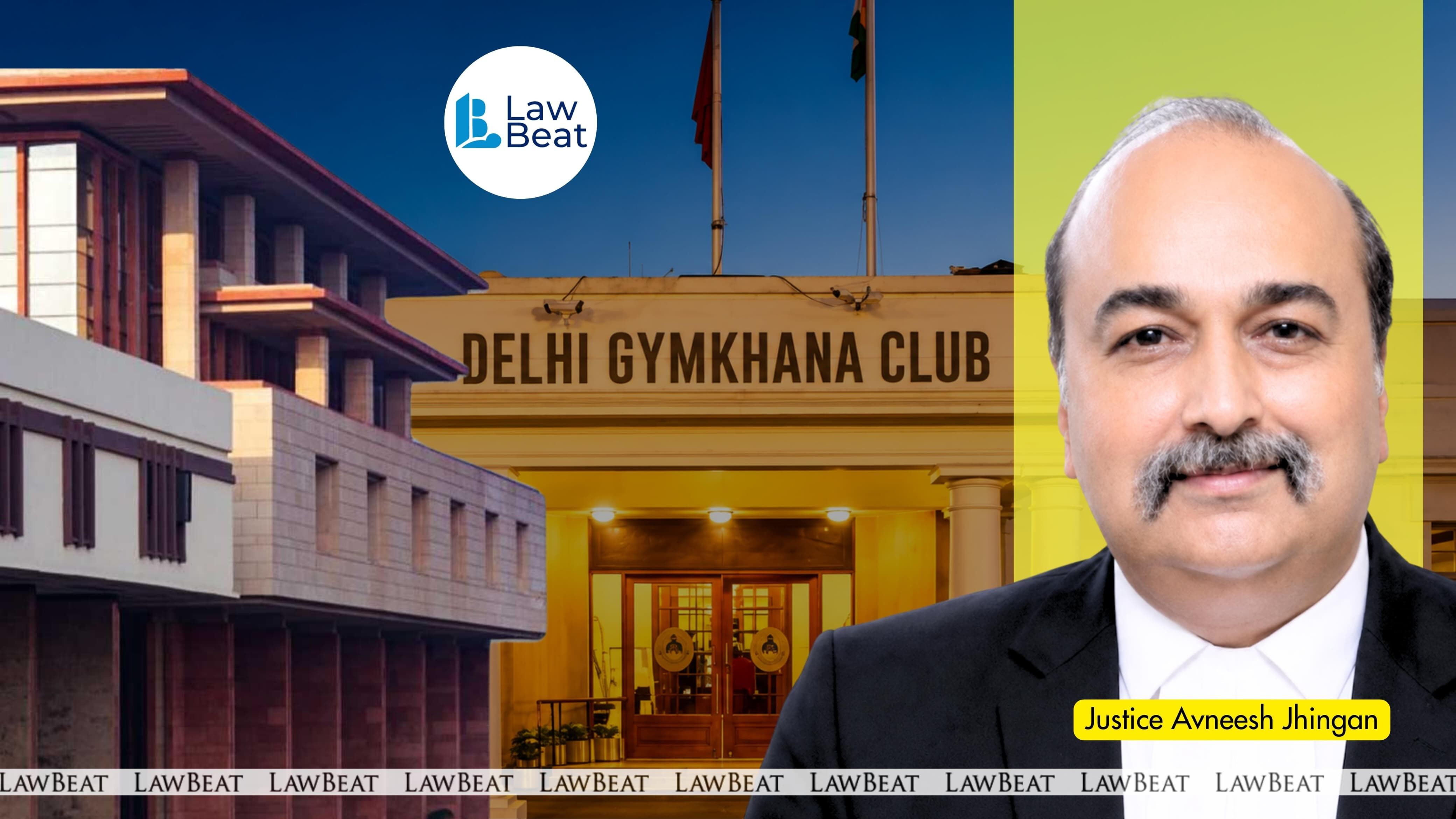
Delhi High Court: Delhi Gymkhana Club High Court Jurisdiction Hearing
Summary
- The Delhi High Court has extended protection for the Delhi Gymkhana Club against coercive action.
- The court directed the Estate Officer to first consider the club's jurisdictional objection before proceeding further.
- Any engagement with the Estate Officer will not prejudice the club's fundamental challenge to jurisdiction, which remains open.
- The underlying dispute involves the Centre's invocation of a perpetual lease clause for public purpose, citing national security concerns.
- No coercive action will be taken against the club in the interim, and existing protection continues until the next hearing.
High Court Mandates Jurisdictional Review
This ruling provides significant guidance for entities facing notices from an Estate Officer under the Public Premises Act, particularly concerning the Delhi High Court Estate Officer jurisdiction.
The Delhi High Court has extended its protection for the Delhi Gymkhana Club against any coercive action, directing the Estate Officer to first address the club's jurisdictional objections before proceeding with any substantive steps. Justice Avneesh Jhingan, presiding over the matter, adjourned the proceedings to allow legal counsel representing the Gymkhana members to obtain instructions regarding their consent for the Estate Officer to initially examine the jurisdictional question.
Senior Advocate Abhishek Manu Singhvi, appearing on behalf of the Delhi Gymkhana Club Staff Welfare Association, underscored that any response to or appearance before the Estate Officer would be strictly without prejudice to the club's fundamental challenge regarding jurisdiction. The court explicitly clarified that the club would not be disadvantaged simply by engaging with the notice or appearing before the authority, ensuring that the jurisdictional objection remains fully open for consideration. Crucially, the existing protection order against coercive measures will remain in effect until the subsequent hearing date.
The Core Lease Dispute
This recent development is part of a broader legal conflict originating from an order issued by the Land & Development Office (L&DO), operating under the Ministry of Housing and Urban Affairs. The Centre has invoked Clause 4 of a perpetual lease deed, originally granted to the erstwhile Imperial Delhi Gymkhana Club Ltd. This specific clause allows for re-entry and termination of the lease if the premises are deemed necessary for a public purpose.
The government asserts that the 27.3-acre property, which encompasses all buildings, lawns, structures, and fittings, is situated in a strategically sensitive area of the national capital. It claims the land is required for critical public uses, including strengthening and securing defence infrastructure, as well as other public security-related needs. Upon re-entry and resumption of possession, the entire parcel would legally vest in the President of India through the L&DO. The Centre maintains that its decision is driven by urgent public interest considerations, specifically citing national security and the need for integrated governance infrastructure in adjacent government land areas within Lutyens’ Delhi. The Delhi Gymkhana Club is actively challenging this directive.
Procedural History and Court's Rationale
The High Court's current directive follows a procedural history that began with a notice of re-entry, subsequently leading to an interim application filed under Order 39 Rules 1 and 2 of the Code of Civil Procedure. At that earlier stage, parties had agreed to proceed in accordance with established legal procedures. The court observed that the ongoing proceedings before the Estate Officer were being presented as a change in circumstances, prompting a request for reconsideration of the previously established interim arrangement.
Rather than issuing a definitive ruling on the matter at this juncture, the High Court opted to provide the Estate Officer with an opportunity to independently assess whether the proceedings should continue, given that the fundamental question of the Estate Officer's jurisdiction itself remains pending before the High Court. This approach highlights the judiciary's emphasis on addressing jurisdictional challenges as a preliminary step, particularly in cases involving the Public Premises Act jurisdiction challenge.
Implications for Public Premises Act Cases
This ruling provides significant guidance for entities facing notices from an Estate Officer under the Public Premises Act, particularly concerning the Delhi High Court Estate Officer jurisdiction. It clearly indicates that objections to an Estate Officer's jurisdiction must be thoroughly considered before any substantive action is taken. The court's decision to continue protection against coercive measures while the jurisdictional question is being addressed highlights the judiciary's emphasis on due process.
For legal practitioners, this case reinforces the strategic importance of raising jurisdictional challenges early and seeking interim protection against any adverse steps. It sets a precedent that such objections, especially in perpetual lease re-entry disputes, warrant prior consideration, ensuring that parties are not prejudiced by engaging with an authority whose jurisdiction is still under scrutiny. This Delhi Gymkhana Club protection order underscores the necessity for Estate Officers to apply their minds to jurisdictional questions before proceeding with the merits of a case.
Practical Implications
This ruling provides a precedent for challenging the Estate Officer's jurisdiction under the Public Premises Act, indicating that such objections must be considered first before proceeding with substantive action. Lawyers should advise clients facing similar notices to prioritize jurisdictional challenges and seek interim protection against coercive measures.
Source
How does this affect you?
Get an AI analysis of this article grounded in your jurisdictions, practice areas, and any policy documents you've uploaded to Wansom.
Finish Reading the Full Story and the Expert Analysis.
Wansom is AI and can make mistakes.