
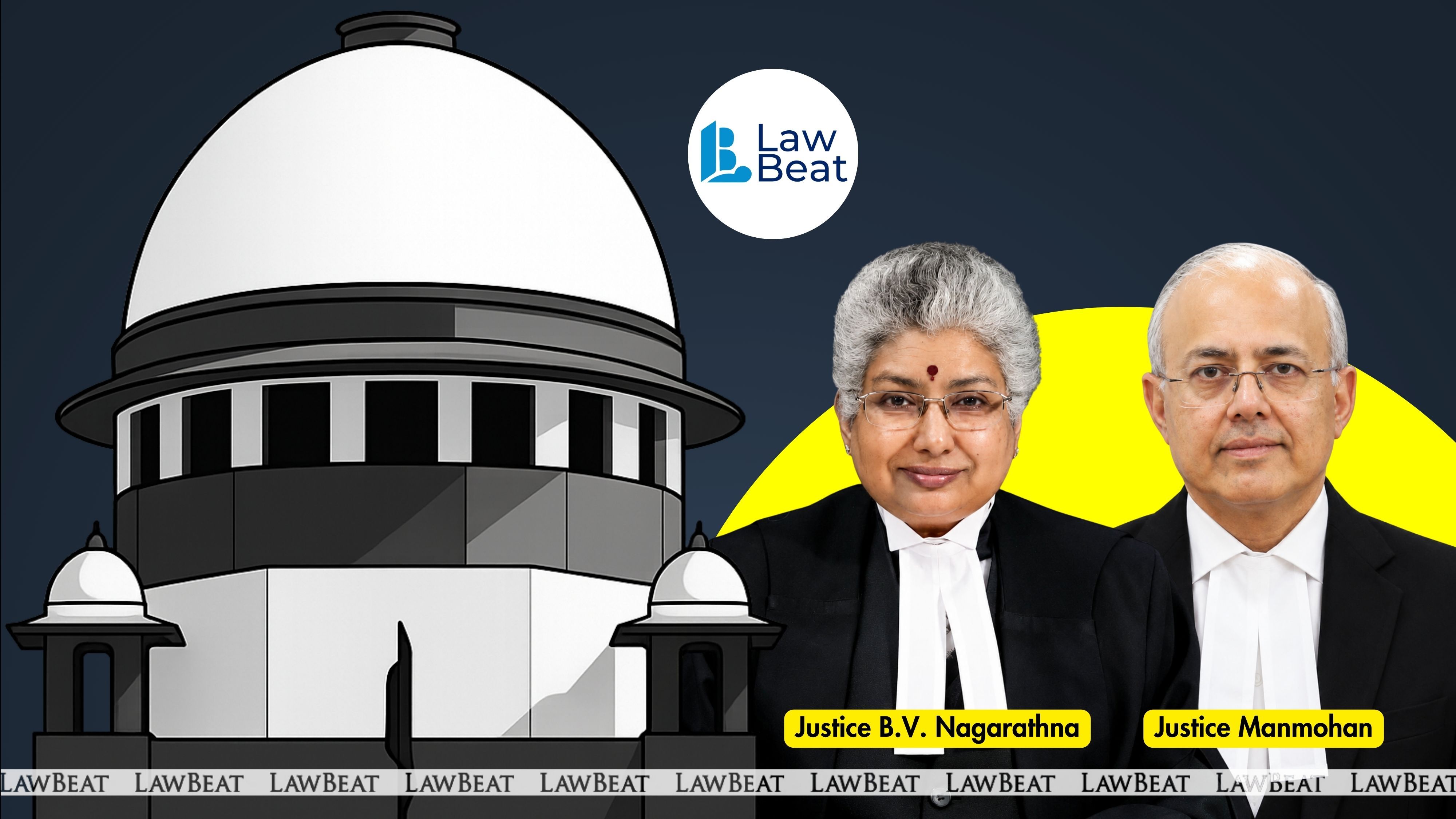
Supreme Court Asks Centre To Frame Welfare Scheme For Cadets Outboarded Due To Training Disabilities
Home / Top Stories Supreme Court Asks Centre To Frame Welfare Scheme For Cadets Outboarded Due To Training Disabilities X The Supreme Court urged the Centre to frame a welfare scheme for armed forces cadets outboarded due to disabilities sustained during military training The Supreme Court urged the Centre to formulate a welfare scheme for outboarded military cadets, reconsider the Sabharwal Committee's recommendations, and explore employment and reservation benefits for those injured during training The Supreme Court on Tuesday urged the Union Government to formulate a comprehensive welfare scheme for cadets who are outboarded from the armed forces after suffering disabilities during military training, particularly those who fall outside the protection of the Rights of Persons with Disabilities Act, 2016. A Bench of Justices B.V. Nagarathna and Manmohan called upon Additional Solicitor General (ASG) N. Venkataraman , appearing for the Union of India, to obtain instructions from the concerned authorities on framing such a scheme. The Court observed that the provisions of the Rights of Persons with Disabilities Act may not extend to outboarded cadets whose benchmark disability is below 40%, leaving them without adequate statutory protection despite having suffered injuries during military training. The Bench also directed the respondent departments to reconsider the recommendations of the Sabharwal Committee, observing that the present proceedings were intended to improve the conditions of outboarded cadets. "We expect that certain favorable recommendations would be emanating from the respondent-departments in this regard, " the Court observed. At the same time, the Bench clarified that it was not examining whether such cadets should be granted the status of "ex-servicemen" but instead sought suggestions on the best possible welfare measures that could be extended to them. During the hearing, the Court noted that a distinction must necessarily exist between cadets who could not be commissioned due to injuries sustained during training and officers who successfully completed training and were inducted into the armed forces. Justice Nagarathna observed: "Don't expect that you will straightaway be called ex-servicemen for all purposes. You may be referred to as ex-servicemen loosely, but at the same time there should be some distinction, no?" The Bench emphasised that a "realistic extension of benefits " should nevertheless be evolved for such cadets. The Court further suggested that States and Union Territories consider extending reservation benefits to outboarded cadets under the quota meant for ex-military personnel, observing that such a measure would significantly improve their employment prospects. It also recorded its appreciation for those States and Union Territories that have already treated outboarded cadets as ex-servicemen for employment purposes. Clarifying the scope of the proceedings, the Court said the pendency of the present matter would not prevent individual cadets from pursuing relief before High Courts. It further permitted revival of petitions that may have earlier been disposed of solely because of the pendency of the present proceedings. During the hearing, Senior Advocate Rekha Palli , appearing as amicus curiae , highlighted disparities in ex gratia payments made to different categories of trainees. She pointed out that an officer trainee receives ₹12,240 per month (including dearness allowance), whereas a jawan trainee recruited before attestation receives ₹18,000 per month . Responding to the Court's queries, ASG Venkataraman submitted that the Ministry of Defence and the Ministry of Finance had already filed affidavits stating that lifetime medical treatment under the Ex-Servicemen Contributory Health Scheme (ECHS) had been extended to outboarded cadets. He further informed the Court that the 8th Pay Commission had been constituted and would examine enhancement of the monthly ex gratia payment payable
How does this affect your business?
Get an AI analysis of this article grounded in your jurisdictions, practice areas, and any policy documents you've uploaded to Wansom.
Wansom is AI and can make mistakes.