
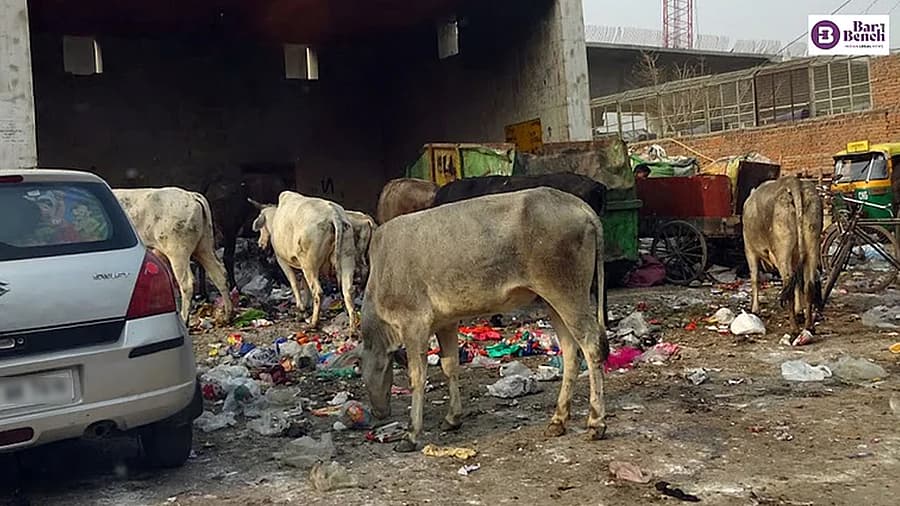
Supreme Court Asks Centre to Frame Solid Waste Rule Compensation Guidelines
Summary
- The Supreme Court has directed the Union Ministry of Environment, Forest and Climate Change (MoEF&CC) to formulate guidelines for determining and imposing environmental compensation for Solid Waste Rule violations.
- Environmental compensation is a restitutionary measure meant to restore damaged environments, not replace penalties levied against polluters.
- The Supreme Court has laid down eight key principles to guide the formulation of guidelines under Rule 17(2) of the Solid Waste Management Rules, 2026.
The Supreme Court's Mandate
Environmental compensation is not meant to replace penalties levied against polluters, but rather serves as a restitutionary measure to restore damaged environments.
In a significant move to address environmental degradation, the Supreme Court has directed the Union Ministry of Environment, Forest and Climate Change (MoEF&CC) to formulate guidelines for determining and imposing environmental compensation for violations of the Solid Waste Management Rules, 2026. This directive is part of an ongoing effort to strengthen India's waste management framework.
The Court's order was issued in the case of [Amravati Municipal Corporation v. Ganesh Dadarao Anasane & Ors.], where a Bench of Justices PS Narasimha and Alok Aradhe emphasized the need for clear guidelines to govern environmental compensation.
The Role of Environmental Compensation
Environmental compensation is not meant to replace penalties levied against polluters, but rather serves as a restitutionary measure to restore damaged environments. This principle was highlighted by the Supreme Court in its recent order, underscoring the importance of considering both tangible and intangible damage when determining compensation amounts.
The temporal extent of paying compensation also comes into play, with the Court ruling that it ends only when the damage caused is reversed. This means that polluters must continue to pay for environmental restoration until the affected area is restored to its original state.
Guidelines and Implementation
The Supreme Court has laid down eight key principles to guide the formulation of guidelines under Rule 17(2) of the Solid Waste Management Rules, 2026. These principles include valuing damage caused by polluters, collecting compensation for restoration, and considering both tangible and intangible damage when determining compensation amounts.
As the MoEF&CC begins work on these guidelines, lawyers are advised to closely monitor developments and advise clients accordingly. The upcoming guidelines will have a significant impact on environmental regulation in India.
Practical Implications
Lawyers should watch for the upcoming guidelines from MoEF&CC, which will outline how to determine and impose environmental compensation for Solid Waste Rule violations, and advise clients accordingly.
Source
How does this affect your business?
Get an AI analysis of this article grounded in your jurisdictions, practice areas, and any policy documents you've uploaded to Wansom.
Wansom is AI and can make mistakes.