
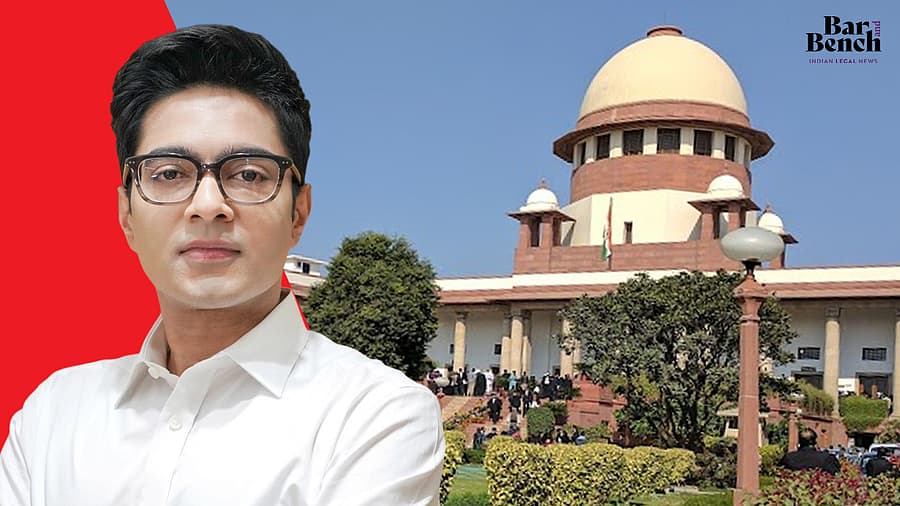
Supreme Court Asks Calcutta High Court to Decide Abhishek Banerjee's Foreign Travel Plea
Summary
- The Supreme Court is currently considering Abhishek Banerjee's foreign travel plea after the Calcutta High Court denied his request.
- Banerjee faces a string of FIRs registered against him since the BJP swept the West Bengal Assembly elections and came to power on May 4.
- Existing restrictions on foreign travel for those facing FIRs create a delicate balance between personal medical needs and compliance with legal requirements.
Abhishek Banerjee's Foreign Travel Plea
The Supreme Court has intervened in the foreign travel plea of Trinamool Congress (TMC) Member of Parliament (MP) Abhishek Banerjee, seeking permission to travel abroad for eye treatment.
The Supreme Court has intervened in the foreign travel plea of Trinamool Congress (TMC) Member of Parliament (MP) Abhishek Banerjee, seeking permission to travel abroad for eye treatment. This development comes after the Calcutta High Court declined to grant him immediate relief, instead directing him to get his eye condition assessed by a hospital in Kolkata to determine if its treatment can be done within India. Banerjee subsequently challenged this decision, and the matter is now pending before the Supreme Court.
Banerjee has been facing a string of FIRs registered against him since the BJP swept the West Bengal Assembly elections and came to power on May 4. Among these cases, he faces allegations related to provocative comments made during election campaigns. In several of these cases, Banerjee has secured interim protection, including a condition that prohibits him from leaving the country without the High Court's permission.
The Supreme Court is currently considering Banerjee's foreign travel plea after the Calcutta High Court denied his request.
Legal Context
The Supreme Court's intervention in Abhishek Banerjee's foreign travel plea highlights the complexities of navigating judicial orders for Indian politicians. Existing restrictions on foreign travel for those facing FIRs create a delicate balance between personal medical needs and compliance with legal requirements.
Lawyers advising Indian politicians on compliance with judicial orders may need to advise clients on the implications of this development, particularly in light of existing restrictions on foreign travel for those facing FIRs. This raises questions about the scope of judicial powers in regulating the personal freedoms of public figures.
The Calcutta High Court's earlier decision to decline immediate relief and direct Banerjee to get his eye condition assessed by a hospital in Kolkata demonstrates the court's efforts to balance individual needs with the need for due process.
Why It Matters
The Supreme Court's current consideration of Abhishek Banerjee's foreign travel plea, following the Calcutta High Court's denial, has significant implications for Indian politicians facing FIRs. The case highlights the need for clear guidelines on balancing personal freedoms with compliance with judicial orders.
As the country continues to grapple with issues of accountability and transparency, this development underscores the importance of navigating complex legal requirements while upholding individual rights. The outcome of this case will have far-reaching consequences for Indian politicians and the broader public.
Practical Implications
Lawyers advising Indian politicians on compliance with judicial orders may need to advise clients on the implications of this development, particularly in light of existing restrictions on foreign travel for those facing FIRs.
Source
Source: Original reporting via [Source]
How does this affect your business?
Get an AI analysis of this article grounded in your jurisdictions, practice areas, and any policy documents you've uploaded to Wansom.
Wansom is AI and can make mistakes.