
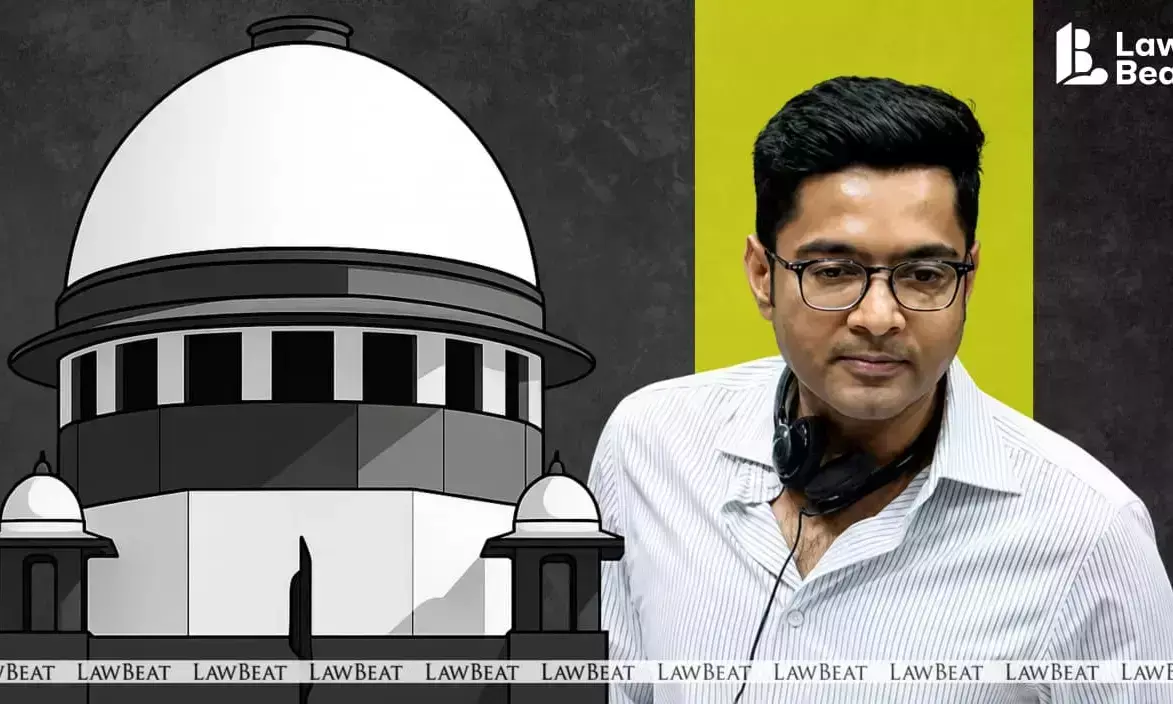
Supreme Court: Abhishek Banerjee Media Reporting Plea Sent to Calcutta High Court
Summary
- The Supreme Court declined to grant interim relief to Trinamool Congress MP Abhishek Banerjee regarding media reporting on investigations against him.
- Banerjee alleged that leaks of investigation-related information were fueling a continuous media trial.
- The Supreme Court directed Banerjee to approach the Calcutta High Court for interim relief, requesting prompt consideration after its reopening on November 16.
- Banerjee's counsel argued that the presumption of innocence was being undermined by regular media reports.
- The High Court had previously not heard Banerjee's plea due to roster issues, despite multiple attempts for an urgent hearing.
Judicial Deferral on Media Reporting
The Supreme Court's decision to defer to the Calcutta High Court for interim relief underscores a current judicial approach where apex court intervention on media restrictions related to ongoing investigations is not immediately granted.
The Supreme Court of India recently declined to issue interim relief or adjudicate on the merits of a plea by Trinamool Congress Member of Parliament Abhishek Banerjee, who sought to curb media reporting on ongoing investigations against him. Instead, a bench comprising Chief Justice of India Surya Kant, Justice Joymalya Bagchi, and Justice V Mohana directed Banerjee to present his application for interim measures to the Calcutta High Court. This directive came on November 3, 2026, with the Supreme Court requesting the High Court to consider the matter promptly upon its reopening on November 16, following the Durga Puja and Diwali vacations.
Banerjee's legal team, led by Senior Advocate Shoeb Alam, had approached the Supreme Court after previous attempts to secure an urgent hearing at the Calcutta High Court proved unsuccessful. Alam informed the apex court that his client had initially filed a plea in September with the Calcutta High Court, seeking relief against what he termed a "media trial." However, that court had indicated it lacked the appropriate roster to hear the case. Despite three subsequent attempts to mention the matter before the High Court, the plea remained unheard, prompting the direct appeal to the Supreme Court.
Allegations of Media Trial and Legal Principles
At the heart of Abhishek Banerjee's petition was the allegation that information pertaining to investigations against him was being systematically leaked to media organizations. He contended that this dissemination of investigation-related details was fueling a continuous "media trial," thereby prejudicing his position. The specific relief sought by Banerjee included directives to prevent the publication of reports concerning matters under active investigation and to halt the alleged spread of sensitive information.
Senior Advocate Shoeb Alam emphasized before the Supreme Court that the fundamental legal principle of the presumption of innocence, a cornerstone of judicial precedents, was being undermined by these media reports. He argued that the regular publication of such reports concerning Banerjee constituted an ongoing violation of his client's rights. The case, titled Abhishek Banerjee v. Union of India & Ors., highlights the tension between freedom of the press and the rights of individuals facing investigation, particularly concerning investigation leaks media and the potential for media trial India Supreme Court intervention.
Implications for High Court Scrutiny
The Supreme Court's decision to defer to the Calcutta High Court for interim relief underscores a current judicial approach where apex court intervention on media restrictions related to ongoing investigations is not immediately granted. By permitting Banerjee to pursue his plea at the High Court and urging prompt consideration, the Supreme Court effectively placed the onus on the lower court to address the concerns regarding Abhishek Banerjee media reporting. This means the Calcutta High Court will now be tasked with evaluating Banerjee's request for Calcutta High Court media restrictions in accordance with its established judicial processes.
This development is significant for understanding the current stance on presumption of innocence media reporting in India. While the Supreme Court acknowledged the existence of the plea, it refrained from making a substantive ruling on the alleged media trial or imposing any blanket restrictions on reporting. The High Court's upcoming consideration will therefore be a crucial step in determining the immediate legal recourse available to individuals like Banerjee who claim to be adversely affected by media coverage during investigations.
Practical Implications
This ruling indicates that the Supreme Court is currently deferring to High Courts for interim relief concerning restrictions on media reporting of ongoing investigations. Lawyers advising high-profile clients or those under investigation should note that direct Supreme Court intervention to curb 'media trials' is not being granted at this stage, and strategies should focus on High Court remedies for such issues.
Source
How does this affect you?
Get an AI analysis of this article grounded in your jurisdictions, practice areas, and any policy documents you've uploaded to Wansom.
Wansom is AI and can make mistakes.