
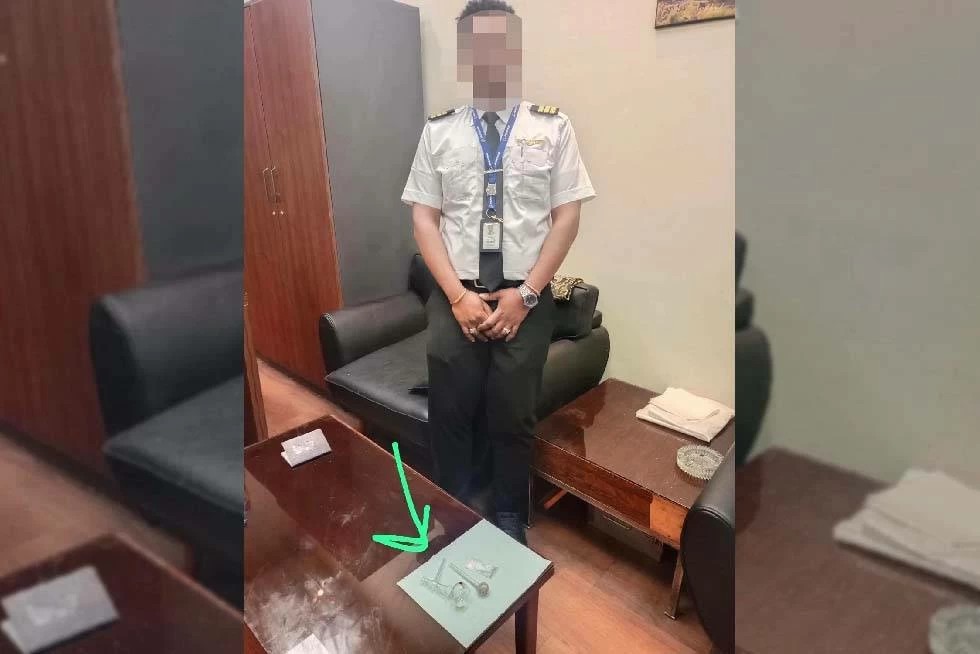
East Cairo Public Prosecution: Sudanese Co-Pilot Cairo Airport Drug Arrest, Detained 4 Days
Summary
- A Sudanese co-pilot was arrested at Cairo Airport for possessing crystal methamphetamine and drug paraphernalia.
- He was intercepted by airport security while traveling as a passenger on a flight from Cairo to Port Sudan.
- The East Cairo Public Prosecution ordered his four-day detention pending further investigation.
- The incident highlights Egypt's strict enforcement of drug possession laws, particularly at international transit points.
Incident at Cairo International
Ultimately, the Sudanese co-pilot's Cairo Airport drug arrest underscores the unwavering commitment of Egyptian authorities to enforce their drug possession laws, ensuring the security and integrity of their borders and international transit points against illicit activities.
A Sudanese co-pilot was recently apprehended at Cairo International Airport, facing serious charges related to drug possession. The individual, whose name has not been released, was intercepted by airport security officers while preparing to board a flight destined for Port Sudan. He was traveling in a passenger capacity at the time of the arrest.
Authorities discovered crystal methamphetamine along with associated drug paraphernalia in his possession. This discovery led to his immediate detention on Tuesday, initiating a formal legal process. The incident underscores the vigilance of security personnel at one of Africa's busiest air hubs, highlighting ongoing efforts to curb illicit drug trafficking and possession within its premises.
Legal Proceedings and Egyptian Drug Laws
Following the arrest, the East Cairo Public Prosecution swiftly took action, ordering a four-day detention for the co-pilot. This initial detention period is a standard procedure in Egypt, allowing investigators to gather evidence and conduct further inquiries before formal charges are laid or a more extended remand is sought.
The legal framework in Egypt imposes stringent penalties for drug-related offenses, particularly those involving controlled substances like crystal methamphetamine. Possession, trafficking, and even personal use of such drugs can lead to severe sentences, including lengthy imprisonment and substantial fines. However, a recent Supreme Constitutional Court ruling in February 2026 determined that the Egyptian Drug Authority (EDA) lacked the constitutional power to amend drug schedules, a decision that could affect past reclassifications of substances like methamphetamine and potentially allow some convicts to seek reduced sentences or annulled verdicts. The fact that the arrest occurred at an international airport, a critical transit point, further complicates the legal landscape. Egyptian authorities maintain a zero-tolerance policy for drug offenses within their borders, and this strict enforcement extends unequivocally to all individuals, regardless of their nationality or professional status, including those in the aviation sector.
The East Cairo Public Prosecution's involvement signals the serious nature of the charges, indicating that the case will proceed through the Egyptian judicial system with a focus on upholding the nation's strict anti-drug statutes.
Implications for Aviation and International Travel
This incident at Cairo Airport carries significant implications beyond the immediate legal fate of the individual involved. For the aviation industry, it serves as a stark reminder of the rigorous security protocols in place at major international airports and the personal accountability expected of all personnel, even when off-duty.
The arrest of an aviation professional, albeit traveling as a passenger, draws attention to the potential vulnerabilities within the broader travel ecosystem. While the co-pilot was not on active duty, his professional identity adds a layer of scrutiny to the event, prompting considerations about background checks, employee conduct, and the potential for reputational damage to airlines.
For international travelers, the case reinforces the critical importance of understanding and adhering to local laws, especially concerning controlled substances, when transiting through or visiting foreign countries. Egypt's firm stance on drug possession means that ignorance of the law is not a viable defense, and penalties are applied without exception. Ultimately, the Sudanese co-pilot's Cairo Airport drug arrest underscores the unwavering commitment of Egyptian authorities to enforce their drug possession laws, ensuring the security and integrity of their borders and international transit points against illicit activities.
Practical Implications
This incident underscores the strict enforcement of drug possession laws in Egypt, particularly at international transit points like Cairo Airport. Legal professionals should advise clients on the severe penalties for drug offenses, while compliance officers in aviation should review internal policies regarding employee conduct and drug screening, even for off-duty personnel.
Source
How does this affect you?
Get an AI analysis of this article grounded in your jurisdictions, practice areas, and any policy documents you've uploaded to Wansom.
Finish Reading the Full Story and the Expert Analysis.
Get the latest legal & regulatory intelligence in Egypt
Wansom is AI and can make mistakes.