
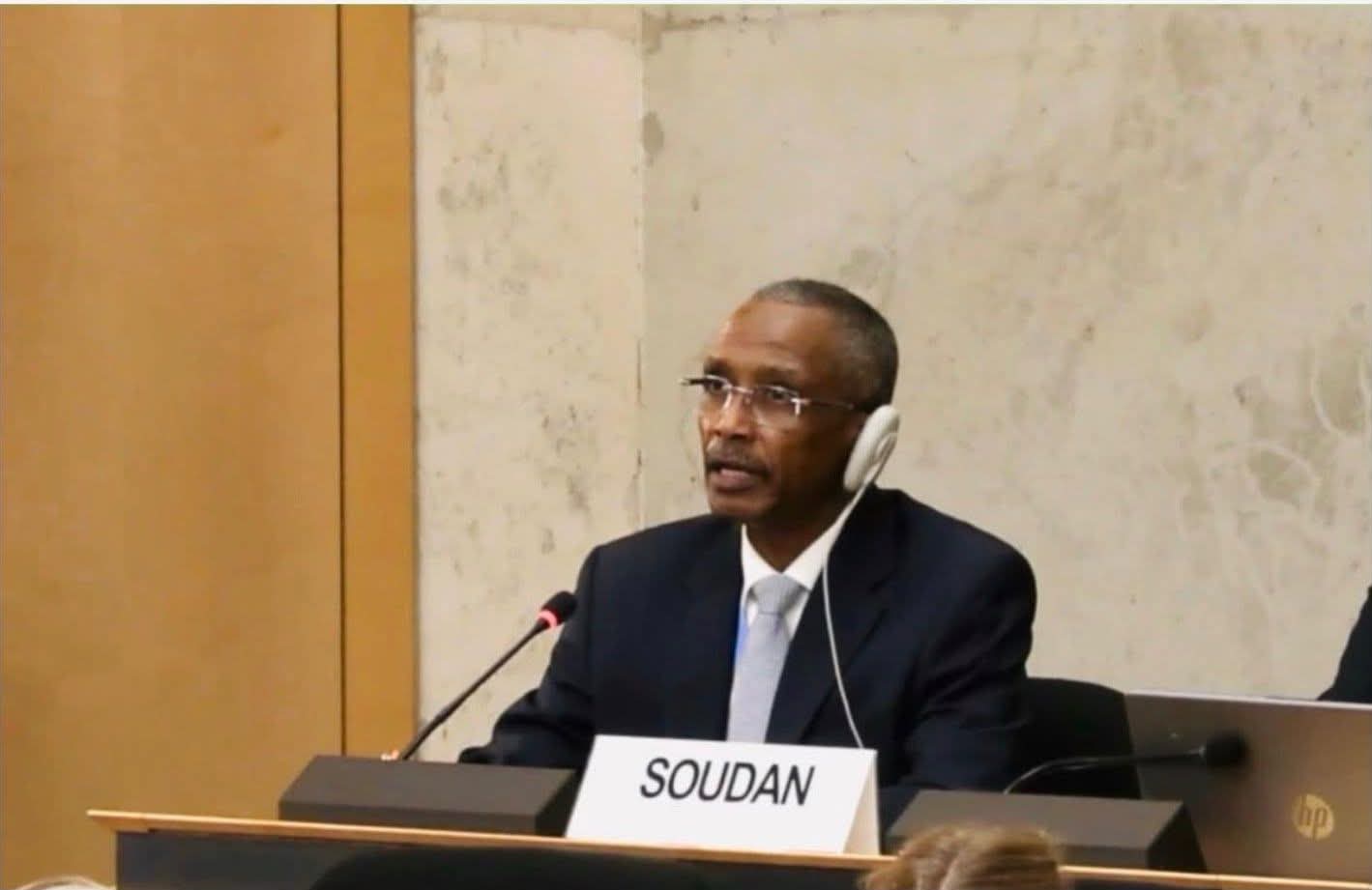
Sudan: تحفظات السودان مجلس حقوق الإنسان بعثة تقصي الحقائق ترفض تمديد الولاية
Summary
- Sudan's Permanent Representative in Geneva, Hassan Hamid, criticized the UN Human Rights Council for extending its fact-finding mission's mandate, citing disregard for national sovereignty and the principle of complementarity.
- The Human Rights Council voted to extend the mission for an additional year, with 28 countries in favor, 10 against, and 9 abstaining.
- Sudan has consistently advocated for external mechanisms to supplement, not replace, its national investigation committee, which was formed on July 21, 2023, to probe violations of national and international humanitarian law.
- The national committee has submitted five interim reports to the Human Rights Council, yet the resolution to extend the mission, sponsored by Britain and other Western nations, did not incorporate Sudan's substantive reservations.
- This dispute highlights a significant challenge to the legal standing and enforceability of international findings versus national investigations into alleged human rights violations in Sudan.
Sudan Challenges UN Mandate Extension
This conflict highlights potential challenges to the legal standing and enforceability of findings from international bodies when they are perceived to bypass or undermine national investigations.
Sudan's Permanent Representative in Geneva, Hassan Hamid, voiced strong objections on October 5, 2026, to the United Nations Human Rights Council's decision to extend the mandate of its fact-finding mission. Speaking on a Monday, Hamid criticized the Council for disregarding the principle of complementarity with Sudan's national investigation committee and for infringing upon the nation's sovereignty. These تحفظات السودان مجلس حقوق الإنسان بعثة تقصي الحقائق underscore a deepening jurisdictional dispute between the international body and the Sudanese government regarding investigations into alleged human rights violations.
The Council's vote saw 28 nations supporting the draft resolution to extend the mission's mandate for an additional year. In contrast, 10 countries rejected this extension, while 9 others chose to abstain. The nations that opposed the extension included Egypt, Pakistan, Qatar, Kuwait, Iraq, Cuba, China, Indonesia, Burundi, and Vietnam, highlighting a significant division among member states on the issue of the tمديد ولاية بعثة تقصي الحقائق السودان.
Sudan's Stance on National Investigations
For three consecutive years, Sudan's delegation, led by Hassan Hamid in Geneva, has consistently communicated its willingness to engage with the principle of complementarity. This principle, as articulated by Sudan, posits that any external investigative mechanism should serve to supplement, rather than replace, the efforts of the national investigation committee. However, Hamid noted that the drafters of the resolution to extend the mission's mandate deliberately avoided incorporating explicit language that would affirm this principle and respect the inherent jurisdiction of both the اللجنة الوطنية للتحقيق السودانية and the country's judicial system.
Following the onset of an open conflict initiated by the Rapid Support Forces against the Sudanese state and its populace, the government of Sudan moved swiftly to establish its own national committee. Formed on July 21, 2023, this body was tasked with investigating crimes and violations of both national law and international humanitarian law. The national committee has since demonstrated its commitment by submitting five interim reports to the Human Rights Council, detailing its ongoing work and findings.
International Resolution and Sovereignty Concerns
The draft resolution for the تمديد ولاية بعثة تقصي الحقائق السودان was put forward by Britain and several other Western countries. Despite Sudan's consistent engagement and the submission of detailed reports by its national committee, the Human Rights Council proceeded with the extension, prompting further criticism from Khartoum. Hassan Hamid specifically highlighted that the proponents of the extension resolution failed to adequately consider Sudan's substantive reservations, particularly concerning the perceived encroachment on national sovereignty and the role of its domestic legal processes.
This decision by the مجلس حقوق الإنسان السودان to extend the mission's mandate without explicitly acknowledging the principle of complementarity or the primary role of Sudan's national judiciary has intensified the debate over the balance between international oversight and national jurisdiction. The omission of such language in the resolution, despite Sudan's repeated calls, signals a continued divergence in approaches to accountability for alleged violations of القانون الدولي الإنساني السودان.
Implications for Accountability and Legal Standing
The ongoing jurisdictional dispute between Sudan and the UN Human Rights Council regarding the extended mandate of the fact-finding mission carries significant implications for future accountability processes. This conflict highlights potential challenges to the legal standing and enforceability of findings from international bodies when they are perceived to bypass or undermine national investigations. The Sudanese government's consistent articulation of its تحفظات السودان مجلس حقوق الإنسان بعثة تقصي الحقائق suggests a deep-seated concern over the perceived erosion of its sovereign right to investigate and prosecute alleged violations within its borders.
This situation could set a precedent for how international human rights mechanisms interact with national judicial systems, particularly in contexts of internal conflict. The perceived disregard for Sudan's national efforts, despite the establishment of the اللجنة الوطنية للتحقيق السودانية and its submission of interim reports, raises questions about the effectiveness of international cooperation when national sovereignty concerns are not adequately addressed. The outcome of this dispute will likely influence the credibility and acceptance of both international and national findings in the long term.
Practical Implications
Lawyers and compliance officers should monitor the ongoing jurisdictional dispute between Sudan and the UN Human Rights Council regarding the fact-finding mission's extended mandate. This conflict highlights potential challenges to the legal standing and enforceability of findings from international bodies versus national investigations into alleged human rights violations in Sudan, which could impact future accountability processes.
Source
How does this affect you?
Get an AI analysis of this article grounded in your jurisdictions, practice areas, and any policy documents you've uploaded to Wansom.
Finish Reading the Full Story and the Expert Analysis.
Get the latest legal & regulatory intelligence in Sudan
Wansom is AI and can make mistakes.