
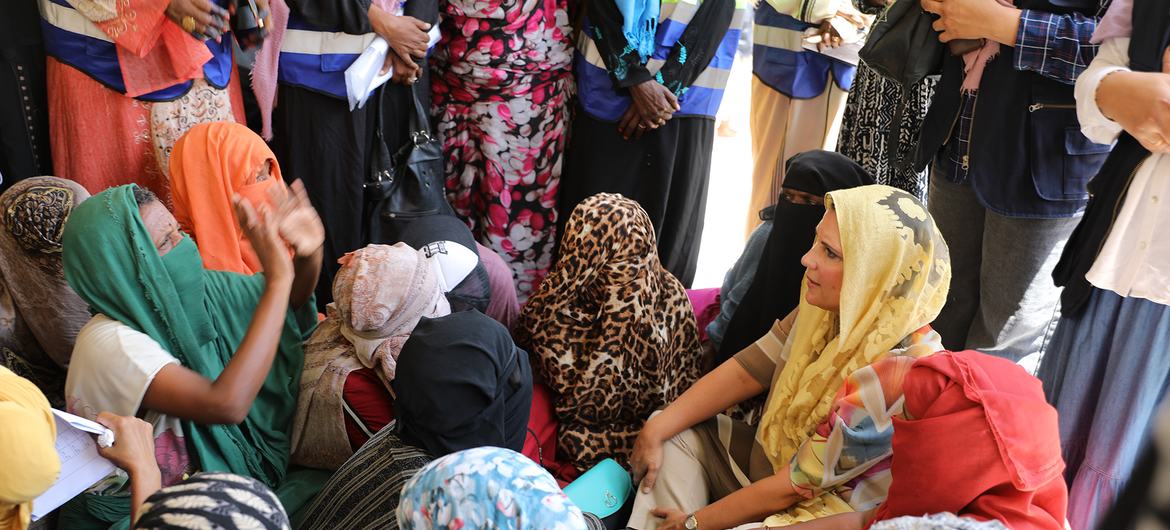
Sudan: Women Leaders Question Burhan Dialogue Plan Legitimacy
Summary
- Sudanese women leaders are critically questioning General El Burhan's proposed national dialogue, citing concerns over a lack of ceasefire and independent guarantees.
- The Sudan Dialogue Preparation Committee is tasked with facilitating initial consultations to define the terms of the dialogue, calling for verifiable guarantees and public freedoms.
- Activists like Rabha Ismail warn that without mediation and a ceasefire, the dialogue risks becoming one-sided and failing to address the war's root causes.
- Dar Alsalam Abdullah Wada'a emphasizes that El Burhan cannot be a neutral convener and demands clear accountability for abuses and transparent participation criteria for armed groups.
- Women leaders advocate for "peace from a feminist perspective," stressing the need for justice, dignity, equality, and the dismantling of violent structures for a durable peace.
Sudan's Proposed Dialogue Under Scrutiny
Without a genuine commitment to a ceasefire, independent oversight, and robust mechanisms for accountability, the proposed discussions risk failing to deliver a lasting resolution for the war-torn nation.
Sudanese women leaders and activists are raising significant questions regarding the efficacy and legitimacy of a proposed national dialogue initiated by army chief and Sovereignty Council chair, General Abdelfattah El Burhan. Their primary concerns center on the absence of a comprehensive ceasefire, the need for truly independent guarantees, and the imperative for genuine participation by women to ensure any political breakthrough is meaningful and sustainable. This critical assessment comes as the 19-member Sudan Dialogue Preparation Committee announces its intention to launch a national, independent initiative aimed at establishing the necessary conditions for talks among various political, civil, and community forces.
The committee, which convened a press conference in Khartoum on Sunday, clarified that its role is strictly limited to facilitating initial consultations. These consultations are intended to define the conditions, methodology, criteria for participation and representation, guarantees, and the overall agenda for the dialogue, without imposing any predetermined outcomes. To foster a conducive environment, the committee has called for written, verifiable guarantees for all participants, an end to politically motivated legal cases against those traveling from abroad to join the discussions, and temporary procedural immunity. They also demand an environment that upholds public freedoms, emphasizing that the state's involvement should be confined to providing guarantees, facilities, and protection, without interfering in the selection of participants, the agenda, or the final results.
Concerns Over Neutrality and Conditions
Despite the committee's stated intentions, women's activist Rabha Ismail expressed reservations, telling Radio Dabanga that while dialogue is ultimately essential to end the ongoing conflict, its success hinges on the warring parties' agreement on its terms and mechanisms. Ismail questioned the process for selecting the dialogue committee and how its independence could be assured, particularly given that the Sudanese government, now based in Khartoum, is itself a direct party to the conflict. She underscored the necessity of external mediation and a political environment fostered by a truce and ceasefire, viewing these as crucial signs of good faith.
Ismail warned that holding any dialogue amidst continued and spreading warfare risks creating a "one-sided dialogue." She stressed that the political process must delve into the fundamental roots and causes of the war, rather than merely seeking a temporary agreement. Ignoring the underlying structure of the state and the sources of violence, she cautioned, could lead to a fragile peace that might plunge the country back into conflict or coups. Furthermore, Ismail voiced apprehension that the persistent influence of Islamists within the Khartoum authorities could inadvertently gain renewed legitimacy through the proposed dialogue.
Demands for Accountability and Inclusive Participation
A central point of contention for women leaders is the issue of accountability for abuses. Rabha Ismail drew a clear distinction between protection from prosecution for political views and exemption from accountability for crimes and violations. She firmly stated that individuals who have committed such offenses should not be shielded from justice through political arrangements. This sentiment is echoed by Dar Alsalam Abdullah Wada'a, head of the Sudan Civil Movement and a prominent advocate for the political and social participation of rural women, who also affirmed the necessity of dialogue in principle.
Wada'a, however, raised critical questions about who is initiating the dialogue and who will determine its participants, conditions, and guarantees. She argued that General El Burhan, as the commander of the army and a principal party to the war, cannot be considered a neutral actor or the sole representative of the state in the political process. Wada'a questioned how armed movements and groups fighting alongside the army would participate, emphasizing the need for clarity on whether they would join as independent entities or as forces aligned with the military. She called for transparent participation criteria for all armed groups and Islamist organizations involved in the fighting, asserting that taking up arms should not automatically confer political legitimacy. Wada'a insisted that anyone proven to have been involved in crimes or abuses against civilians must be held accountable, further questioning the enforceability of any guarantees promised by El Burhan.
The Path to a Durable Peace
The collective voice of these Sudanese women leaders highlights a profound skepticism about the current framework for peace talks. Their critique underscores that a sustainable resolution demands more than just a conversation; it requires fundamental shifts in power dynamics, a commitment to justice, and a truly inclusive process. They advocate for what Rabha Ismail terms "peace from a feminist perspective," which encompasses meaningful participation, the delivery of justice, dignity, and equality, and the dismantling of violent structures. This vision also includes the reform and reorganization of military institutions, active efforts to tackle hate speech, and the rebuilding of trust among communities.
Without a genuine commitment to a ceasefire, independent oversight, and robust mechanisms for accountability, the proposed discussions risk failing to deliver a lasting resolution for the war-torn nation. The concerns raised by these influential women leaders serve as a critical reminder that any political process in Sudan must address the deep-seated grievances and ensure that all parties, particularly those who have suffered most, have a legitimate voice in shaping the country's future. Their insistence on accountability and genuine inclusivity is paramount for preventing a recurrence of conflict and establishing a truly democratic and just society.
Practical Implications
Lawyers advising on Sudan should closely monitor the evolving conditions and legitimacy of El Burhan's proposed dialogue, particularly concerning the contentious issues of accountability for abuses and the enforceability of any guarantees, as these will shape future legal frameworks and transitional justice mechanisms.
Source
How does this affect you?
Get an AI analysis of this article grounded in your jurisdictions, practice areas, and any policy documents you've uploaded to Wansom.
Finish Reading the Full Story and the Expert Analysis.
Wansom is AI and can make mistakes.