
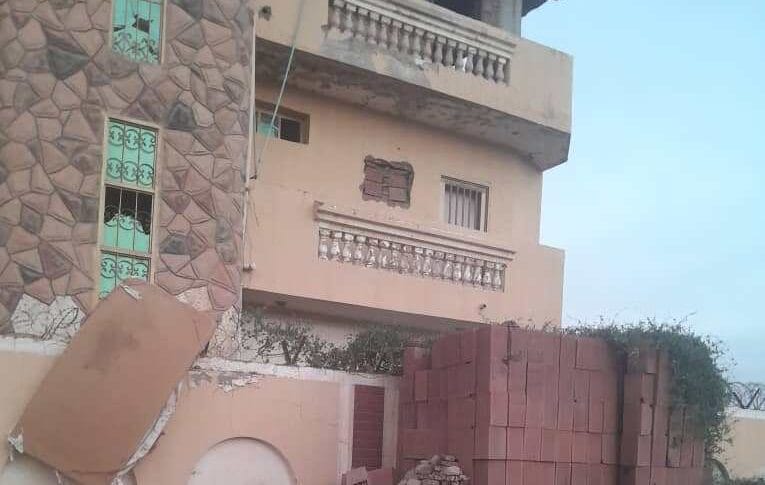
Sudan: War Property Ownership Disputes Emerge Amid Displacement
Summary
- Thousands of Sudanese displaced by conflict are facing the loss of their homes and ownership documents.
- Many returning owners are discovering their properties occupied by new residents, leading to complex disputes.
- The absence of official papers makes it difficult for original owners to prove their claims to their homes.
- Asia Salah's experience in Bahri illustrates how displaced individuals are unable to reclaim their occupied residences.
- The war has created widespread Sudan war property ownership disputes that extend beyond physically destroyed homes.
The Unforeseen Crisis of Displaced Property
The ongoing conflict has thus created a dual crisis: the destruction of homes and the effective dispossession of owners from intact properties through occupation and documentation loss.
The mass displacement of thousands across Sudan has evolved beyond a temporary escape from conflict, transforming into a profound and enduring struggle for many citizens. What began as a flight from the immediate dangers of shelling and gunfire, with the expectation of a swift return, has instead led to a complex web of challenges, including the loss of homes, the disappearance of crucial ownership documents, and the emergence of intricate Sudan war property ownership disputes. This crisis extends beyond the physical destruction of residences by combat, encompassing numerous standing homes that have become contested assets.
Many original owners are now confronting individuals who have settled in their properties during their absence, creating significant Sudan housing legal challenges. A report from Khartoum on November 25, 2026, highlighted the plight of those like Asia Salah, a resident of Bahri, an area severely affected by military confrontations. After a prolonged period of displacement, Salah returned with her family, hoping to resume her life, only to discover her home occupied by others. She found herself unable to access her property or retrieve her belongings easily, illustrating the harsh reality faced by countless Sudanese.
Proving Ownership Amidst Document Loss
A critical aspect of these emerging Sudan war property ownership disputes is the widespread loss of official documentation. During the chaotic process of displacement, many individuals lost their essential papers and records, rendering them unable to formally prove their ownership. This absence of clear title documents significantly complicates any attempt to reclaim property, leaving original owners in a precarious legal position. The situation underscores the severe Sudan property documentation loss that has occurred, creating a vacuum of evidence.
The challenge is exacerbated when original owners return to find their homes inhabited by new occupants. Without robust documentation, asserting a Sudan land ownership claim becomes incredibly difficult, often leading to protracted and unresolved conflicts. Asia Salah's experience exemplifies this, as she and her family had left their home believing their absence would be brief, only to return to find it occupied and face uncertainty on how to reclaim it. This scenario is a common thread in the broader Sudan forced displacement legal landscape, where the legal framework for restitution and property rights is severely tested.
Long-Term Repercussions for Returning Citizens
The ongoing conflict has thus created a dual crisis: the destruction of homes and the effective dispossession of owners from intact properties through occupation and documentation loss. The long-term implications for the social fabric and legal stability of Sudan are substantial, as these Sudan war property ownership disputes are expected to persist long after active hostilities cease. The inability of citizens to reclaim their homes not only represents a personal tragedy but also poses a significant obstacle to post-conflict recovery and the return of normalcy.
The widespread nature of these Sudan housing legal challenges means that a substantial portion of the population faces uncertainty regarding their most valuable assets. The lack of clear pathways for restitution, compounded by the loss of vital records, suggests a future fraught with legal battles and social tension. Addressing these complex property rights issues will be crucial for any future peacebuilding efforts, as the right to housing and property is fundamental to the stability and well-being of returning displaced populations.
Practical Implications
Lawyers advising clients with property in Sudan must anticipate complex ownership disputes arising from wartime displacement and document loss, requiring robust strategies for proving title and navigating claims against new occupants. This highlights the critical need for meticulous documentation and understanding of potential post-conflict restitution frameworks.
Source
How does this affect you?
Get an AI analysis of this article grounded in your jurisdictions, practice areas, and any policy documents you've uploaded to Wansom.
Finish Reading the Full Story and the Expert Analysis.
Get the latest legal & regulatory intelligence in Sudan
Wansom is AI and can make mistakes.