
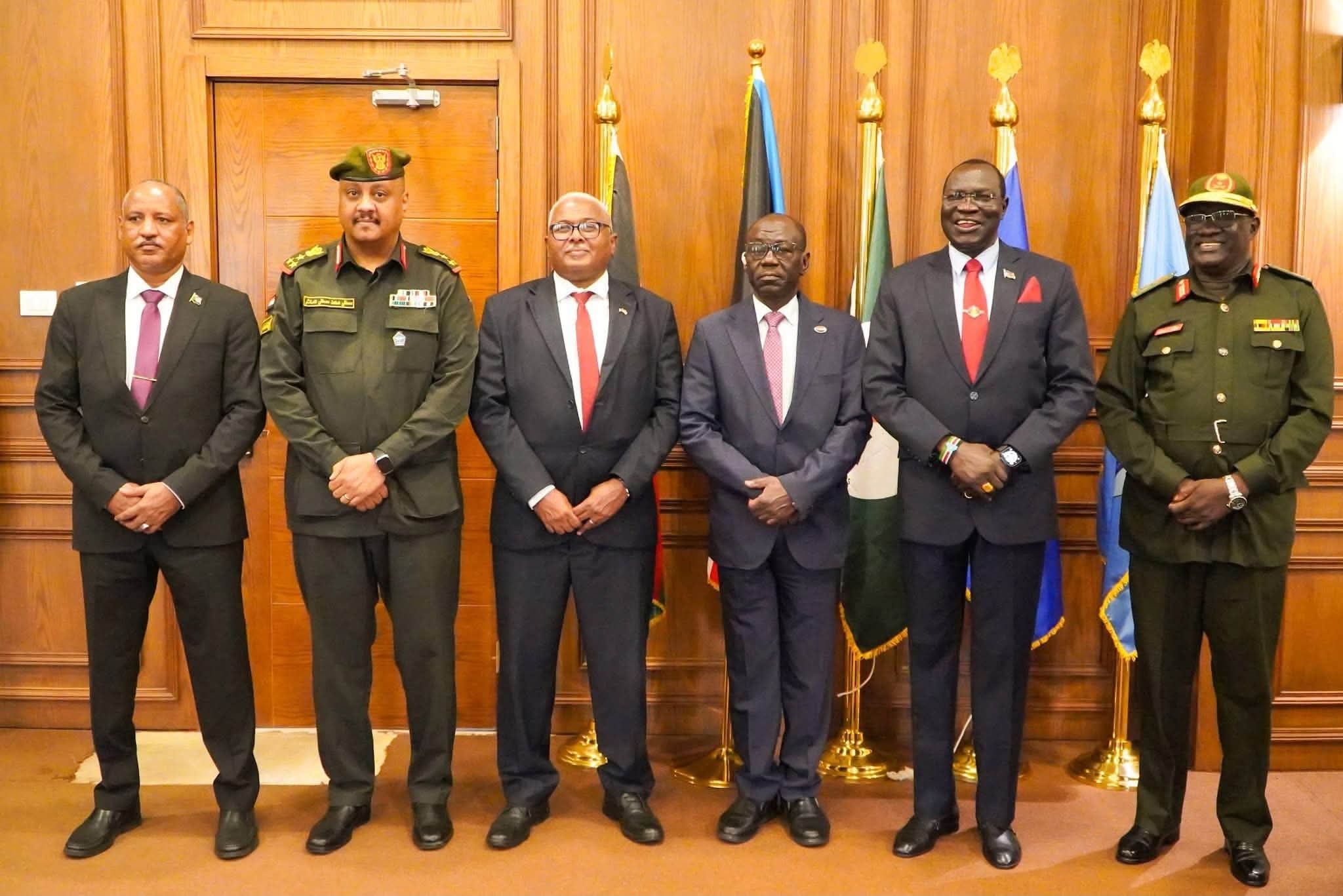
Sudan South Sudan Defence Ministers: Enhanced Border Security Agreement Reached
Summary
- Sudan and South Sudan agree to enhance border security and maintain status quo in disputed Abuie region.
- Joint political and security mechanism resumes after hiatus since April 2023 war outbreak.
- Agreement aims to address outstanding issues, promote stability, and enhance security along shared border.
- Disputed areas include Abuie, Hafir al-Nahhas, and Jebel Maginaz.
- Cooperation on preventing armed group infiltration, not harboring armed elements, and securing oil facilities.
Border Security Agreement Between Sudan and South Sudan
The joint mechanism agreed to cooperate in preventing the infiltration of armed groups across the border, not harboring any armed elements, and securing oil facilities and pipelines from South Sudan to Port Sudan's export terminal.
In a significant development, Sudan and South Sudan have agreed to enhance border security and maintain the status quo in the disputed Abuie region. The agreement was reached during meetings of the joint political and security mechanism, which resumed this week after a hiatus since the outbreak of war in Sudan in April 2023.
The mechanism, led by defense ministers from both countries, discussed the implementation of previous agreements and ways to address outstanding issues, promote stability, and enhance security along their shared border. The meetings brought together representatives from various government agencies, including foreign affairs, intelligence, and police units, highlighting the comprehensive nature of the discussions.
The 1,800-kilometer border between Khartoum and Juba is home to nomadic tribes that migrate seasonally for grazing and water, as well as armed groups. Despite previous agreements, no consensus has been reached on disputed areas such as Abuie, Hafir al-Nahhas, and Jebel Maginaz.
The joint mechanism agreed to cooperate in preventing the infiltration of armed groups across the border, not harboring any armed elements, and securing oil facilities and pipelines from South Sudan to Port Sudan's export terminal.
Legal Context
The agreement marks a crucial step towards stabilizing the region, which has been plagued by conflict and disputes over border territories. The joint mechanism's efforts aim to address the complex issues surrounding cross-border trade, investment, and security cooperation.
Lawyers advising clients on cross-border activities in the region should be aware of this development and monitor any further agreements or changes to border security protocols that may impact their operations. The agreement's implications for trade, investment, and regional stability will likely be closely watched by stakeholders.
The Sudan Tribune reported on the agreement, highlighting the significance of the joint mechanism's efforts in promoting cooperation between the two countries.
Why It Matters
The agreement has far-reaching implications for regional security and stability. By enhancing border security and maintaining the status quo in disputed areas, Sudan and South Sudan can reduce tensions and promote economic cooperation.
The joint mechanism's efforts demonstrate a commitment to addressing complex issues through dialogue and cooperation. This approach is crucial for resolving long-standing disputes and promoting peace in the region.
As the agreement takes effect, stakeholders should closely monitor its implementation and any potential changes to border security protocols that may impact cross-border activities.
Practical Implications
Lawyers advising clients on cross-border trade or investment in the region should be aware of this development and monitor any further agreements or changes to border security protocols that may impact their operations.
Source
How does this affect you?
Get an AI analysis of this article grounded in your jurisdictions, practice areas, and any policy documents you've uploaded to Wansom.
Wansom is AI and can make mistakes.