
Speaker Bagbin: Rejects Ghana Parliament Recall Motion
Summary
- Speaker Alban Bagbin rejected a motion from the Minority in Ghana's Parliament.
- Tolon MP Habib Iddrisu expressed surprise, stating the motion was identical to the one that triggered Parliament's recall.
- The motion sought urgent action on Ghana becoming a transit hub for illicit drugs.
- Iddrisu acknowledged the Speaker's authority under Ghana's Parliamentary Standing Orders to admit or reject motions.
- The Speaker ultimately decided not to admit the motion, despite prior knowledge of its content.
What Happened
The Speaker's ultimate decision not to admit the motion, despite its direct link to the House's recall, highlights the significant discretionary power vested in the office under Ghana's Parliamentary Standing Orders.
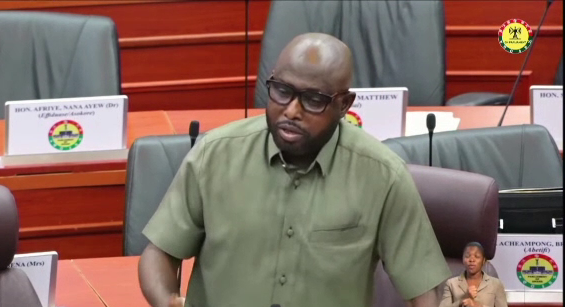
Speaker Alban Bagbin recently rejected a motion put forth by the Minority in Ghana's Parliament, a decision that surprised Tolon MP and First Deputy Minority Whip, Habib Iddrisu. The motion, which sought to address pressing national concerns, was not admitted by the Speaker, despite Iddrisu's firm belief that its content was identical to the memorandum that had prompted the recall of Parliament in the first place. This rejection by Speaker Bagbin of a Ghana Parliament recall motion has drawn attention to the procedural powers within the legislative body.
Iddrisu expressed considerable astonishment at the Speaker's refusal to admit the motion. He stated that he was "very, very surprised" by the outcome, having been convinced that the Speaker would allow the motion to proceed. The First Deputy Minority Whip emphasized that the text of the rejected motion mirrored precisely the language used in the memorandum that successfully triggered the parliamentary recall, suggesting the Speaker had prior knowledge of its substance.
The Motion's Substance
The Minority's initiative to recall Parliament stemmed from serious concerns regarding Ghana's potential emergence as a transit hub for illicit drugs. The rejected motion specifically aimed to prompt urgent action from the legislative body to tackle this critical issue. Habib Iddrisu noted that the Speaker's prior awareness of the reasons behind the recall had bolstered his confidence that the motion would be admitted, given its direct relevance to the House's convened session.
He reiterated that the motion's content was not distinct from the initial reference in the memorandum that had led to Parliament's reconvening. This consistency, in Iddrisu's view, should have ensured its admission. The focus on the Minority motion illicit drugs Ghana underscores a significant national security and public health concern that the Minority sought to bring to the immediate attention of the House.
Speaker's Discretionary Authority
Despite his surprise, Tolon MP Habib Iddrisu acknowledged the Speaker's inherent authority in parliamentary proceedings. He conceded that the power to admit motions, or to reject them, ultimately rests with the Speaker of the House. This authority is explicitly outlined within Ghana's Parliamentary Standing Orders, which empower the Speaker to make such determinations.
Iddrisu pointed out that while the Ghana Parliament Standing Orders motion grants the Speaker the right to admit motions, Speaker Alban Bagbin ultimately exercised his parliamentary discretion not to admit the Minority's motion. The Speaker reportedly provided some reasons for his decision, though these specific justifications were not detailed by the MP. This highlights the broad scope of the Speaker's procedural control over the legislative agenda.
Implications for Parliamentary Procedure
The Speaker's ultimate decision not to admit the motion, despite its direct link to the House's recall, highlights the significant discretionary power vested in the office under Ghana's Parliamentary Standing Orders. This incident underscores how the Speaker's interpretation and application of procedural rules can profoundly influence which issues are debated and acted upon by Parliament. The rejection of Habib Iddrisu motion rejection Ghana, even when it formed the very basis for a special sitting, demonstrates the Speaker's capacity to shape legislative priorities.
This development serves as a crucial reminder of the Speaker's pivotal role in Ghana's parliamentary system. The exercise of Alban Bagbin parliamentary discretion in this instance illustrates that even motions tied to the fundamental reasons for a legislative recall are subject to the Speaker's final approval. Such procedural decisions can have far-reaching implications for the legislative agenda and the progression of critical national issues.
Practical Implications
This development underscores the Speaker's significant discretionary power under Ghana's Parliamentary Standing Orders concerning the admission of motions, even when they form the basis for a legislative recall. Lawyers and compliance officers should note that parliamentary procedure and the Speaker's authority can significantly influence the legislative agenda and the progression of critical issues, requiring careful consideration for advocacy or legislative tracking.
Source
How does this affect you?
Get an AI analysis of this article grounded in your jurisdictions, practice areas, and any policy documents you've uploaded to Wansom.
Finish Reading the Full Story and the Expert Analysis.
Get the latest legal & regulatory intelligence in Ghana
Wansom is AI and can make mistakes.