
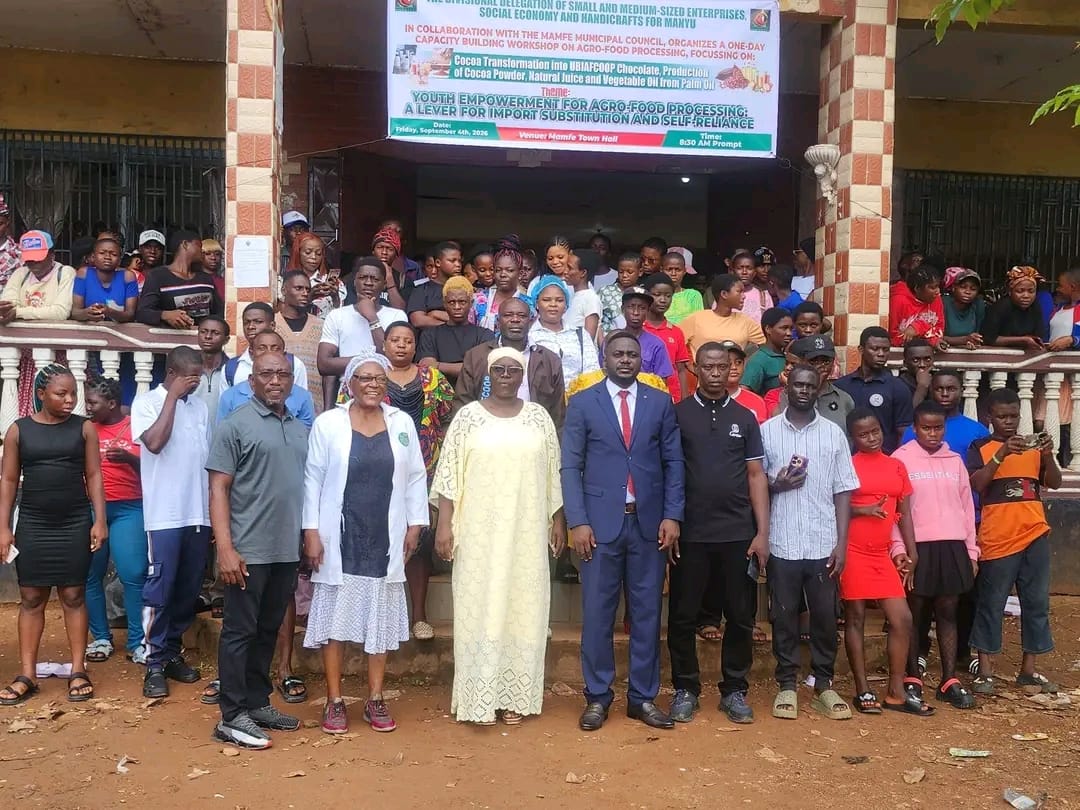
Southwest Cameroon Trains 401 Youth in Agro-Processing
The Ministry of Small and Medium-sized Enterprises, Social Economy, and Handicrafts (MINPMEESA) in Cameroon, through its departmental delegation, organized a training program for 401 young people in agro-food processing in Mamfe, Manyu department, South-West region, on September 4, 2026.
This capacity-building initiative, themed "Youth Empowerment for Agro-Food Processing: A Lever for Import Substitution," aimed to equip young participants with practical skills in areas such as fruit juice production, Overtea manufacturing, and chocolate production. The program is significant as it reflects the Cameroonian government's strategic focus on promoting youth entrepreneurship, fostering local value addition, and addressing unemployment, particularly in the South-West region which has faced security challenges. For legal professionals, this signals potential governmental support, incentives, or regulatory frameworks designed to encourage agro-processing ventures and youth-led businesses. It also highlights the legal considerations involved in establishing and operating such enterprises, including compliance with food safety standards, intellectual property rights for new products, and labor laws.
The legal context for this initiative is rooted in Cameroonian national development policies that prioritize import substitution, local content development, and job creation through the promotion of Small and Medium-sized Enterprises (SMEs) and the social economy. MINPMEESA operates under specific laws and decrees that define its mandate to support these sectors. Relevant legal frameworks include the OHADA Uniform Acts governing commercial companies and economic interest groups, national food safety and quality standards set by bodies like the Agence des Normes et de la Qualité (ANOR), and intellectual property laws under the OAPI framework. The government's emphasis on the South-West region also suggests a broader strategy that integrates economic development with peacebuilding efforts, potentially involving specific legal provisions for regional development or post-crisis recovery.
Key parties involved in this event include the Ministry of Small and Medium-sized Enterprises, Social Economy, and Handicrafts (MINPMEESA), specifically its departmental delegation in Manyu, and the 401 young participants from various neighborhoods in Mamfe. The initiative leverages the region's rich natural resources, such as fruits, cocoa, and palm oil, to create local value and income. This action follows a similar training organized earlier in 2026 for women and young girls, indicating a sustained effort by MINPMEESA in this domain.
Attorneys should advise young entrepreneurs and agro-processing businesses on the legal requirements for business registration, adherence to national food safety and quality standards, and the protection of their intellectual property rights for products and brands. Practitioners should also monitor government policies and incentives related to import substitution, youth entrepreneurship, and regional development, particularly in crisis-affected areas, to help clients access available support and navigate the regulatory landscape. Understanding the specific legal and regulatory environment for food production, labeling, and distribution will be crucial for businesses operating in this sector.
How does this affect you?
Get an AI analysis of this article grounded in your jurisdictions, practice areas, and any policy documents you've uploaded to Wansom.
Finish Reading the Full Story and the Expert Analysis.
Wansom is AI and can make mistakes.