
South Sudan: New National Parks Demarcation Policy Bans Forced Evictions
Summary
- South Sudan's Ministry of Wildlife Conservation and Tourism has introduced new guidelines for national park demarcation.
- The policy explicitly rules out forced evictions, requiring negotiations and community consultations for any relocation.
- A multi-agency verification process will establish park boundaries and assess historical land claims, demanding evidence from residents.
- The Land Commission will provide land ownership documents and maps to classify land before decisions are made.
- The initiative aims to protect vital ecological sites, contribute to the national economy through tourism, and secure the future of both communities and wildlife.
New Demarcation Policy for South Sudan's National Parks
The proposed National Protected Area Demarcation Guidance mandates a process of negotiation and community consultations before any consideration of relocation for residents.
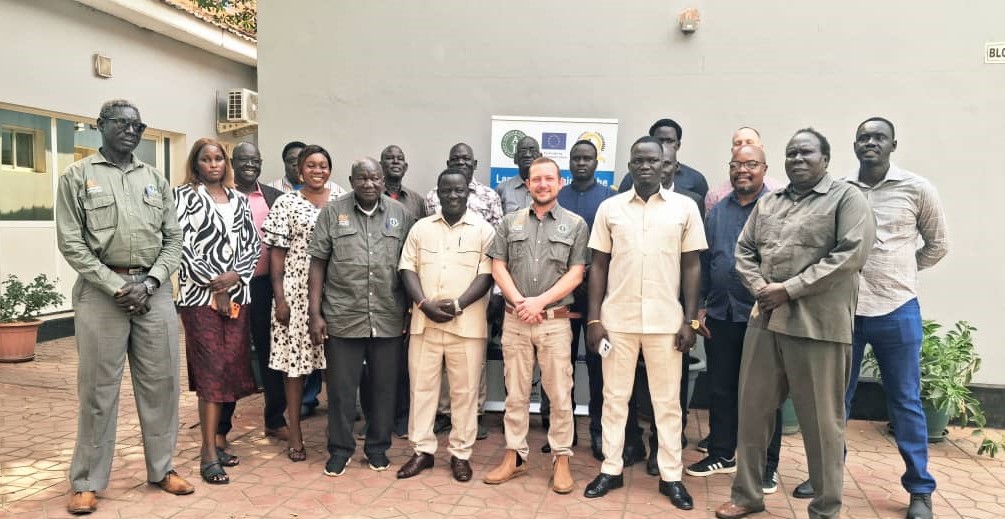
South Sudan's Ministry of Wildlife Conservation and Tourism has unveiled a new policy framework for managing settlements within its six national parks, explicitly ruling out forced evictions. This significant development comes as the government works to establish clear boundaries for these protected areas, which have seen an expansion of human habitation. The proposed National Protected Area Demarcation Guidance mandates a process of negotiation and community consultations before any consideration of relocation for residents.
Martin Ring Malek, who serves as the assistant director general for administration and finance at the ministry and is also the deputy chairperson of the Land Use Planning Committee, confirmed on Tuesday that authorities are committed to involving affected communities in devising solutions. This approach aims to address the growth of settlements that occurred within protected zones, particularly during periods of conflict. Malek underscored that any relocation would proceed only through mutual agreement, not coercion, following a validation workshop held in Juba.
Structured Process for Land Claims and Relocation
The new South Sudan protected area guidelines outline a meticulous process for establishing park boundaries and verifying historical land claims. Authorities will first delineate the protected areas and then assess whether communities residing within them possess legitimate historical rights to the land. Residents asserting that their families inherited land prior to the establishment of the national parks will be required to furnish evidence to substantiate these claims.
Should compelling evidence and established boundaries confirm historical occupation, Malek indicated that authorities would acknowledge these claims. In such scenarios, the government might propose relocating communities to alternative areas, emphasizing the need to preserve specific zones for wildlife. Furthermore, the policy allows for the potential adjustment of park boundaries in instances where evidence unequivocally demonstrates that communities legitimately occupied certain areas before their official gazetting as protected zones. The government has yet to ascertain the total population living within the national parks, noting that encroachment is widespread across various locations within individual parks.
This comprehensive verification exercise will necessitate collaboration among several key government bodies. The Ministry of Wildlife Conservation and Tourism South Sudan, along with the Ministries of Lands, Housing and Urban Development, and Environment and Forestry, will all participate, alongside the Land Commission. The Land Commission's crucial role will involve providing official land ownership documents and maps, which are essential for determining whether disputed territories are classified as public, private, or community land before any final decisions are rendered. This inter-agency cooperation underscores a structured legal process for land use planning in these sensitive areas.
Conservation, Economy, and Community Well-being
The initiative extends beyond mere boundary demarcation, aiming to bolster both environmental conservation and national economic development. David Geng Kech, who coordinates the Land Reform Unit at the Ministry of Lands, Housing and Urban Development, highlighted the integral role of wildlife conservation within national land use planning, emphasizing the economic contributions of protected areas. He specifically cited the significant revenue potential from various forms of tourism, including fishing tourism and wildlife viewing, underscoring the necessity of inter-ministerial cooperation to enhance land use management.
Joseph Kulang Akech, the director of research and planning at the Ministry of Environment and Forestry, also voiced strong support for the new guidelines. He characterized protected areas as vital ecological sites that demand robust conservation efforts, noting their role in supporting a rich diversity of biological species, from plants to animals and insects. Protecting these areas is seen as crucial for safeguarding South Sudan's natural and cultural heritage for future generations. Akech clarified that the South Sudan national parks demarcation policy is not intended to displace individuals but rather to secure the long-term future of both the people and the wildlife within these critical ecosystems. He urged communities to actively participate in the upcoming community consultations national parks South Sudan, stressing that effective conservation efforts ultimately benefit those living in proximity to the protected areas.
Practical Implications
Lawyers advising clients in South Sudan on land rights, environmental law, or community resettlement should be aware of the new National Protected Area Demarcation Guidance, which mandates community consultations and verification of historical land claims, ruling out forced evictions. This establishes a more structured legal process for land use planning in protected areas, requiring careful attention to due process and evidence for any relocation or boundary adjustments.
Source
How does this affect you?
Get an AI analysis of this article grounded in your jurisdictions, practice areas, and any policy documents you've uploaded to Wansom.
Finish Reading the Full Story and the Expert Analysis.
Get the latest legal & regulatory intelligence in South Sudan
Wansom is AI and can make mistakes.