
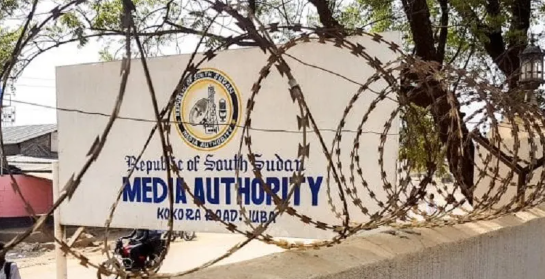
South Sudan Media Authority: 30-Day License Renewal Deadline Sparks Concerns
Summary
- The South Sudan Media Authority (SSMA) has issued a 30-day deadline for all media outlets nationwide to renew their operating licenses.
- Media organizations are concerned about the short timeframe, high costs, and lack of clear procedures, especially amid a severe economic recession.
- The SSMA operates under the Media Authority Act, but its independence is questioned due to the directive's ambiguity and political appointments.
- The directive is seen as part of a broader regime strategy to control media and restrict freedom of expression, likely intensifying before upcoming elections.
- Presidential appointments of Mr. Kongder Dut Jok to the SSMA and Gen. Peter Wal Athieu to the SSBC are cited as examples of political influence over media regulation.
Urgent Directive Issued to South Sudan Media
The sudden and ambiguous nature of the South Sudan Media Authority license renewal deadline, coupled with the lack of transparent procedures, raises suspicions that security directives may be influencing the SSMA's actions.
The South Sudan Media Authority (SSMA) has recently mandated that all media institutions and platforms operating across the country must renew their licenses within a stringent 30-day period. This administrative decision, issued by the SSMA in its capacity as a regulatory body under the Media Authority Act, has immediately triggered significant apprehension among numerous media outlets. The primary concerns revolve around the unusually short timeframe provided, the substantial costs associated with licensing, and a notable absence of both prior notification and clear procedural guidelines for the renewal process.
This directive arrives amidst a severe economic recession currently impacting households, businesses, and institutions throughout South Sudan. For many media organizations already grappling with elevated operational expenses and diminishing revenues, the combination of a one-month deadline and steep licensing fees presents a formidable challenge. Industry observers suggest these factors could severely jeopardize their ability to maintain operations, potentially leading to closures or significant scaling back of services.
Regulatory Powers and Operational Concerns
The Media Authority Act grants the SSMA powers as an independent regulatory body, tasked with overseeing and developing the media sector in the public interest. However, the recent South Sudan Media Authority license renewal deadline has prompted questions regarding the SSMA's operational independence and its adherence to its foundational mission. Critics point to the lack of clear procedural terms and the absence of prior notice as particularly troubling, suggesting potential influences beyond its stated regulatory mandate.
Journalist Ajou Luol Akuei, who serves as the director of the Media Authority, faces a significant moral and organizational responsibility in navigating these concerns. The regulation of the media, often referred to as the fourth estate, is fundamentally a national responsibility that should not be monopolized or exploited by any single entity. This principle is particularly crucial given the media's foundational role in public discourse and its influence on societal actions.
Political Context and Election Scrutiny
The current regime's approach to the media sector in South Sudan has long been characterized by efforts to control rather than foster its development. Historical patterns indicate that targeting the fourth estate has been a consistent objective throughout its rule, employing administrative, legal, financial, and security resources to exert pressure on media institutions. This pattern is further evidenced by persistent discriminatory appointment practices within key regulatory bodies.
Illustrative of this trend are the presidential appointments of Mr. Kongder Dut Jok as Chairperson of the Board of Directors of the South Sudan Media Authority, and Gen. Peter Wal Athieu as Chairperson of the Board of Directors of the South Sudan Broadcasting Corporation (SSBC). These individuals now lead the nation's highest media regulatory entities, effectively overseeing mechanisms that have historically restricted South Sudan freedom of expression. This heightened regulatory scrutiny, particularly through the SSMA license renewal directive, is widely anticipated to intensify as the regime prepares for upcoming elections scheduled for the end of this year.
The sudden and ambiguous nature of the South Sudan Media Authority license renewal deadline, coupled with the lack of transparent procedures, raises suspicions that security directives may be influencing the SSMA's actions. Beyond political control, the move also appears to serve a financial purpose. Official government stamps in South Sudan have increasingly become tools for generating revenue, often operating outside the direct oversight of the Ministry of Finance, suggesting the license fees could contribute to state coffers.
Practical Implications
Lawyers advising media clients in South Sudan must urgently assess compliance with the Media Authority's 30-day license renewal directive, considering the high costs and lack of clear procedures. This development signals increased regulatory scrutiny and potential challenges to media operations, requiring advice on legal recourse or risk mitigation strategies, especially in the context of upcoming elections.
Source
How does this affect you?
Get an AI analysis of this article grounded in your jurisdictions, practice areas, and any policy documents you've uploaded to Wansom.
Wansom is AI and can make mistakes.