
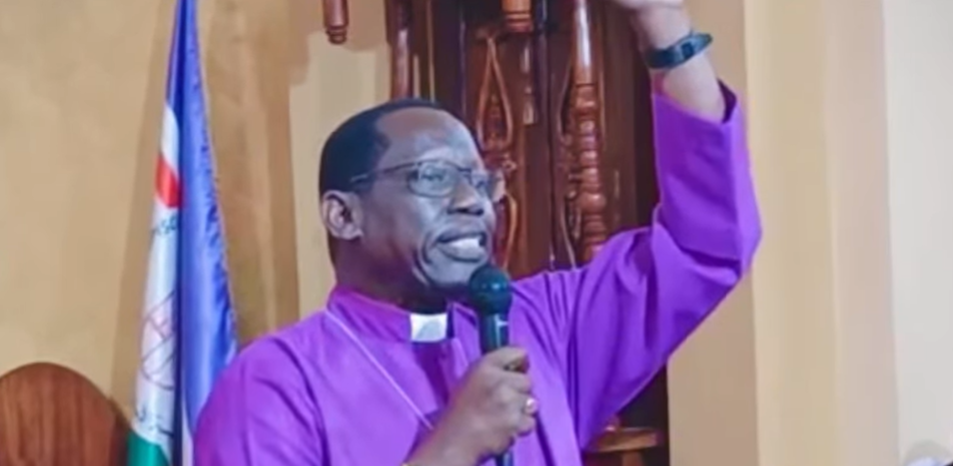
Bishop Gabriel: Challenges South Sudan Election Christmas
Summary
- Bishop Jackson George Gabriel of the Episcopal Diocese of Juba urged the South Sudanese government to change the December 22, 2026, general election date.
- The bishop argued that the scheduled election falls within the Christmas season, conflicting with a significant period of Christian worship.
- This would be South Sudan's first national election since its independence in 2011, following repeated postponements.
- Gabriel also highlighted challenges in accessing President Salva Kiir, referencing Vice President Rebecca Nyandeng de Mabior's similar difficulties.
- The intervention adds a religious dimension to existing political concerns regarding the election's timing and the readiness for credible polls.
Church Leader Challenges Election Timing
The intervention by Bishop Jackson George Gabriel places renewed and significant scrutiny on the South Sudan general election 2026 date, particularly from a moral and religious standpoint.
A prominent South Sudanese church figure has publicly urged the government to reconsider the scheduled date for the nation's upcoming general election, citing a direct conflict with the Christmas season. The Right Reverend Canon Jackson George Gabriel, who serves as the assistant bishop for the Episcopal Diocese of Juba, made his appeal on a recent Friday during a requiem Mass. The event, held at All Saints Cathedral in Juba, honored the late veteran politician Kosti Manibe Ngai.
Bishop Gabriel specifically highlighted that the December 22, 2026, election date, as set by the National Elections Commission South Sudan, would fall squarely within a crucial period of Christian observance. He questioned the rationale behind scheduling the vote so close to Christmas, emphasizing that the timing had not undergone sufficient public discourse. According to Gabriel, the period between December 22nd and 26th would effectively 'swallow in' Christmas Day, a time when Christians worldwide celebrate their faith and the birth of Jesus Christ. He called upon South Sudanese citizens to pray for a change in the election schedule, advocating for the date to be moved away from the festive season.
Broader Electoral Concerns and Historical Context
The proposed December 22, 2026, general election would mark South Sudan's inaugural national polls since achieving independence from Sudan in 2011. This intervention by a senior church leader introduces a significant religious dimension to the ongoing South Sudan election timing controversy, adding to existing political criticisms surrounding the planned vote. The government has consistently affirmed its commitment to holding the election on this date, despite a history of repeated postponements of national elections since the country's independence.
Opposition groups and various political actors have voiced considerable apprehension regarding the feasibility of conducting credible and peaceful polls under current conditions. Their concerns encompass several critical areas, including the unresolved implementation of provisions from the 2018 peace agreement, existing political and civic restrictions, the need for comprehensive security-sector reforms, and the overall readiness of electoral institutions. President Salva Kiir and members of parliament were last elected in 2010, prior to South Sudan's independence, underscoring the long delay in holding national polls. Despite these widespread concerns, the government maintains its defense of the current election timetable and continues with preparations for the vote.
Access to Leadership and Public Advocacy
Bishop Gabriel's remarks extended beyond the election date, touching upon the challenges of public engagement with the nation's leadership. He suggested that church leaders often find themselves compelled to speak on behalf of citizens who are hesitant to directly challenge those in power. He referenced an earlier statement made by Vice President Rebecca Nyandeng de Mabior, who also spoke at the same funeral service. Nyandeng, who is the widow of the late independence leader John Garang and holds the portfolio for youth and gender, expressed difficulties in gaining access to President Salva Kiir, noting that she sometimes goes for as long as two years without a meeting.
Gabriel used this revelation to underscore his point, questioning how ordinary church leaders could expect to meet the president if even a vice president struggles to do so. He implied that individuals surrounding the president might be actively preventing critical voices from reaching him. The bishop further invoked the legacy of Kosti Manibe Ngai, suggesting that if the late politician were still part of the government, he would not have remained silent but would have discreetly advised the president against holding elections on the proposed dates.
Implications for Stability and Peace
The intervention by Bishop Jackson George Gabriel places renewed and significant scrutiny on the South Sudan general election 2026 date, particularly from a moral and religious standpoint. His public challenge adds a potent layer of pressure to the existing political and logistical concerns surrounding the nation's first post-independence polls. This development could potentially impact the stability of the electoral process and the broader implementation of the South Sudan peace agreement elections.
By raising objections from a faith-based perspective, Gabriel's comments amplify the calls for greater public discussion and consideration of the election's timing. The confluence of religious objections with long-standing political and logistical issues creates a complex environment for the National Elections Commission South Sudan and the government as they navigate preparations for the crucial 2026 vote. This highlights the critical role of civil society and religious leaders in shaping public discourse and potentially influencing governmental decisions in South Sudan.
Practical Implications
Lawyers and compliance officers should monitor this development for potential legal challenges or changes to the South Sudan 2026 election timetable, as a senior church leader's intervention adds significant public pressure that could impact electoral stability and the implementation of outstanding peace agreement provisions.
Source
How does this affect you?
Get an AI analysis of this article grounded in your jurisdictions, practice areas, and any policy documents you've uploaded to Wansom.
Wansom is AI and can make mistakes.