
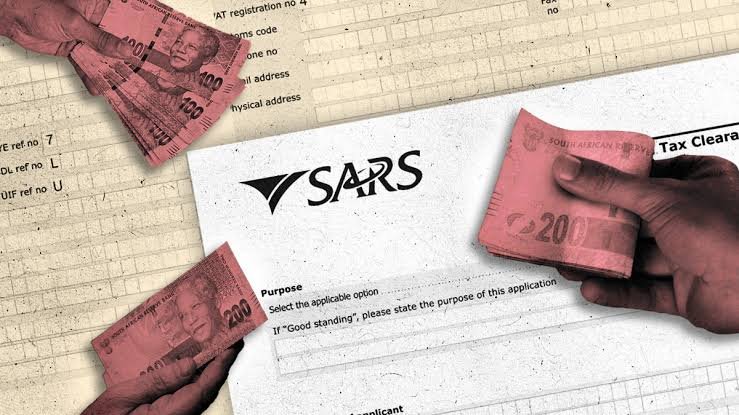
South Africa Interest-Free Loan Tax: SARS Clarifies Fringe Benefit Rules
The Core Rule: Why an "Interest-Free" Loan Isn't Actually Free of Tax
The logic behind this rule is straightforward once stated plainly: if an employer lends an employee money without charging interest, or charges interest below what a genuine lender would charge, the employee has received something of value — the interest they didn't have to pay. South African tax law doesn't let that value pass tax-free simply because no cash changed hands for it. Under Paragraph 2(f) of the Seventh Schedule, this is treated as a taxable fringe benefit, valued under Paragraph 11 as the difference between what the employee would have paid in interest at SARS's official rate, and what they actually paid (which may be nothing at all).
Critically, this applies regardless of where the loan funds actually come from. A common misconception flagged by tax practitioners is the assumption that only loans sourced from a financial institution attract this treatment. That's incorrect: SARS treats the benefit as taxable wherever an employer-employee relationship exists behind the loan, whether the employer lends its own funds directly or arranges the loan through another party or an associated institution. Housing loans, study loans, and emergency cash advances are all common real-world examples that fall squarely within this rule.
How the Official Rate Actually Works
The "official rate of interest" is not something SARS sets by discretion or policy preference each year — it's a fixed statutory formula: the South African Reserve Bank's repo rate plus one percentage point, defined in Section 1(1) of the Income Tax Act. When the Reserve Bank changes the repo rate, the official rate updates automatically from the first day of the following month. SARS publishes this history in Table 3, a month-by-month record running back to 1985, specifically so employers can apply the historically correct rate for any given pay period — including when correcting prior periods during an audit or preparing an Employer Reconciliation Declaration (EMP501).
The current rate is 7.75% per annum, effective 1 December 2025 — a decrease from the 8.75% rate that applied from April 2023, tracking the Reserve Bank's easing cycle over that period. If the interest an employer actually charges is below this rate — including charging zero — the shortfall is the taxable fringe benefit value for that period. If an employer charges interest at or above 7.75%, no fringe benefit arises at all, regardless of how the loan is otherwise structured.
What's Actually Exempt and the Exemptions Are Narrow
The R3,000 "casual loan" exemption is the one most often misapplied, and it's worth stating precisely. No taxable value arises on the granting of a casual loan, or loans in aggregate, not exceeding R3,000 at any time — but this exemption is specifically limited to short-term loans granted at irregular intervals. It is not a blanket R3,000 allowance every employer can rely on for any small loan. If loans under R3,000 are granted on a regular, recurring basis to all employees, or to a defined category of employees, a taxable benefit arises regardless of the fact that no individual loan exceeds R3,000 — the regularity of the arrangement, not just the amount, determines whether the exemption applies.
A second, separately significant exemption covers loans granted specifically to enable an employee to further their own studies — no value is placed on this benefit at all, distinct from the R3,000 casual-loan exemption and not subject to its irregularity condition.
A third category is excluded from the fringe benefit rule entirely by the wording of Paragraph 2(f) itself: loans advanced for the purpose of paying consideration in respect of a qualifying equity share under an employee share scheme, loans covering associated stamp duties or uncertified securities tax on such a share, or loans in respect of which the employer pays the borrower a subsidy. These fall outside the interest-free loan fringe benefit mechanism from the outset, rather than being exempted after the fact.
A related anti-avoidance provision is worth flagging for completeness: Paragraph 10A of the Seventh Schedule deems certain employer-financed housing schemes to constitute a loan for these purposes, even where the arrangement is structured as an occupancy or rental agreement rather than a loan on its face. Under a typical scheme of this kind, an employee occupies a house registered in the employer's name and pays a rental calculated as a percentage of the house's cost to the employer — economically equivalent to a low-interest housing loan, and taxed accordingly rather than allowed to escape the rule through structuring.
The Compliance Mechanics Employers Actually Need to Get Right
For a loan financed from the employer's own funds, the taxable value is the interest the employee would have paid for the tax year had they been charged at the official rate — recalculated for each period the official rate itself changes, since the rate is not fixed for the life of the loan. Where an employee does pay some interest, but at a rate below the official rate, only the difference is taxed, not the full official-rate amount — a distinction some employers get wrong, potentially over-withholding PAYE on the full notional interest rather than just the shortfall.
Employers face a specific, separate penalty risk tied to how this benefit is reported, not just how it's calculated. SARS's own PAYE guide for employers states that every employer must reflect the nature and cash equivalent value of a taxable fringe benefit on the employee's IRP5/IT3(a) certificate — and failing to do so attracts a penalty equal to 10% of the cash equivalent value of the taxable benefit, or 10% of the amount by which that value was understated on the certificate. This is a distinct compliance risk from simply getting the fringe benefit calculation wrong in payroll — it specifically penalises incomplete or inaccurate certificate reporting.
Compliance Implications / What This Means for Employers and Payroll Teams
Who must act, and what specifically changes: Any employer currently offering interest-free or low-interest loans to staff should confirm payroll systems are applying 7.75% as the official rate for periods from 1 December 2025 onward, and should verify historical periods were calculated using the correct rate applicable at the time, using SARS's own Table 3 record rather than a single current figure applied retroactively.
Financial and operational exposure: Employers relying on the R3,000 casual-loan exemption for recurring, scheduled loan programmes — rather than genuinely irregular, one-off advances — are likely misapplying the exemption and may be understating a taxable fringe benefit as a result. Separately, incomplete or missing fringe-benefit reporting on IRP5/IT3(a) certificates carries its own 10%-of-value penalty, independent of any PAYE shortfall itself.
Realistic timeline: The 7.75% rate is already in effect and applies until the next Reserve Bank repo rate change triggers an automatic update, at which point SARS updates Table 3 for the following month. There is no separate compliance deadline beyond ordinary monthly payroll and annual EMP501 reconciliation timing.
What remains uncertain or pending: The next change to the official rate depends entirely on the Reserve Bank's own repo rate decisions, which are not announced on a fixed schedule tied to the tax calendar. Employers should monitor SARS's Table 3 publication directly for the current applicable rate rather than relying on a fixed figure indefinitely.
Frequently Asked Questions
What is SARS's current official interest rate for fringe benefit purposes? 7.75% per annum, effective from 1 December 2025. This is fixed by statute as the Reserve Bank's repo rate plus one percentage point, not set independently by SARS.
Does this apply if the loan comes from a source other than the employer's own funds? Yes. The rule applies where the loan is granted by the employer directly, by another party through arrangement with the employer, or by an associated institution — the source of funds doesn't determine whether the benefit is taxable.
Are all loans under R3,000 exempt from this tax? No. The R3,000 exemption applies only to casual, short-term loans granted at irregular intervals. A recurring loan programme offered regularly to employees or a category of employees is not exempt merely because each individual loan is under R3,000.
Are study loans to employees exempt? Yes — loans granted specifically to enable an employee to further their own studies have no value placed on them as a fringe benefit under this rule, separate from the casual-loan exemption.
What happens if an employer charges some interest, but less than 7.75%? Only the difference between what was actually charged and the official rate is taxed as a fringe benefit — not the full official-rate amount.
What penalty applies if an employer fails to report this benefit correctly on an employee's tax certificate? A penalty equal to 10% of the cash equivalent value of the taxable benefit, or 10% of the amount by which that value was understated, applies where the required details are not properly reflected on the employee's IRP5/IT3(a) certificate.
Source
The current official rate (7.75%, effective 1 December 2025): SARS, "Budget 2026 Frequently Asked Questions" — read directly.
SARS's own Table 3 document, defining the official rate as the repo rate plus one percentage point and its historical record since 1985: SARS, "Interest Rates – Table 3" — read directly.
SARS's own official guidance on the fringe benefit rules generally: SARS, "Guide for Employers in respect of Fringe Benefits"; SARS, "PAYE-GEN-01-G02 – Guide for Employers in respect of Fringe Benefits (External Guide)" — including the 10% IRP5/IT3(a) reporting penalty, read directly.
Detailed analysis of Paragraph 2(f) and Paragraph 11 of the Seventh Schedule, the precise scope of the R3,000 casual-loan exemption (irregular short-term loans only, not recurring programmes), the study-loan exemption, and Paragraph 10A's deemed-loan housing scheme provision: South African Tax Guide, "Fringe benefits – Low interest or interest free loans".
The December 2025 Table 3 update, the rate's relationship to the repo rate, and its relevance to connected-person loan assessments: Accounting Weekly, "SARS Updated Interest Rates for Table 3".
The historical 8.75% rate effective April 2023, used as a comparison point, and common employer misconceptions about the source of loan funds: Business Media MAGS, "Employee Loans And Taxes"; ASL Expert Accounting Services, "Fringe Benefits".
How does this affect you?
Get an AI analysis of this article grounded in your jurisdictions, practice areas, and any policy documents you've uploaded to Wansom.
Finish Reading the Full Story and the Expert Analysis.
Wansom is AI and can make mistakes.