
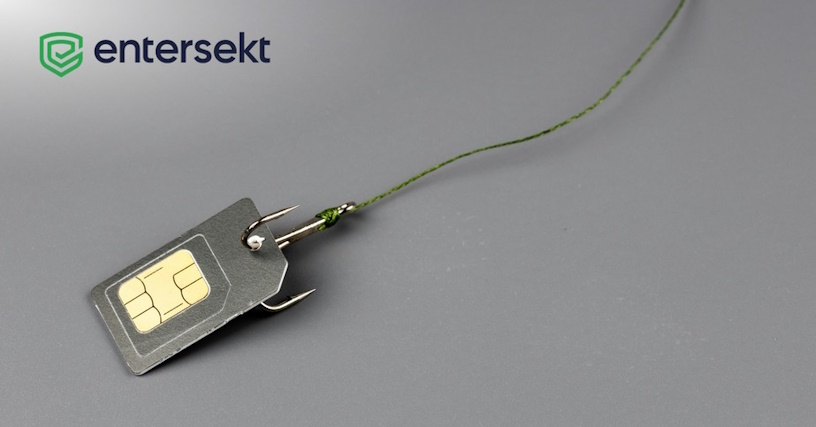
South Africa: Entersekt Addresses SIM-Swap Fraud for Financial Sector
Entersekt, a technology company, has been providing real-time SIM-swap fraud protection to its customers in South Africa for over a decade, enabling financial institutions to verify SIM card status with mobile network operators before processing sensitive transactions, addressing a critical vulnerability in the country's rapidly evolving instant payments landscape.
This development is of paramount legal and financial significance for South African financial institutions and their customers. The alarming statistics from the Communications Risk Information Centre (CRIC) and the South African Banking Risk Information Centre (SABRIC), indicating that roughly 60% of mobile-banking fraud is associated with SIM-swap attacks and projecting digital-banking fraud losses at R2.4 billion in 2025, underscore the severe and escalating threat. The shift to instant payments, as highlighted by Michael Avery, drastically reduces the window for fraud detection, placing immense pressure on institutions to implement robust, real-time authentication mechanisms. Failure to do so exposes financial service providers to significant financial losses, reputational damage, and potential regulatory penalties, as well as increased liability to defrauded customers.
The legal context for combating SIM-swap fraud in South Africa is multi-faceted. It primarily involves the National Payment System Act 78 of 1998, which governs payment systems and mandates secure and efficient transactions. The Financial Intelligence Centre Act (FICA) imposes stringent obligations on financial institutions to identify and verify clients and report suspicious transactions, making robust identity verification crucial. Furthermore, the Protection of Personal Information Act (POPIA) requires responsible processing and safeguarding of personal information, which includes protecting against identity theft facilitated by SIM swaps. The Consumer Protection Act 68 of 2008 also places duties on financial institutions to protect consumers from fraudulent activities. Key regulatory bodies include the South African Reserve Bank (SARB), which oversees payment systems, and the Financial Sector Conduct Authority (FSCA), which regulates market conduct and consumer protection in the financial sector.
Attorneys advising financial institutions and payment service providers must urgently review and enhance their fraud prevention protocols, particularly concerning SIM-swap detection and real-time authentication. It is imperative to move beyond reliance on SMS-based verification as the sole proof of identity. Legal professionals should guide clients on their compliance obligations under FICA, POPIA, and the NPSA, emphasizing the need for multi-factor authentication and the adoption of advanced technologies like those offered by Entersekt to mitigate significant financial losses and regulatory penalties. Furthermore, practitioners should prepare for potential litigation arising from SIM-swap fraud, including claims from defrauded customers against financial institutions for negligence or breach of duty, and advise on robust contractual terms with technology providers to ensure adequate protection and recourse.
How does this affect you?
Get an AI analysis of this article grounded in your jurisdictions, practice areas, and any policy documents you've uploaded to Wansom.
Finish Reading the Full Story and the Expert Analysis.
Get the latest legal & regulatory intelligence in South Africa
Wansom is AI and can make mistakes.