
South Africa AI Governance Strategy: Draft Policy Withdrawn Over AI-Generated References
Summary
- South Africa's Draft National AI Policy was withdrawn in April due to fake, AI-generated academic references, highlighting the need for robust AI governance.
- Jonathan Oaker of CloudZA emphasizes that effective AI governance begins with a thorough understanding and categorization of an organization's data and AI tools.
- Businesses should implement observability tools like Open Telemetry and utilize platforms that allow for locking down AI environments to manage usage and data access.
- For businesses handling sensitive data, consulting a service provider is recommended to establish proper controls and governance frameworks.
- Proactive AI governance mitigates risks such as data breaches, legal liabilities, and reputational damage, while also fostering competitive advantage.
South Africa's Evolving AI Regulatory Landscape
Businesses that prioritize robust AI governance from the outset will gain a competitive advantage through enhanced client trust, regulatory readiness, and operational maturity.
The landscape for artificial intelligence governance in South Africa is currently undergoing significant shifts, as evidenced by the recent withdrawal of the nation's Draft National Artificial Intelligence (AI) Policy. Communications and Digital Technologies Minister Solly Malatsi officially rescinded the document in April, citing the presence of fabricated, AI-generated academic references within its text. This incident serves as a stark reminder of the inherent risks associated with deploying AI technologies without adequate oversight and a clear governance framework.
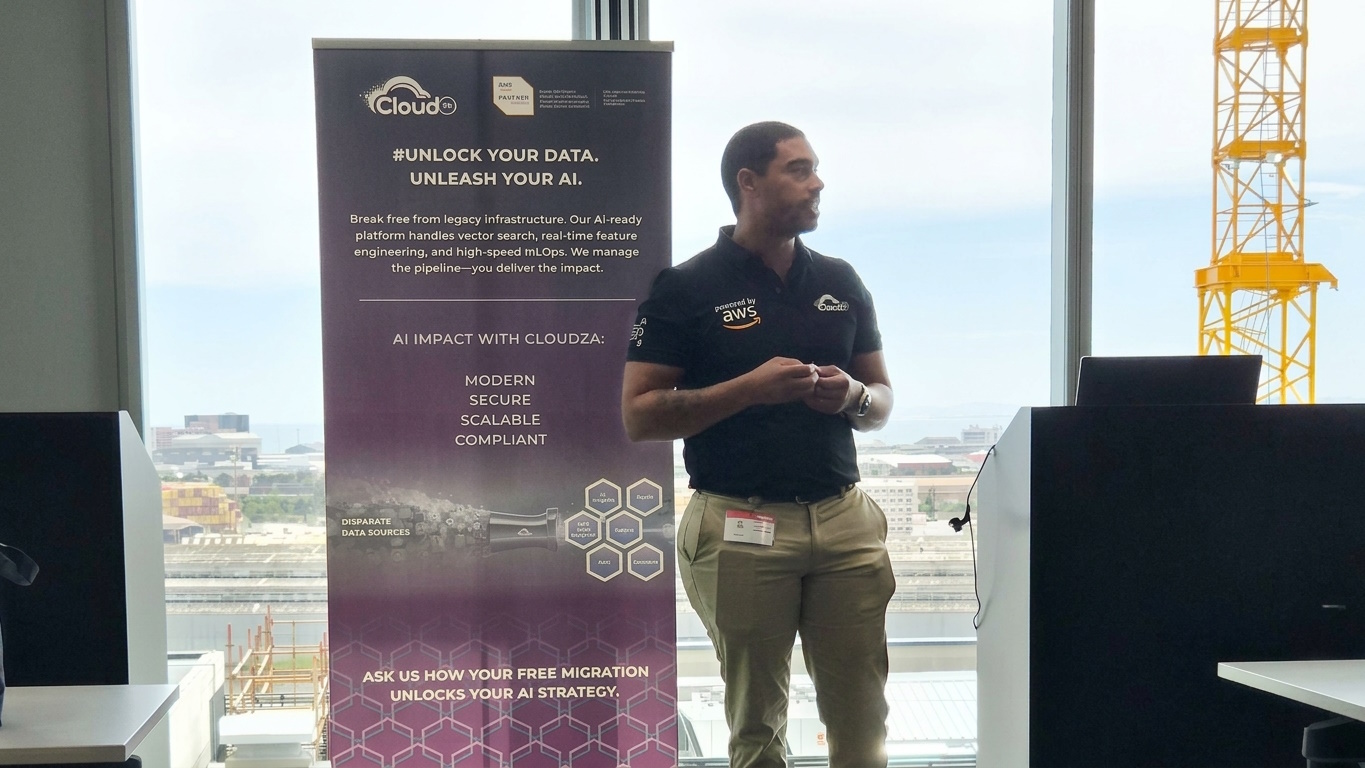
Jonathan Oaker, founder and CEO of CloudZA, highlighted this particular event as a prime illustration of the challenges businesses face when integrating AI without proper controls. The withdrawal of such a foundational policy document, particularly due to issues stemming from AI's misuse, signals a clear intent from regulators to address the complexities of AI. This development underscores the growing importance for South African businesses to proactively develop a comprehensive South Africa AI governance strategy to navigate future regulatory demands and mitigate potential ZA AI compliance risks.
Establishing a Foundational Business AI Governance Framework
For organizations embarking on their AI journey, establishing a robust business AI governance framework must begin with a deep understanding of their data assets. According to Oaker, the initial step involves meticulously identifying the types of data an organization possesses, distinguishing between personally identifiable information, internal company data, and information linked to intellectual property. Once these data characteristics are understood, they can be systematically categorized, forming the basis for secure AI deployment.
Following data assessment, a similar rigorous evaluation must be applied to the AI tools themselves. Businesses need to investigate the origins of the data used to train each model, comprehend its operational capabilities and limitations, and ascertain the level of access it has to sensitive business information. This detailed analysis is crucial for selecting AI models that not only meet operational requirements but also align with the organization's specific governance standards, ensuring responsible and compliant use of artificial intelligence.
Operationalizing AI Governance and Mitigating Risks
Implementing effective AI governance extends beyond initial assessments to include continuous monitoring and control. Oaker advocates for the adoption of Open Telemetry from the outset, enabling businesses to track the usage of AI applications and large language models (LLMs) and gain essential observability. He emphasizes that effective governance is impossible without visibility, stating the necessity to understand what AI systems are running, who developed them, what data they utilize, and when they were last reviewed. This proactive approach is vital for AI data protection South Africa.
Furthermore, various technological solutions are available to help organizations "lock down" their AI environments. These tools can restrict which AI applications employees can access, control the data those tools can process, dictate how that data is handled, and define the actions AI systems are permitted to undertake. Examples include Amazon Bedrock, a managed platform designed for building governed AI applications, and Amazon Quick, an AI assistant providing a managed workspace. For entities preferring to maintain sensitive prompts and data within their own infrastructure, tools like Ollama allow models to be run internally. For smaller businesses considering AI subscriptions, Oaker suggests team licenses, with a critical recommendation to disable settings that permit AI companies to use user conversations for model training. Enterprise-level solutions offer further control by allowing organizations to integrate their existing identity and access management policies, thereby strengthening their overall South Africa AI governance strategy.
The Imperative for Proactive AI Compliance
The choice between enterprise and open-source AI governance approaches often depends on an organization's current stage in its AI adoption journey, with Oaker generally advising a start with open-source solutions before transitioning to enterprise if appropriate. Regardless of the chosen path, the message is clear: for businesses handling significant volumes of identifiable data and where operational failure is not an option, engaging with a specialized service provider or partner is crucial. Such experts can properly assess the environment and ensure the implementation of appropriate controls and governance frameworks.
Failing to prioritize governance when integrating AI carries substantial risks, including exposure to data breaches, significant AI legal liability ZA, and severe reputational damage. Retrofitting governance measures at a later stage proves to be both complex and costly. Businesses that prioritize robust AI governance from the outset will gain a competitive advantage through enhanced client trust, regulatory readiness, and operational maturity. This forward-thinking approach is essential for navigating the evolving regulatory landscape and harnessing AI's benefits responsibly.
Practical Implications
Lawyers and compliance officers in South Africa must proactively advise businesses on implementing robust AI governance frameworks to mitigate legal liabilities, data breaches, and reputational damage, especially given the evolving regulatory landscape and the withdrawal of the Draft National AI Policy, which signals future regulatory attention.
Source
How does this affect you?
Get an AI analysis of this article grounded in your jurisdictions, practice areas, and any policy documents you've uploaded to Wansom.
Finish Reading the Full Story and the Expert Analysis.
Get the latest legal & regulatory intelligence in South Africa
Wansom is AI and can make mistakes.