
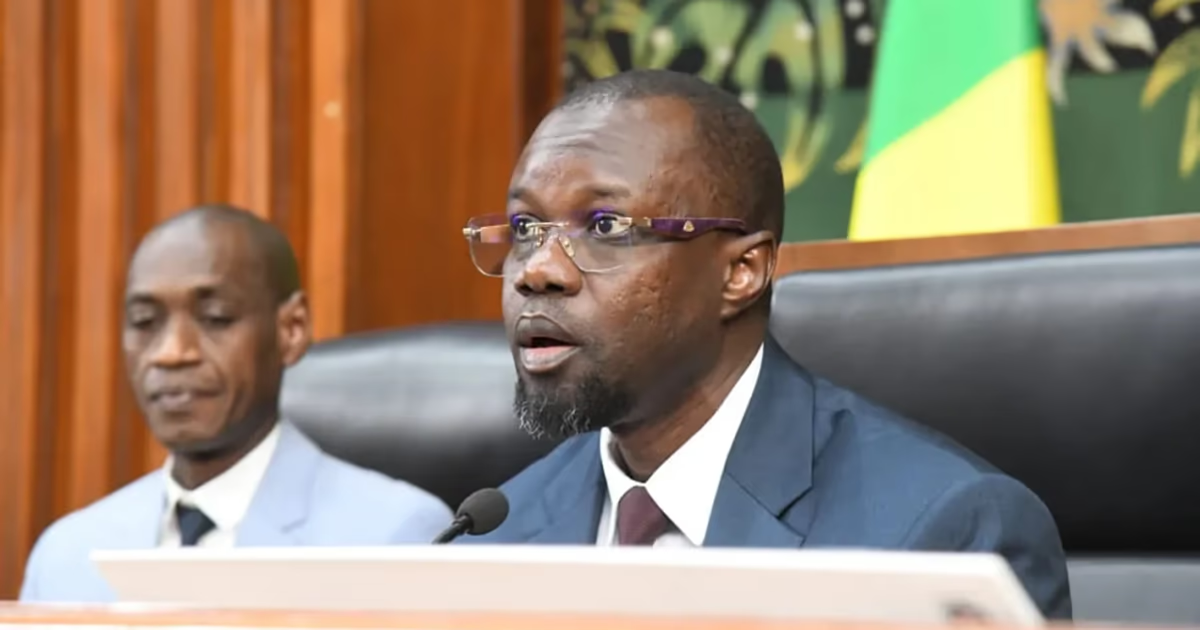
Sonko Warns on Public Debt Transparency
In Senegal, Ousmane Sonko, as President of the National Assembly, recently highlighted during the opening of the 2026-2027 parliamentary session the severe consequences of public debt and the opacity surrounding financial information on the nation's economic sovereignty.
During his opening address for the unique ordinary session of the National Assembly for 2026-2027, Ousmane Sonko, the President of the Assembly, dedicated a significant portion of his speech to the critical issue of Senegal's public debt. He specifically warned about the detrimental effects of high indebtedness on the state's capacity for independent action and decision-making. Furthermore, Sonko strongly criticized the lack of transparency in public finance management, asserting that such opacity could lead to long-term erosion of the country's economic sovereignty. This statement reflects a clear concern from the legislative leadership regarding the nation's fiscal health and the need for greater accountability in financial reporting. The excerpt does not detail any specific policy proposals or immediate actions, but rather sets a tone for legislative priorities.
This pronouncement by the President of the National Assembly carries substantial legal and economic significance for Senegal. It signals a legislative intent to scrutinize public debt management and promote greater transparency in government financial operations. For legal practitioners, this implies a potential for increased legislative oversight, possibly leading to new laws or amendments related to public finance, debt ceilings, and disclosure requirements. Businesses, particularly those involved in public-private partnerships, government contracts, or financial services, should anticipate a heightened focus on fiscal prudence and accountability. The emphasis on "economic sovereignty" suggests that future policies might prioritize national control over economic decisions, potentially impacting foreign investment terms or international financial agreements. This could also lead to a review of existing debt instruments and their terms.
The legal framework governing public debt in Senegal involves constitutional provisions on public finance, organic laws on budget and financial management (LOLF), and specific statutes related to borrowing and guarantees. The National Assembly has a constitutional role in approving the national budget and overseeing government expenditure and debt. The principle of transparency in public finance is a cornerstone of good governance, often supported by laws on access to information and the mandates of independent audit institutions like the Cour des Comptes. Sonko's remarks align with international best practices for fiscal transparency and debt sustainability, which are often promoted by international financial institutions. The legislative body's concern over "opacity" could prompt a re-evaluation of existing disclosure mechanisms and reporting standards for public debt.
The key party is Ousmane Sonko, President of the National Assembly, articulating a legislative priority. The "citizens" are the ultimate stakeholders who are entitled to transparent information. Attorneys advising government agencies, state-owned enterprises, and private entities engaged in financial dealings with the Senegalese state should pay close attention to this development. They should prepare for potential legislative initiatives aimed at enhancing fiscal transparency, imposing stricter debt management rules, and increasing public disclosure requirements for government financial obligations. Businesses considering investments or loans to the Senegalese government should factor in a potentially more rigorous due diligence process and a greater demand for transparency in financial arrangements. This signals a period of increased scrutiny over public financial management, requiring proactive compliance and strategic legal advice.
How does this affect you?
Get an AI analysis of this article grounded in your jurisdictions, practice areas, and any policy documents you've uploaded to Wansom.
Finish Reading the Full Story and the Expert Analysis.
Get the latest legal & regulatory intelligence in Senegal
Wansom is AI and can make mistakes.