
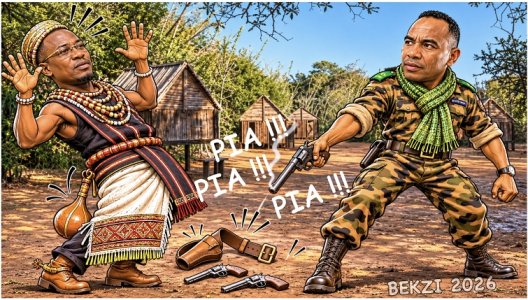
Assemblée Nationale Madagascar: Siteny Randrianasoloniaiko Destitution Approved
Summary
- The National Assembly of Madagascar recently removed four members from its permanent bureau following a late-night session.
- Siteny Randrianasoloniaiko, the Assembly's President, was among those subjected to destitution.
- Vice-Presidents Charles Issa Ibrahim and Christian Afakandro, along with Third Quaestor Mamihaja Charlot, were also removed.
- For each destitution, the required majority of 109 votes was exceeded by the Assembly members.
- This significant parliamentary change concluded at 3 AM.
What Happened
The destitution of the President of the National Assembly, Siteny Randrianasoloniaiko, alongside three other key bureau members, represents a significant political development in Madagascar.
The National Assembly of Madagascar (Assemblée nationale Madagascar) recently underwent a significant leadership shake-up, concluding a late-night session that extended until 3 AM. This parliamentary action resulted in the destitution of four prominent members of its permanent bureau, marking a notable Madagascar parlementaire changement.
In addition to the President, two Vice-Presidents were also removed from their posts. These individuals were Charles Issa Ibrahim, representing the province of Antsiranana, and Christian Afakandro, who hailed from the province of Mahajanga. The fourth official affected by this sweeping change was Mamihaja Charlot, who held the position of third quaestor within the Assembly's leadership structure.
For each of these four destitutions, the legislative body followed a specific procedural requirement. A majority of 109 votes was mandated for the removal of any bureau member. In every single case, the votes cast in favor of destitution significantly surpassed this required threshold, demonstrating a clear and decisive mandate from the Assembly members for these leadership changes. The unanimous exceeding of the 109-vote mark for Siteny Randrianasoloniaiko's destitution, as well as for the others, underscores the strength of the consensus behind these actions.
Legal and Procedural Context
The process of destitution within a national legislative body, such as the Assemblée nationale Madagascar, represents a formal and often critical exercise of parliamentary power. This mechanism allows for the removal of elected officials from their leadership roles, typically in accordance with established internal rules and constitutional provisions. The recent actions against Siteny Randrianasoloniaiko, Charles Issa Ibrahim, Christian Afakandro, and Mamihaja Charlot highlight the operational capacity of the Assembly to effect such changes.
The requirement for a specific numerical majority—109 votes in this instance—is a fundamental aspect of ensuring the legitimacy and democratic integrity of such a significant decision. The fact that this threshold was not merely met but exceeded for all four individuals indicates a robust procedural adherence and a strong, collective will among the voting members. This outcome confirms that the destitution process was carried out with the requisite parliamentary support, making the removals legally binding within the Assembly's framework.
Such a parliamentary maneuver directly alters the composition and leadership of the legislative branch. It necessitates subsequent steps to fill the now-vacant positions, which could involve internal elections or appointments, depending on the Assembly's standing rules. While the immediate legal effect is the removal from office, the broader context points to the dynamic nature of parliamentary governance and the potential for shifts in legislative direction.
Broader Political Significance
The destitution of the President of the National Assembly, Siteny Randrianasoloniaiko, alongside three other key bureau members, represents a significant political development in Madagascar. This comprehensive change in the leadership of the Assemblée nationale suggests more than just a routine reshuffle; it could signal a deeper realignment of political forces or a response to underlying tensions within the Malagasy political landscape. Such a decisive Madagascar parlementaire changement, affecting figures like Charles Issa Ibrahim and Christian Afakandro, is likely to have ripple effects beyond the legislative chamber.
This event warrants close attention from those monitoring political stability and governance in Madagascar. The removal of such high-ranking officials, including the third quaestor Mamihaja Charlot, could impact the legislative agenda, the efficiency of parliamentary operations, and the relationship between the legislative and executive branches. A shift in parliamentary leadership often precedes or accompanies changes in policy priorities or governmental direction, making this a critical juncture for the nation.
The overwhelming support for the destitutions, evidenced by the votes surpassing the 109-vote threshold in all four cases, underscores a strong consensus among a significant portion of the Assembly. This level of unity behind such a drastic measure implies a concerted effort to reshape the parliamentary leadership. The implications for future legislative processes, including the passage of new laws and oversight functions, will be closely observed as the Assembly moves to reconstitute its permanent bureau. This development could influence investor confidence and the regulatory environment, making it a key indicator for legal professionals advising on matters in the jurisdiction.
Practical Implications
This political development, involving the removal of key parliamentary figures, may signal shifts in legislative priorities or political stability in Madagascar. While not a direct legal change, it warrants attention from legal professionals advising clients on regulatory or investment matters in the jurisdiction, as it could indirectly affect the legislative environment.
Source
Source: Original reporting via Editorial
How does this affect you?
Get an AI analysis of this article grounded in your jurisdictions, practice areas, and any policy documents you've uploaded to Wansom.
Finish Reading the Full Story and the Expert Analysis.
Get the latest legal & regulatory intelligence in Madagascar
Wansom is AI and can make mistakes.