
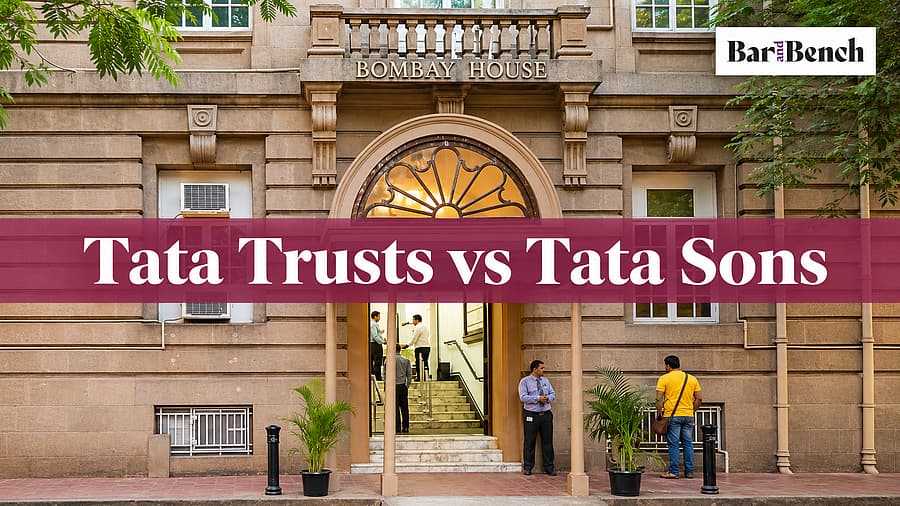
Sir Dorabji Tata Trust v Tata Sons: Bombay HC Allows Meeting, Decisions Conditional
Summary
- The Tata Trusts challenged the reappointment of N Chandrasekaran as executive chairman of Tata Sons in the Bombay High Court.
- The dispute, formally Sir Dorabji Tata Trust v Tata Sons, centers on the interpretation of Articles 104B and 121 of Tata Sons' Articles of Association.
- On November 27, Justice Abhay Ahuja refused to stay Tata Sons' November 30 board meeting but ruled that any decisions made would be subject to the petition's outcome.
- Both sides were represented by extensive legal teams, including Cyril Amarchand Mangaldas for the Trusts and DMD Advocates for Tata Sons.
What Happened
This ongoing legal challenge, "Sir Dorabji Tata Trust v Tata Sons", serves as a critical illustration of the significant litigation risk inherent in corporate governance decisions, particularly those concerning the reappointment of key executives.
A significant governance dispute between the Tata Trusts and Tata Sons recently unfolded in the Bombay High Court, drawing extensive legal representation. The core of the contention, formally known as Sir Dorabji Tata Trust v Tata Sons Pvt Ltd & Ors. and connected suit, centers on a board resolution passed by Tata Sons on September 17. This resolution concerned the reappointment of N Chandrasekaran as the executive chairman of Tata Sons, a decision that the Tata Trusts subsequently challenged.
The legal challenge mounted by the Tata Trusts specifically questioned the validity of this reappointment, arguing that it hinged on a particular interpretation of two key provisions within the Articles of Association of Tata Sons: Articles 104B and 121. The trusts filed suits before the High Court to contest the resolution. During a hearing on November 27, which lasted over three hours, Justice Abhay Ahuja heard arguments from thirteen senior advocates representing the various parties involved in the "Tata Trusts vs Tata Sons dispute".
Ultimately, on a Friday, Justice Abhay Ahuja issued an interim directive regarding the upcoming November 30 board meeting of Tata Sons. The court declined to issue a stay on this meeting, allowing it to proceed as planned. However, Justice Ahuja stipulated that any decisions made during the November 30 meeting would not be final and would remain subject to the ultimate outcome of the petitions filed by the Tata Trusts. This ruling allows corporate operations to continue while preserving the trusts' right to challenge the underlying governance issues.
Legal Context
The legal battle, which highlights complex "Bombay High Court Tata governance" issues, is fundamentally about the interpretation of corporate foundational documents. The specific articles, "Tata Sons Articles 104B 121", are central to understanding the powers and procedures for executive appointments within Tata Sons. The differing interpretations of these articles by the Tata Trusts and Tata Sons form the bedrock of the dispute regarding N Chandrasekaran's reappointment challenge.
The intensity of this high-stakes corporate governance dispute was underscored by the formidable legal teams assembled by both sides. Representing the Sir Dorabji Tata Trust and Ratan D Tata Trust was the prominent law firm Cyril Amarchand Mangaldas, with Senior Advocates Abhishek Manu Singhvi and Aspi Chinoy leading the arguments. They were supported by counsel Avishkar Singhvi, Uday Bhatia, Vivek Kumar Singh, and Rohaan Cama, alongside a large team from Cyril Amarchand Mangaldas including Cyril Shroff, Indranil Deshmukh, Gathi Prakash, Nidhi Asher, Aishwarya Gupta, Shivani Varade, Chandni Turakhiya, Vidushi Trivedi, Harshit Jindal, Anusha Sarkar, and Keshav Menon. This extensive representation from "Cyril Amarchand Mangaldas Tata" demonstrates the gravity of the trusts' challenge.
On the opposing side, Tata Sons and five of its directors (excluding Noel Tata) were represented by DMD Advocates as the firm on record, with Anagram providing advisory services. Their legal team featured an equally impressive roster of Senior Advocates, including Harish Salve, Ravi Kadam, Ashish Kamath, Virendra Tulzapurkar, Sudipto Sarkar, Zal Andhyarujina, Virag Tulzapurkar, and Birendra Saraf. The presence of such a large number of senior legal minds from "DMD Advocates Tata" underscores the critical nature of the case for Tata Sons and its governance structure.
Why It Matters
This ongoing legal challenge, "Sir Dorabji Tata Trust v Tata Sons", serves as a critical illustration of the significant litigation risk inherent in corporate governance decisions, particularly those concerning the reappointment of key executives. When the Articles of Association, which are the foundational rules governing a company, are open to differing interpretations, it can lead to protracted and costly legal battles. The dispute over "Tata Sons Articles 104B 121" exemplifies how ambiguity in such documents can trigger challenges to fundamental board resolutions.
The Bombay High Court's interim decision, allowing the November 30 board meeting to proceed while making its resolutions subject to the petition's outcome, highlights a common judicial approach in such corporate disputes. While it permits business continuity, it simultaneously introduces an element of uncertainty, as any actions taken could potentially be nullified later. This scenario underscores the critical importance for corporations to ensure robust internal processes and to draft Articles of Association with exceptionally clear and unambiguous language. Such clarity is vital to mitigate future challenges to board resolutions and to safeguard the stability of leadership appointments, thereby reducing exposure to the kind of "N Chandrasekaran reappointment challenge" seen in this case.
Practical Implications
This case highlights the significant litigation risk associated with corporate governance decisions, particularly board reappointments, when Articles of Association are subject to differing interpretations. Lawyers should advise clients on ensuring robust internal processes and clear AoA language to mitigate challenges to board resolutions, as interim court decisions may allow actions to proceed but subject them to future nullification.
Source
How does this affect you?
Get an AI analysis of this article grounded in your jurisdictions, practice areas, and any policy documents you've uploaded to Wansom.
Finish Reading the Full Story and the Expert Analysis.
Get the latest legal & regulatory intelligence in India
Wansom is AI and can make mistakes.