
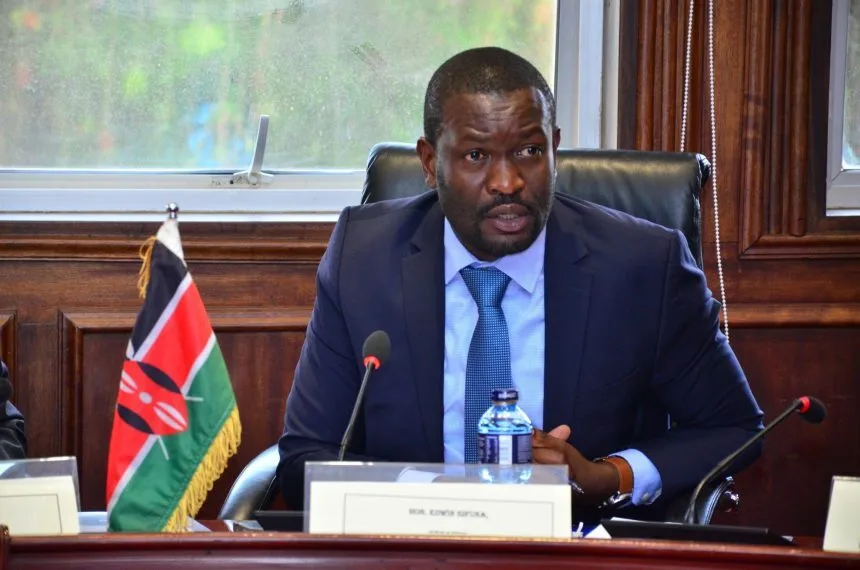
Sifuna: Ruto's State of Nation Address Fails Article 132 Mandate
Summary
- Senator Edwin Sifuna criticized President William Ruto's fourth State of the Nation Address for failing to meet constitutional reporting requirements.
- Sifuna argued that Article 132 of the Kenya Constitution mandates the President to report on progress in realizing national values under Article 10, not just development projects.
- He cited the death of Albert Ojwang in police custody as an example of human rights concerns that should be addressed.
- Sifuna emphasized that human rights, rule of law, and democracy should be central to the presidential report.
- He outlined his own commitment to prioritizing human rights and democratic freedoms if elected President in 2027.
A Contentious State of the Nation Address
Sifuna insisted that the presidential report must directly address these foundational principles, rather than focusing on tangible but less constitutionally central development projects.
Senator Edwin Sifuna recently voiced strong disapproval of President William Ruto's fourth State of the Nation Address, characterizing it as a 'State of Imagination.' The leader of the Linda Mwananchi Movement contended that the President's presentation failed to adhere to the constitutional mandates for the annual presidential report, instead prioritizing a recitation of development initiatives. Sifuna, who represents Nairobi and has consistently abstained from attending these annual addresses since his election, views the event as a platform for the President to assert government achievements while sidestepping critical issues of governance and accountability.
The core of Sifuna's critique centers on the perceived misdirection of the address. He argued that the President's focus on infrastructure projects, such as the construction of a market in Homa Bay, diverged significantly from the constitutional requirements. According to Sifuna, the address should delve into substantive progress regarding human rights, the rule of law, democratic principles, citizen freedoms, and public participation, rather than merely cataloging roads and other physical developments. This fundamental disagreement highlights a growing debate over the appropriate scope and content of the presidential report.
Constitutional Requirements Under Scrutiny
Sifuna's argument is firmly rooted in the provisions of the Kenya Constitution, specifically Article 132. He emphasized that this article stipulates a precise duty for the President when addressing Parliament: to report on the measures undertaken and the advancements made in upholding the national values and principles of governance as outlined in Article 10. The Nairobi Senator quoted Article 132 directly, stating that the President's role is to inform the nation about "steps taken and progress achieved in the realization of the values under Article 10."
Article 132(1)(c) further elaborates on this obligation, requiring the President to annually report on the progress made in realizing the national values specified in Article 10. This includes publishing the report's details in the Kenya Gazette and submitting a separate report to the National Assembly concerning the country's international obligations. Article 10 itself enumerates these crucial national values, encompassing the rule of law, democracy, public participation, human dignity, equity, social justice, inclusiveness, equality, human rights, and sustainable development. Sifuna insisted that the presidential report must directly address these foundational principles, rather than focusing on tangible but less constitutionally central development projects.
Human Rights and Accountability Concerns
A significant point of contention for Sifuna was the President's alleged oversight of Kenya's human rights record. He specifically highlighted the tragic death of Albert Ojwang, a teacher and blogger from Homa Bay, who died while in police custody in June 2025. Sifuna asserted that announcements of development projects should not overshadow or distract from serious questions regarding the protection of citizens' rights and accountability for such incidents. He maintained that issues like accountability for deaths in police custody, the safeguarding of civil liberties, and respect for the rule of law ought to be central themes of the national address.
A Vision for Future Leadership
Looking ahead, Senator Sifuna utilized the occasion to articulate his own political agenda, outlining what he would prioritize should he assume the presidency following the 2027 General Election. He pledged that an administration under his leadership would place a strong emphasis on the protection of human rights, the preservation of democratic freedoms, and the unwavering adherence to the rule of law.
Sifuna firmly believes that the responsibilities of the President extend far beyond merely announcing development projects. He stated that his primary duty, if elected, would be to explain to Parliament the specific measures his government would implement to ensure robust respect for human rights, the strengthening of democracy, and the guarantee of freedom across the nation. This declaration positions him as a proponent of a governance model that prioritizes constitutional adherence and human rights over purely developmental metrics.
Practical Implications
This article highlights an ongoing political debate regarding the interpretation and adherence to constitutional reporting requirements under Article 132 and Article 10 of the Kenyan Constitution. Lawyers specializing in public law or constitutional matters should note this discourse as it reflects differing views on executive accountability and the scope of presidential duties, potentially influencing future legal challenges or policy discussions on governance.
Source
How does this affect you?
Get an AI analysis of this article grounded in your jurisdictions, practice areas, and any policy documents you've uploaded to Wansom.
Finish Reading the Full Story and the Expert Analysis.
Get the latest legal & regulatory intelligence in Kenya
Wansom is AI and can make mistakes.