
Ruto: Kenya Public Order Reforms Boost Police Accountability
Summary
- President William Ruto has committed to reforms in public order management, focusing on police accountability and improved training.
- The Independent Policing Oversight Authority reported 127 protest-related deaths across three periods, while Missing Voices documented 21 police-linked protest deaths in May 2026.
- The government has allocated Sh2 billion for compensation to victims of protest violations, with Sh1.2 billion already paid to 1,476 beneficiaries by July 2026.
- Ruto affirmed that Article 37 of the Constitution protects the right to peaceful assembly and protest.
- He emphasized that unlawful force by security officers must lead to accountability, separate from compensation.
Government Pledges Public Order Reforms
He stated unequivocally that when security officers employ unlawful force or overstep their authority, such wrongdoing must be acknowledged, and those responsible must face accountability in accordance with the law.
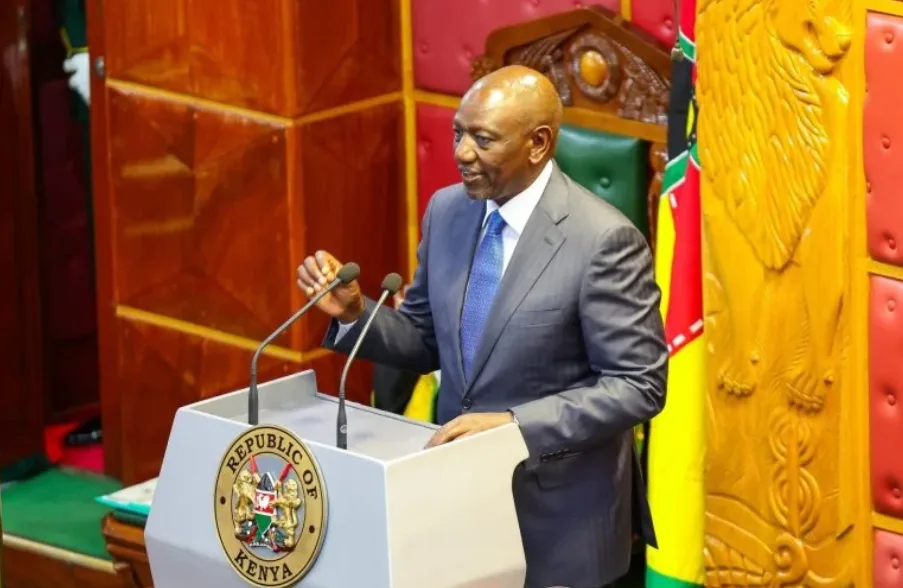
President William Ruto recently announced significant reforms aimed at improving public order management and enhancing police accountability. During his State of the Nation Address to Parliament on Wednesday, the President outlined a comprehensive strategy to address concerns surrounding deaths and injuries that have occurred during public demonstrations and confrontations with security forces. The proposed changes encompass improved training for officers, stronger operational oversight, and a renewed focus on accountability mechanisms.
The President detailed that the government is actively reinforcing the systems governing public order. This involves elevating professional standards, prioritizing officer welfare, ensuring appropriate equipment is available, establishing clear operational command structures, implementing de-escalation procedures, and strengthening overall oversight. These measures are intended to create a more professional and rights-respecting approach to managing public gatherings.
President Ruto specifically referenced the "painful events" of the June 2024 anti-Finance Bill protests and subsequent demonstrations, acknowledging the loss of life, serious injuries sustained by citizens, and the lasting trauma inflicted upon families. He also highlighted incidents such as the breach of Parliament, attacks on public institutions including the Judiciary, and widespread business looting, underscoring the critical importance of national stability for economic progress. He affirmed the constitutional mandate of security agencies to protect human life and property, insisting that this duty must always align with constitutional requirements.
Documenting the Human Cost
The gravity of fatalities during public demonstrations has been a persistent concern for human rights organizations. The Independent Policing Oversight Authority (IPOA) has documented a total of 127 deaths across three distinct periods of major protests. This figure includes 62 deaths recorded during the 2024 anti-Finance Bill demonstrations, 27 during the June 2025 protest commemorations, and an additional 38 during the July 2025 Saba Saba (July 7) demonstrations.
Further illustrating the scale of the issue, the Missing Voices rights alliance reported 24 police-related killings in May 2026 alone. A significant majority of these, 21 deaths, were directly linked to protest policing activities. Specifically, 19 individuals died during demonstrations against fuel price increases held on May 18 and 19 across several counties, including Nairobi, Kiambu, and Nakuru. These statistics underscore the urgent need for the reforms articulated by the President.
Upholding Rights and Ensuring Redress
President Ruto firmly reiterated the constitutional protection for the right to peaceful assembly and protest, citing Article 37 of the Constitution. This article explicitly guarantees every individual the right to assemble, demonstrate, picket, and present petitions to public authorities in a peaceful and unarmed manner. The President emphasized the imperative to safeguard this fundamental right, asserting that Kenyans must retain the freedom to express dissent and critique their government without fear.
Crucially, the President also addressed the state's responsibility for misconduct. He stated unequivocally that when security officers employ unlawful force or overstep their authority, such wrongdoing must be acknowledged, and those responsible must face accountability in accordance with the law. This commitment extends to financial redress for victims. The government has allocated Sh2 billion for compensation to individuals affected by protest-related violations, covering incidents dating back to 2017.
By July 2026, the Compensation Panel had processed payments totaling Sh1.2 billion, distributed among 1,476 verified beneficiaries. These recipients include the families of those who lost their lives and survivors who sustained serious injuries. The breakdown provided by the President indicated 1,036 civilian victims and 356 police officers who were injured in the line of duty, totaling 1,392 individuals, a figure that differs from the stated 1,476 beneficiaries. While acknowledging the importance of compensation in recognizing harm, President Ruto stressed that it cannot serve as a substitute for criminal accountability.
Practical Implications
Lawyers should advise clients on the increased potential for accountability actions against the state for police misconduct during protests, leveraging the government's commitment to reforms and the established compensation framework. This also signals a need for organizations to review their internal policies regarding employee participation in public demonstrations in light of evolving public order management standards.
Source
How does this affect you?
Get an AI analysis of this article grounded in your jurisdictions, practice areas, and any policy documents you've uploaded to Wansom.
Finish Reading the Full Story and the Expert Analysis.
Get the latest legal & regulatory intelligence in Kenya
Wansom is AI and can make mistakes.