
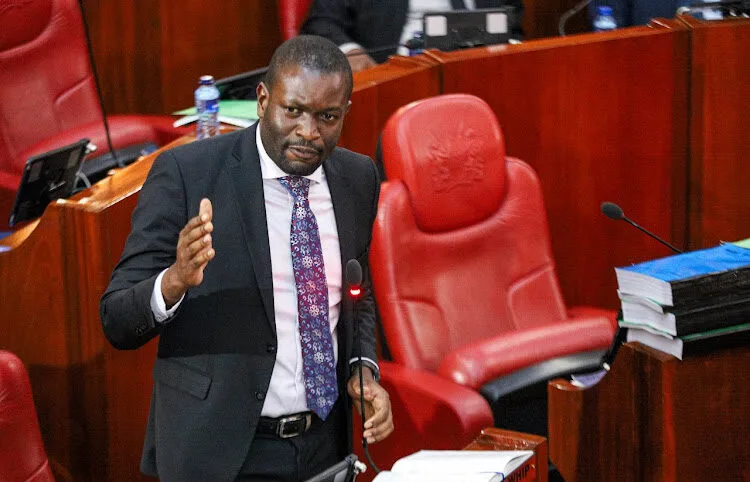
Sifuna Initiates Dangote Refinery Parliamentary Scrutiny
Summary
- Nairobi Senator Edwin Sifuna formally requested comprehensive documents on the proposed $16 billion Lamu refinery from the Senate Standing Committee on Energy on October 2.
- The request, made under Standing Order 53(1), seeks details on the project's financial model, ownership structure, public participation, environmental assessments, and taxpayer commitments, including beneficial owners.
- Senator Sifuna accuses parliamentary "gatekeepers" of obstructing scrutiny, despite President Ruto's call for critics to use formal channels for information.
- He cites Article 35(3) of the Kenya Constitution, which mandates the state to publish important information affecting the nation, as the basis for his demand for transparency.
- The Senate's upcoming recess from October 9 to November 3 raises concerns about the timely processing of the request by the Energy Committee.
Parliamentary Inquiry into Lamu Refinery
This development signals heightened Sifuna Dangote refinery parliamentary scrutiny over major infrastructure projects in Kenya, particularly concerning issues of transparency, public participation, and financial accountability.
Nairobi Senator Edwin Sifuna has initiated a formal parliamentary inquiry into the proposed Lamu refinery, seeking comprehensive documentation and transparency regarding the significant infrastructure project. His request, officially lodged with the Senate Standing Committee on Energy on October 2, aims to compel the government to release critical information. This move comes shortly after the refinery's formal launch in Lamu on September 30 by President William Ruto and Nigerian businessman Aliko Dangote, a $16 billion undertaking projected to process up to 700,000 barrels of crude oil daily for Kenya and regional markets.
Senator Sifuna's detailed request, submitted under Standing Order 53(1) of the Kenya Senate, targets several key areas of public concern. He specifically demands disclosure of the project's financial model, its complete ownership structure, and the extent of any financial commitments from Kenyan taxpayers. Furthermore, the senator is seeking records pertaining to the public participation process, environmental assessments conducted, and a thorough value-for-money analysis for all taxpayer investments. He has also explicitly requested a list of all beneficial owners associated with the project and the companies involved in its implementation, underscoring a push for greater Lamu refinery beneficial ownership transparency.
Allegations of Obstruction and Transparency Concerns
Despite President Ruto's recent public statements encouraging critics to utilize “formal channels” within Parliament to obtain state-held documents, Senator Sifuna has voiced strong skepticism regarding the efficacy of such avenues. He alleges that parliamentary “gatekeepers” are actively frustrating efforts to scrutinize the proposed Lamu refinery, preventing his request for information from reaching the House floor. Sifuna contends that the President's assurances are misleading, as these internal mechanisms are designed to block such inquiries.
The timing of Sifuna's request further highlights his concerns about potential delays. The Senate is scheduled to commence its recess on October 9 and will not resume sittings until November 3. This tight window raises questions about the ability of the Energy Committee, chaired by Elgeyo Markwet Senator William Kisang, to formally submit the statement to the House before the recess, thereby delaying Kenya Dangote refinery transparency. Sifuna's intervention places the matter squarely before the Kenya Senate Energy Committee Dangote project, even as he publicly doubts the parliamentary process will allow the request to proceed unimpeded.
Legal Framework for Public Disclosure
Senator Sifuna's pursuit of Senator Sifuna Lamu refinery documents is firmly anchored in Kenya's constitutional and parliamentary frameworks. His request specifically invokes Article 35(3) of the Kenya Constitution, which mandates the State to publish and publicize important information affecting the nation. This constitutional provision underpins his argument that while development and foreign investment are welcome, projects of this magnitude must adhere to fundamental principles of transparency, accountability, public participation, sustainable development, and sound public finance management.
The formal mechanism for his inquiry is Standing Order 53(1) Kenya Senate, which empowers any senator to seek a statement from a committee on matters of public concern. Beyond financial and ownership details, Sifuna has also pressed the Energy Committee to demand evidence of public participation conducted prior to the project's approval and to disclose any concerns raised by affected communities. This comprehensive approach underscores the legal imperative for the government to explain the financing and implementation model, including the source of funds and the exact contribution expected from Kenyan taxpayers.
Heightened Scrutiny for Major Projects
This development signals heightened Sifuna Dangote refinery parliamentary scrutiny over major infrastructure projects in Kenya, particularly concerning issues of transparency, public participation, and financial accountability. The Lamu refinery, presented by the government as a crucial industrial and energy-security investment, is now at the center of a debate about the public's right to information and parliamentary oversight. Critics have long called for greater openness regarding large-scale agreements, and Sifuna's actions directly challenge the perceived lack of transparency surrounding such ventures.
The ongoing dispute adds to the growing public and political examination of the refinery project. The senator's insistence on details like beneficial ownership and value-for-money analyses reflects a broader demand for robust governance in public-private partnerships. This parliamentary push for disclosure, especially under constitutional provisions like Article 35(3), sets a precedent for future large-scale investments, indicating that comprehensive public information and accountability will be increasingly demanded from both government and private entities involved in national development projects.
Practical Implications
This development signals heightened parliamentary scrutiny over major infrastructure projects in Kenya, particularly concerning transparency, public participation, and financial accountability. Lawyers advising clients on large-scale investments or public-private partnerships in Kenya should anticipate increased demands for disclosure, including beneficial ownership and financial models, and ensure robust compliance with constitutional requirements like Article 35(3) to mitigate potential challenges and reputational risks.
Source
How does this affect you?
Get an AI analysis of this article grounded in your jurisdictions, practice areas, and any policy documents you've uploaded to Wansom.
Finish Reading the Full Story and the Expert Analysis.
Get the latest legal & regulatory intelligence in Kenya
Wansom is AI and can make mistakes.