
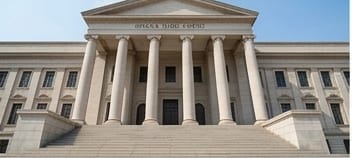
Sierra Leone Chief Justice Orders Lawyer Arrest for Contempt
Chief Justice Komba Kamanda of Sierra Leone ordered the arrest of senior opposition lawyer Barrister Joseph Fitzgerald Kamara (JFK) for alleged contempt of the Supreme Court on October 8, 2026, during proceedings at the nation's highest court. The incident, described as dramatic, occurred while Barrister Kamara, a former Attorney-General and the lead counsel for the main opposition All People’s Congress (APC) party, was representing his client. The specific nature of the alleged contempt and the exact circumstances leading to the Chief Justice's order remain unclear from the provided excerpt, but the event signifies a significant moment of tension within the judicial and political landscape of Sierra Leone.
This development carries considerable legal significance for practitioners in Sierra Leone, highlighting the potent authority of the Chief Justice and the Supreme Court to enforce decorum and respect for judicial proceedings. Contempt of court charges can have severe repercussions, including fines and imprisonment, and the swift action taken by the Chief Justice underscores the seriousness with which such matters are treated. For businesses and individuals involved in litigation, it serves as a stark reminder of the imperative to conduct themselves with utmost professionalism and deference within courtrooms. The involvement of a former Attorney-General and a senior opposition lawyer also politicizes the issue, potentially impacting public perception of judicial independence and impartiality.
The legal context for this event lies within the inherent powers of the Supreme Court of Sierra Leone, as established by the Constitution of Sierra Leone, to maintain its authority and the integrity of its proceedings. The concept of contempt of court is a well-established principle in common law jurisdictions, designed to protect the administration of justice from interference, obstruction, or disrespect. While specific statutes may govern procedural aspects, the power to summarily punish for contempt is a fundamental judicial prerogative. The Supreme Court, as the apex court, holds ultimate appellate jurisdiction and its pronouncements are final, making any challenge to its authority a matter of grave concern.
The key parties involved are Chief Justice Komba Kamanda, acting in his capacity as the head of the judiciary and presiding judge, and Barrister Joseph Fitzgerald Kamara (JFK), a prominent lawyer representing the APC. The Supreme Court of Sierra Leone is the venue, and by extension, the institution whose authority was allegedly challenged. The All People’s Congress (APC) party is also a significant party, as Barrister Kamara was representing their interests, suggesting the contempt issue may have arisen in a case involving the APC.
Practitioners in Sierra Leone should closely monitor the subsequent legal proceedings concerning Barrister Kamara's alleged contempt. It will be crucial to observe how this matter is resolved, whether through further court appearances, appeals, or other legal mechanisms, and to understand the specific grounds for the contempt finding. This event may lead to increased scrutiny of courtroom conduct and potentially influence future interactions between the bar and the bench. Businesses and legal professionals should ensure strict adherence to court rules and etiquette to avoid similar situations, and be prepared for potential shifts in judicial temperament or procedural emphasis following this incident.
How does this affect you?
Get an AI analysis of this article grounded in your jurisdictions, practice areas, and any policy documents you've uploaded to Wansom.
Finish Reading the Full Story and the Expert Analysis.
Get the latest legal & regulatory intelligence in Sierra Leone
Wansom is AI and can make mistakes.