
Sidney Dorsey RICO Prosecution Georgia: DeKalb Sheriff Murder Conviction
Summary
- DeKalb County Sheriff-elect Derwin Brown was assassinated in December 2000, three days before taking office.
- His predecessor, Sidney Dorsey, faced allegations of widespread corruption, including misuse of deputies and inmate labor.
- A co-conspirator's testimony linked Dorsey to Brown's murder and revealed a plot against the district attorney.
- Dorsey was arrested in November 2001 on murder and corruption charges.
- Prosecutors adopted a novel strategy, utilizing Georgia's Racketeer Influenced and Corrupt Organizations (RICO) Act to connect the corruption to the murder.
The DeKalb County Tragedy Unfolds
This innovative application of the state's Racketeer Influenced and Corrupt Organizations (RICO) Act marked a significant departure from traditional prosecution methods for public corruption and murder.
On a rainy night in December 2000, just three days before he was scheduled to be sworn into office, DeKalb County Sheriff-elect Derwin Brown was brutally assassinated in his driveway. His family, waiting inside their home, heard the fatal shots as 12 bullets struck the lawman. The immediate aftermath of the attack left investigators with no discernible evidence of the perpetrator, casting a pall over Georgia's fourth-most populous county.
Brown's election victory the preceding summer had been a significant upset, as he unexpectedly defeated the charismatic incumbent sheriff, Sidney Dorsey. This political shift was fueled by a series of investigative reports from consumer investigator Dale Cardwell, who founded TrustDALE in 2009 and hosts "Inside Investigations," which exposed a pattern of alleged corruption within the sheriff's department under Dorsey's leadership. These revelations set the stage for a complex and high-stakes legal battle.
Uncovering a Web of Misconduct and a Breakthrough
The corruption allegations against then-Sheriff Dorsey were extensive and detailed. Reports indicated that sheriff's deputies were working security for Dorsey's private firm while on county time, instances of sexual harassment, and the illicit use of inmates to perform personal tasks, such as painting and landscaping, at private residences. Notably, these residences were situated within the political jurisdiction of Sherry Dorsey, the sheriff's wife and a former elected member of the Atlanta City Council.
In response to these grave concerns, former DeKalb County District Attorney J. Tom Morgan requested the empanelement of two special investigative grand juries. For ten months, from February to November 2001, these grand juries meticulously heard evidence. The findings from the corruption inquiry revealed a far greater extent of misconduct than initially conceived, encompassing inside dealing, theft of services, and bribery. Meanwhile, the murder investigation remained stalled until a critical breakthrough occurred: a co-conspirator in the homicide case provided a detailed statement in exchange for immunity, implicating Dorsey in the murder and shockingly revealing that the sheriff had also ordered the district attorney's assassination. This led to the arrest of Sidney Dorsey, along with two others, including one of his former deputies, on November 30, 2001, for the murder of Sheriff-elect Brown.
Pioneering a RICO Approach in Georgia
Faced with the daunting task of formally charging Sidney Dorsey with both the murder of Derwin Brown and numerous counts of fraud and corruption, former District Attorney J. Tom Morgan found himself contemplating an unprecedented legal strategy. An unexpected phone call from Emmet Bondurant, a highly respected civil attorney in the Atlanta legal community known for his firm Bondurant Mixson & Elmore and for winning a U.S. Supreme Court case at the age of 26, proved pivotal.
Bondurant, whose firm did not typically engage in criminal practice, connected Morgan with John Floyd. It was Floyd who introduced the concept of utilizing the Racketeer Influenced and Corrupt Organizations (RICO) Act. Despite Morgan's nearly two decades of experience as a felony prosecutor, he had never encountered RICO discussed in state or national training for state prosecutors, nor had anyone in his office ever prosecuted a case under its provisions. This innovative application of the state's Racketeer Influenced and Corrupt Organizations (RICO) Act marked a significant departure from traditional prosecution methods for public corruption and murder.
The Broad Reach of State RICO
The Racketeer Influenced and Corrupt Organizations Act, originally enacted by Congress during President Richard Nixon's administration, was designed to target organized crime figures, particularly Mafia bosses. Following the federal precedent, many states subsequently passed their own versions of the RICO statute, providing prosecutors with a powerful tool to address complex criminal enterprises. The State of Georgia v. Sidney Dorsey prosecution would become a notable example of this expanded application.
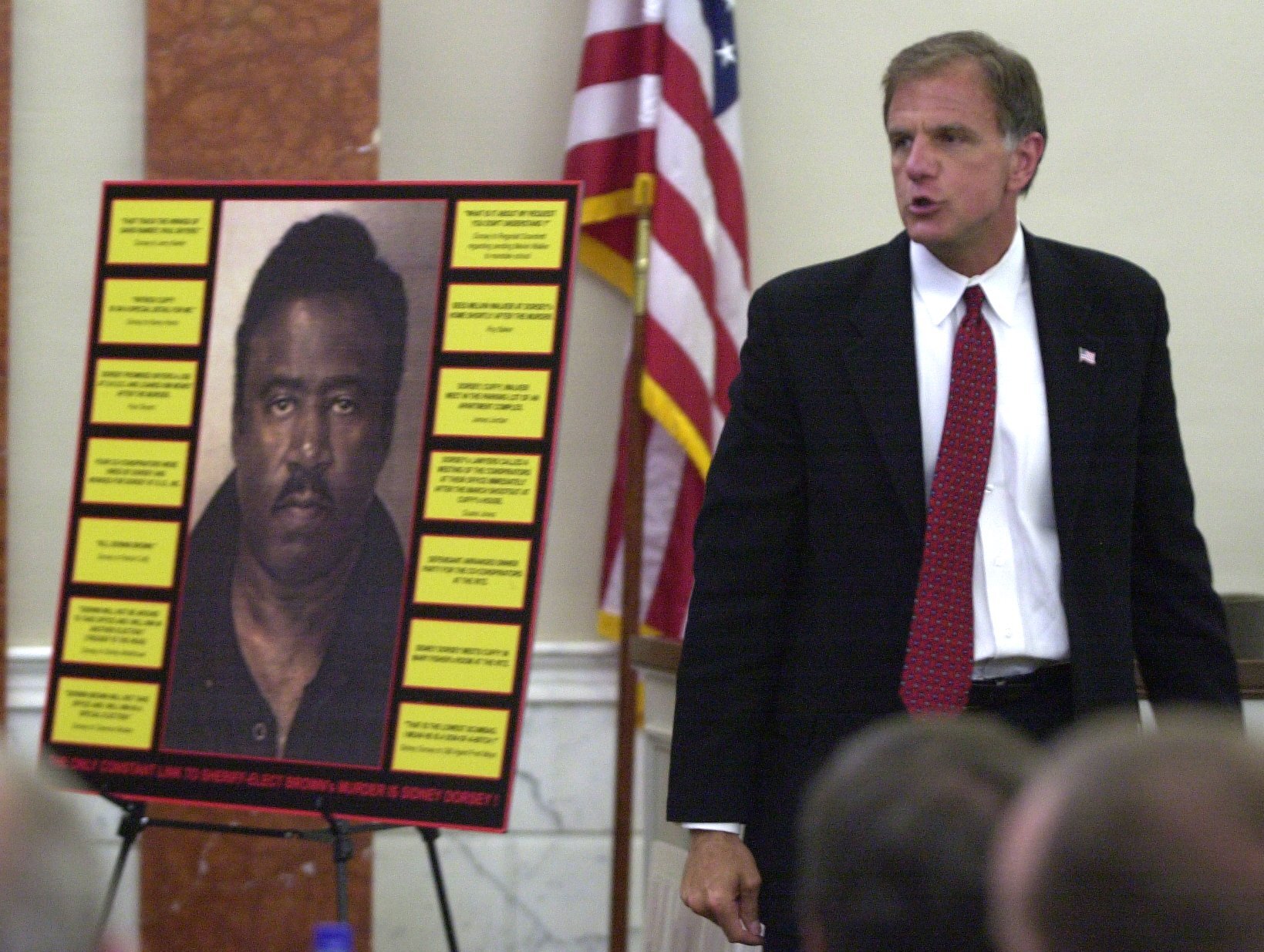
In 2002, during the closing arguments of the Sidney Dorsey RICO prosecution Georgia, former District Attorney J. Tom Morgan effectively employed this strategy. He presented a comprehensive chart to the jury, meticulously outlining the chain of events that connected Dorsey's racketeering activities directly to the murder of Derwin Brown. This approach underscored the versatility of the Racketeer Influenced and Corrupt Organizations Act Georgia in addressing intricate cases involving both public corruption and violent crime.
Practical Implications
This article demonstrates an innovative application of state RICO statutes in prosecuting public corruption and murder, highlighting that lawyers should consider the broad scope of RICO beyond traditional organized crime, even in cases involving seemingly disparate offenses. It also underscores the value of cross-disciplinary legal consultation (civil attorney advising criminal prosecution) for novel strategic approaches.
Source
How does this affect you?
Get an AI analysis of this article grounded in your jurisdictions, practice areas, and any policy documents you've uploaded to Wansom.
Finish Reading the Full Story and the Expert Analysis.
Wansom is AI and can make mistakes.