
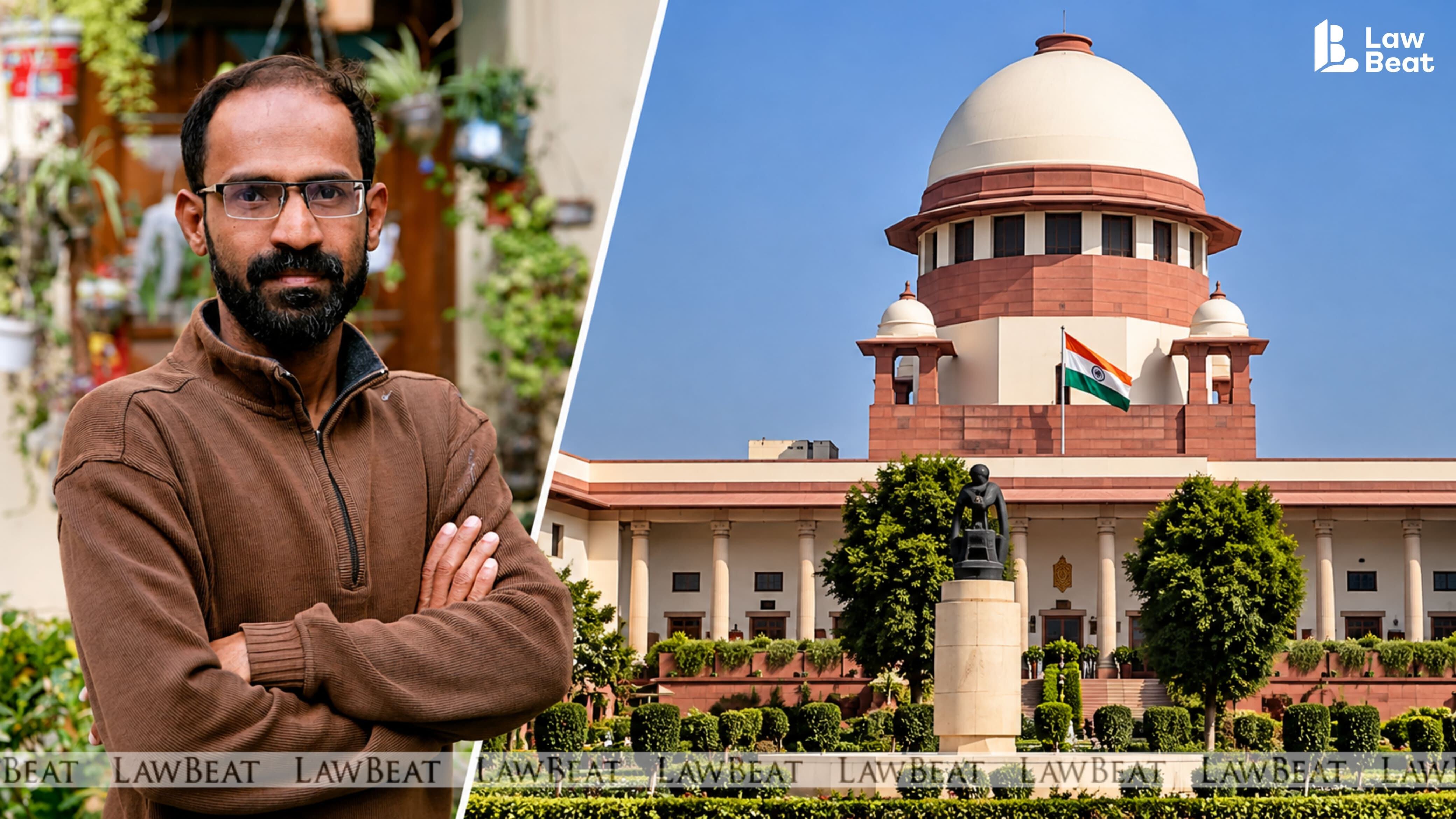
Supreme Court: Siddique Kappan Passport Return Hearing Postponed
Summary
- The Supreme Court adjourned Siddique Kappan's plea for the return of his passport for two weeks.
- The adjournment occurred because the State of Uttar Pradesh's counsel needed time to take instructions after receiving the petition late.
- Kappan's passport was deposited in 2022 as a condition for his bail in the Hathras conspiracy case under the UAPA.
- The Supreme Court previously relaxed other bail conditions for Kappan, including reporting requirements in November 2024.
- Kappan was arrested in 2020 on allegations of conspiring to incite riots while reporting on the Hathras incident.
Supreme Court Adjourns Passport Plea
The Supreme Court has postponed its hearing on a request from Kerala journalist Siddique Kappan for the return of his passport, which was surrendered as a condition of his bail in the Hathras conspiracy case.
The Supreme Court has postponed its hearing on a request from Kerala journalist Siddique Kappan for the return of his passport, which was surrendered as a condition of his bail in the Hathras conspiracy case. A bench comprising Justices PS Narasimha and Alok Aradhe deferred the miscellaneous petition after the State of Uttar Pradesh's counsel indicated a lack of preparedness. Advocate Ruchira Goel, representing Uttar Pradesh, informed the court that she had only just received a copy of the petition and required additional time to obtain instructions from her client.
Goel explicitly stated that she was not in a position to respond to the plea at the time of the hearing, requesting the matter be listed for a subsequent Monday to allow her to gather the necessary information. Justice Narasimha acknowledged this request, remarking, "Okay, then let her take instructions." Consequently, the Supreme Court adjourned the proceedings for a period of two weeks, granting the State the requested time to prepare its response regarding the Siddique Kappan passport return. This particular petition does not challenge the initial grant of bail itself, but rather seeks a modification to one of its specific terms.
Legal Framework for Bail and Conditions
Siddique Kappan's passport was deposited with the investigative agency in 2022, a mandatory requirement set by the Supreme Court when it granted him bail in the Hathras conspiracy case. This case involves serious charges under the Unlawful Activities (Prevention) Act (UAPA). The original bail order, issued on September 9, 2022, by a bench that included then Chief Justice of India U.U. Lalit and Justice S. Ravindra Bhat, overturned a decision by the Allahabad High Court that had denied him bail. A key stipulation of this Supreme Court order was that Kappan "shall deposit his passport with the investigative machinery."
Given that the passport's surrender is a direct term of the Supreme Court's own ruling, any subsequent release of the document necessitates a formal modification of that original order. In such circumstances, the State, acting as the prosecuting authority, is typically afforded an opportunity to present its arguments before any such modification is considered by the court. This is not the first instance where Kappan has sought adjustments to his bail conditions; an earlier miscellaneous application, which aimed to relax the requirement for him to report to a police station in Uttar Pradesh every Monday, was successfully granted. Furthermore, in November 2024, the Supreme Court relaxed Kappan's bail conditions, clarifying that it would no longer be necessary for him to report weekly to a local police station.
Background of the Hathras Conspiracy Case
Siddique Kappan was arrested on October 6, 2020, while en route to Hathras to report on the alleged gangrape and death of a Dalit girl. He faced multiple charges, including Sections 17 and 18 of the UAPA, Sections 120B, 153A, and 295A of the Indian Penal Code, and Sections 65 and 72 of the Information Technology Act. The core allegation against him was his involvement in a conspiracy to incite riots following the tragic incident. Despite being granted bail by the Supreme Court in the UAPA case in September 2022, Kappan remained in custody due to a separate, unspecified case.
The State government of Uttar Pradesh vehemently opposed Kappan's bail application before the Supreme Court, submitting a Statement of Objections. This document asserted that investigations had uncovered a significant connection between Kappan and the senior leadership of the Popular Front of India (PFI) and its student affiliate, the Campus Front of India (CFI). The affidavit further claimed that CFI itself maintained links with Al Qaeda-affiliated organizations, specifically naming IHH in Turkey. The prosecution alleged that Kappan intended to incite unrest at the Hathras gangrape site under the guise of journalistic reporting.
Practical Implications
Lawyers should note the procedural aspects of varying Supreme Court bail conditions, particularly the court's willingness to grant the State time to take instructions before deciding on modifications like passport release. This emphasizes the importance of anticipating and addressing potential delays when seeking to alter existing court orders, especially in high-profile cases involving national security legislation like UAPA.
Source
How does this affect you?
Get an AI analysis of this article grounded in your jurisdictions, practice areas, and any policy documents you've uploaded to Wansom.
Finish Reading the Full Story and the Expert Analysis.
Wansom is AI and can make mistakes.