
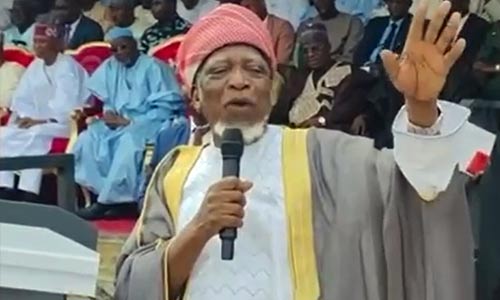
Kano State Islamic Cleric Sheikh Yahaya Jingir on Muslim-Muslim Tickets Nigeria
Summary
- Sheikh Yahaya Jingir called on Muslims in Kano State to support Muslim-Muslim political tickets.
- Lawyers warn against the potential impact of Jingir's comments on electoral outcomes and voter behavior.
- The Nigerian Electoral Act 2020 and INEC guidelines emphasize maintaining a level playing field during elections.
- Religious politics can create an uneven terrain, making it challenging for voters to make informed decisions.
Sheikh Yahaya Jingir's Comments Spark Concerns
Lawyers are concerned that Sheikh Jingir's comments could exacerbate the trend of religious considerations in election campaigns and voter behavior.
Islamic cleric Sheikh Yahaya Jingir has been at the center of controversy after making comments that could potentially influence Muslim voters in Kano State. In a speech delivered in Hausa, Jingir urged Muslims to support Muslim-Muslim political tickets, stating that this arrangement is necessary to maintain Muslim dominance in Nigeria's politics. The remarks were made during an event tagged 'Abba Go Again,' which was organized by supporters of Abba Kabir Yusuf, the 2019 governorship candidate of the Peoples Democratic Party (PDP) in Kano State.
Jingir's comments have been met with criticism from lawyers who argue that religious politics cannot be a deciding factor in electoral outcomes. According to them, such comments can create tension and potentially lead to violence, which is detrimental to the democratic process.
Relevant Legal/Regulatory Context
In Nigeria's political landscape, the use of religious politics has been a contentious issue for years. The country's constitution guarantees freedom of religion, but also emphasizes the importance of maintaining a secular state. However, in practice, religious considerations often play a significant role in election campaigns and voter behavior. Lawyers are concerned that Sheikh Jingir's comments could exacerbate this trend, potentially leading to electoral manipulation and compliance issues.
The Nigerian Electoral Act 2020 and the Independent National Electoral Commission (INEC) guidelines emphasize the importance of maintaining a level playing field during elections. However, the influence of religious politics can create an uneven terrain, making it challenging for voters to make informed decisions. Lawyers are warning that such comments could have far-reaching implications for election-related compliance and advising clients on political risks.
Why It Matters
Sheikh Jingir's comments highlight the delicate balance between religious freedom and electoral integrity in Nigeria. While Muslims have a right to express their preferences, lawyers argue that such comments can create an environment conducive to electoral manipulation. The potential impact on Muslim voters and electoral outcomes cannot be overstated, making it essential for lawyers to remain vigilant and advise clients accordingly.
The case law in Nigeria has shown that religious politics can have significant implications for election-related compliance. In the 2019 general elections, there were reports of voter intimidation and manipulation along religious lines. Lawyers are concerned that Sheikh Jingir's comments could reignite such tensions, making it crucial to address this issue proactively.
Practical Implications
Lawyers should be aware of the potential for Sheikh Yahaya Jingir's comments to influence Muslim voters and impact electoral outcomes, which may have implications for election-related compliance and advising clients on political risks.
Source
How does this affect you?
Get an AI analysis of this article grounded in your jurisdictions, practice areas, and any policy documents you've uploaded to Wansom.
Wansom is AI and can make mistakes.