
Shashank Garg: India's Court-Annexed Arbitration Needs Independence
Summary
- Senior Advocate Shashank Garg advocates for court-annexed arbitration centers in India to eventually become independent of judicial oversight.
- He stated that initial court supervision provides credibility to new centers, but long-term autonomy is the goal.
- Garg cited the Delhi International Arbitration Centre (DIAC) as an example where this phased approach was intended from its inception.
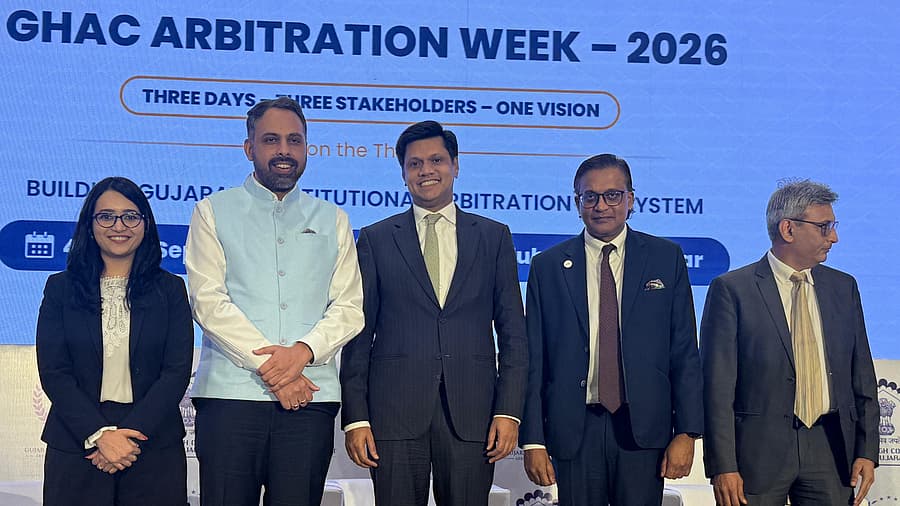
- This discussion occurred during a session on institutional arbitration at GHAC Arbitration Week 2026, organized by the High Court of Gujarat and the Gujarat High Court Arbitration Centre.
- Judicial involvement helped DIAC gain credibility, attracting Section 11 references and arbitration clauses in contracts with State PSUs and MSMEs.
Advocating for Arbitration Autonomy
At some point of time in a foreseeable future the centre would be completely autonomous and the supervision of court would in some way be diluted.
Senior Advocate Shashank Garg recently articulated a forward-looking vision for institutional arbitration in India, proposing that court-annexed arbitration centers should ultimately achieve full independence from the judicial bodies that establish them. This significant perspective was shared during a dedicated session on institutional arbitration at the GHAC Arbitration Week 2026, an event collaboratively organized by the High Court of Gujarat and the Gujarat High Court Arbitration Centre. Garg's remarks underscored a strategic approach to enhancing the efficacy and standing of these dispute resolution mechanisms within the Indian legal framework.
During the session, which was moderated by Senior Advocate Ritin Rai, Garg highlighted that while initial court supervision provides a crucial foundation for newly established arbitration centers by lending them immediate credibility, this oversight should not be a permanent fixture. He emphasized that the overarching objective for these institutions must be a gradual reduction in judicial control, paving the way for them to operate with complete autonomy. This phased transition, he argued, is essential for their long-term growth and effectiveness in the Indian legal landscape.
The DIAC Model and Credibility Building
Drawing upon his extensive experience with the Delhi International Arbitration Centre (DIAC), Shashank Garg provided a practical illustration of this proposed trajectory. He recounted that the DIAC was conceived with the explicit understanding that its initial reliance on court supervision would eventually diminish. Garg stated, "At some point of time in a foreseeable future the centre would be completely autonomous and the supervision of court would in some way be diluted."
He further explained that this initial judicial involvement was instrumental in helping the DIAC establish its credibility during its formative years. This foundational trust enabled the center to attract a significant volume of references under Section 11 of the Arbitration and Conciliation Act. Moreover, the DIAC's enhanced reputation led to its inclusion in arbitration clauses within various contracts, particularly those involving State Public Sector Undertakings (PSUs) and Micro, Small, and Medium Enterprises (MSMEs), thereby solidifying its position as a preferred forum for dispute resolution.
Broader Perspectives on Institutional Arbitration
The discussion at GHAC Arbitration Week 2026 extended beyond Garg's specific proposals, encompassing a broader dialogue on the future of institutional arbitration in India. The panel featured a distinguished group of experts from both domestic and international arbitration spheres, reflecting the global context of these evolving practices. Alongside Garg, the panelists included Vivekananda Neelakantan, the Registrar of the Singapore International Arbitration Centre, offering an international perspective on institutional development.
Further enriching the conversation were Khushboo Deshmukh, Deputy Director, Arbitration and ADR, India at ICC Dispute Resolution Services, and Vyapak Desai, an Advocate and Co-Chair, Council, Mumbai Centre for International Arbitration. Their collective insights contributed to a comprehensive understanding of the challenges and opportunities facing court-annexed arbitration centres in India as they navigate the path towards greater independence and enhanced operational frameworks.
Practical Implications
Lawyers advising on dispute resolution in India should monitor the discussed trajectory towards greater autonomy for court-annexed arbitration centres. This potential shift could influence the selection of arbitration forums and the strategic drafting of arbitration clauses, requiring ongoing awareness of these institutions' evolving independence and procedural frameworks.
Source
How does this affect you?
Get an AI analysis of this article grounded in your jurisdictions, practice areas, and any policy documents you've uploaded to Wansom.
Finish Reading the Full Story and the Expert Analysis.
Wansom is AI and can make mistakes.